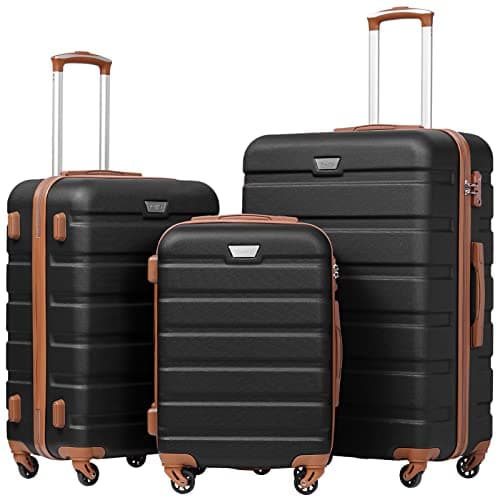
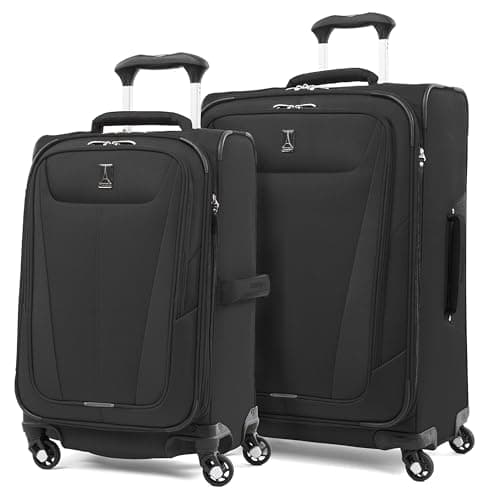
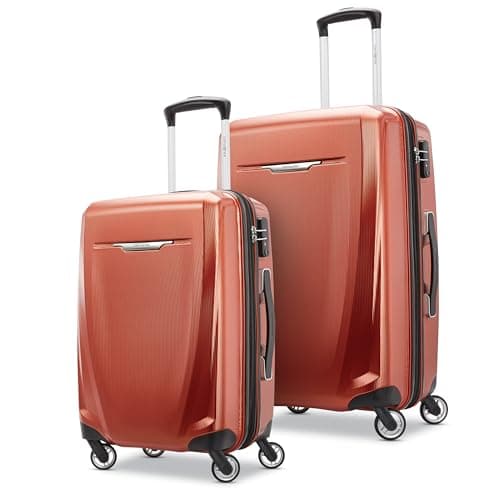
A luggage set is worth it in one situation: you own no luggage you would choose to keep, and you need more than one piece at once. Then a set is genuinely cheaper per piece than buying the same cases separately, the handles and wheels feel the same across the bags, the pieces nest into one closet, and one purchase settles the question. In every other situation - and most buyers are in one of them - you want one suitcase, and a set means paying for bags you will not fly.
The arithmetic the category advertises is cost per piece. The arithmetic that matters is cost per piece you will actually use. A three-piece set at a hundred dollars a case looks like a bargain next to a single two-hundred-dollar case. If you fly the carry-on forty times, the medium twice and the large never, you did not buy three cases at a hundred each; you bought one case at three hundred and a storage problem. That is the whole guide in two sentences, and it is why we rank sets on configuration before price.
The three situations where a set is the wrong purchase
You already own a carry-on you like. Then the cabin piece in the set is dead weight, and dead weight is most of what you are paying for - cabin bags are the piece sets price highest. Buy the checked case you need on its own.
You only fly cabin. A surprising number of set buyers have not checked a bag in years. If that is you, the set is one useful bag and two pieces of furniture, and you should be reading best carry-on luggage instead.
The third piece is a 28-inch case. Nearly every US carrier caps a checked bag at 62 linear inches and 50 lb. A 28-inch case runs up against the first and blows past the second long before it is full - American Tourister publishes 32.5 x 18.5 x 12.5 in for its Stratum 3.0 large spinner, which is 63.5 linear inches empty. Sets sell on total volume, and the volume in the largest piece is frequently volume you are not allowed to use.
The four things a set genuinely gives you
1. A lower price per case. Real, and the main reason to buy one. Just apply it to the cases you will fly, not to the box.
2. Nesting. This is the most undervalued feature in the category. A set whose pieces nest occupies one closet for the fifty weeks a year you are not traveling; three cases bought separately occupy three corners of a room. Check the size steps - a 20/24/28 nests, a 21/25/29 usually nests, and two cases only two inches apart often do not. Our luggage storage guide covers what to do either way.
3. One handle, one wheel feel, one lock. Underrated. Matched handle heights and matched wheels mean the medium behaves like the carry-on, and one TSA lock combination covers everything. If you have ever stood at a carousel trying three codes, this is worth something.
4. One warranty, one registration. Set warranties generally apply per piece, which is good news - a failed wheel on the medium is covered whether or not the large has ever left the house. The catch is registration: Travelpro's Trusted Companion Promise, the half of its warranty that covers airline damage, requires registration within 120 days. Do it once, for the set. Terms in luggage warranties explained.
The carousel problem a set creates
Here is the cost nobody puts on the box: a matched set is a set of identical bags. Two matching cases from the same set, in the same colorway, on the same carousel, is the most common complaint families have about sets - and it is the cheapest problem on this page to fix. A tag on the outside, a second tag inside, and a tracker in the lining cost a fraction of the set and solve it completely. Our guide to making your luggage stand out ranks the fixes by how long they survive a baggage system.
Two pieces, three pieces, or four
Two is right for one traveler: a cabin bag plus a 24 or 25-inch medium, which publishes around 55 linear inches and reaches 50 lb at about the point it is full. Three is right when more than one person uses the set, or when you genuinely take both long and short trips. Four is almost always three cases and a tote - and the tote is where sets hide their margin. A "free" tote or vanity case in a four-piece set is the clearest signal that the set is priced on piece count rather than on usable luggage. Our four-piece set page says which ones earn the fourth piece, and two-piece sets covers the configuration we recommend most.
If a set is the right answer, these three
All three are registry entries the site has already researched on their own roundups, and they are here because they cover the three honest versions of "yes": the two-piece for one traveler, the cheapest usable three-piece, and the lightest set for anyone who packs to the weight limit.
The four-question test
1. How many of these cases will fly in the next two years? Answer honestly. If the answer is one, buy one case. 2. Do the sizes nest? If they do not, you are buying three storage problems with a discount attached. 3. Is the largest piece a 24-to-25 or a 28? A medium is the case you can fill at 50 lb; a large is the case you cannot. 4. Is there a "free" tote? Then the set is priced on piece count. Compare it against the same brand's two-piece and see which is actually cheaper per case you will use.
What a set does not fix
A set does not make a bad case good, and the hardware grade is set by the price band rather than by the piece count. If the wheels on a budget set are plain bushings, they are plain bushings on all three cases - you have bought the same compromise three times. The failure order is the same as on any bag: wheels, then zipper sliders, then the handle tubes. Our how long luggage lasts sets out the order and the cost-per-trip math, and most durable luggage ranks on exactly those failures.
When buying one case beats any set
Three clear cases. You already own a cabin bag you like - buy a 24-inch medium and stop. You only fly cabin - buy the best carry-on you can and stop. Or you have a specific trip shape the set does not serve, like a cruise with under-berth storage limits or a trip where everything goes in one bag; our cruise luggage page and what size luggage for a week cover those.
Who sets are genuinely built for
Three groups, in order of how well the format fits. A household equipping itself from scratch - a set is the right answer and the arithmetic is unarguable; our family of four page ranks on per-person allowance rather than cost per piece. A couple, where the shared checked case plus two cabin bags is exactly a three-piece set - sets for couples works through how the pieces divide. And a student or first-apartment move, where volume matters more than refinement - luggage for college students covers that. Sets ranked for one traveler are in sets for men and sets for women, which use different criteria from each other and from this page.