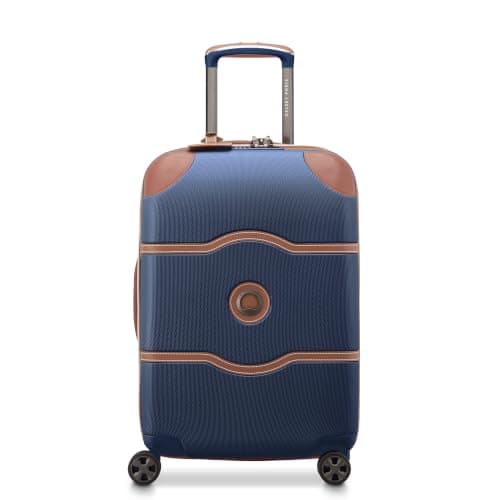
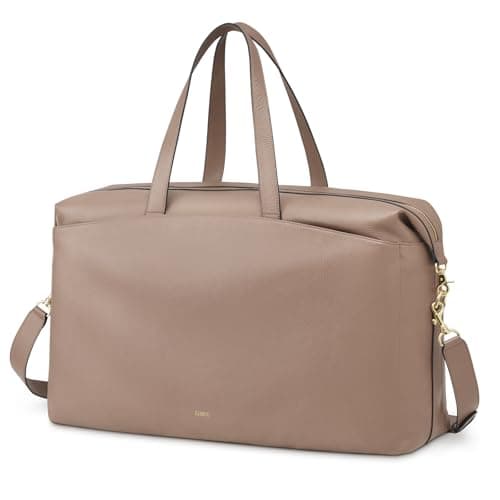
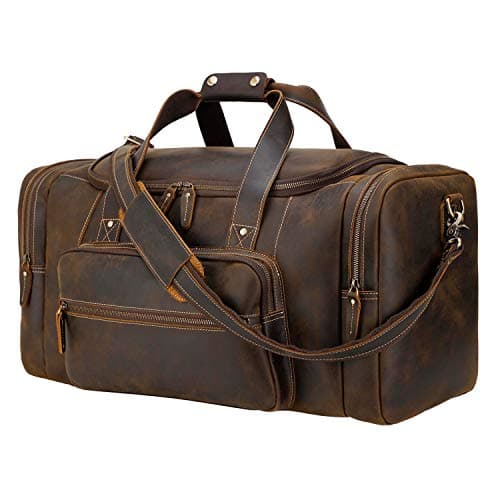
A luxury travel bag earns its price with materials and construction, not a logo: full-grain leather instead of coated split hide, solid metal hardware, stitched-and-lined interiors, and a shape that holds. Done right, it outlasts a decade of cheaper bags. Done as branding, it just costs more.
One honest caveat up front: a beautiful leather duffel is the wrong tool if you actually need to check a bag - it has no wheels, no hard shell and no lock, and airport handling is unkind to fine leather. For that, use a hardside case. If you want the same look for less, our weekender roundup and underseat picks cover it.
The leather grades, plainly
Most of what makes a leather bag "luxury" comes down to the grade of hide, and the labels are designed to blur it. Full-grain is the top: the outer layer of the skin with the grain left intact, the strongest and most durable leather, and the only one that develops a real patina over years. Top-grain is sanded and refined - a little thinner and more uniform, still genuine and long-lasting. The word "genuine leather" is the catch: it sounds premium but simply means it is real leather of a lower grade, often a split layer. At the bottom, bonded or leather-lookis scraps or a coating - it looks the part on day one and can crack or peel within a few years. Pay for full-grain or top-grain; treat "genuine leather" as mid-tier and "leather-look" as synthetic.
Hardware and construction do the aging
Good hide is wasted on bad building. The parts that fail first are the ones under stress: zippers (solid metal pulls, ideally a known maker), stitching (dense, even rows with no loose threads), and the points where straps and handles attach - riveted or double-stitched anchors, not glued tabs. A lined interior protects the leather from the inside and hides raw edges. This is also where you separate a genuinely premium bag from a designer markup: a mid-tier bag with a famous name on it can cost more than the Polare while using the same or worse hardware. Judge the construction, not the logo.
When a luxury bag is the wrong buy
Here is the honest part: a beautiful leather duffel is the wrong tool if you actually need to check a bag. It has no wheels to spare your shoulder, no hard shell to guard against a crushed connection, and no lock - and airport baggage handling scuffs and soaks fine leather in a way it never recovers from. If your trip means checked luggage, buy a hardside case and keep the leather for the cabin. Luxury bags reward carry-on and weekend use, where they stay with you and get to age gracefully - not the belly of the plane.
If leather specifically is what you are shopping for, two pages go deeper than this one can. Best leather travel bags ranks by published hide grade, because in US listings "genuine leather" is a grade below full-grain rather than a compliment - and how to care for leather luggage covers the short routine that keeps one alive, and the over-conditioning that ruins more bags than travel does.
How we picked
We did not lab-test these bags
Everyone in this category says they tested twenty suitcases. We have not lab-tested any of these, and we say so. What we did instead: compiled each bag's published specifications, checked its dimensions against the airline sizers, ran the cost-per-trip and weight-to-capacity math, read the aggregated owner reviews, and scored every pick against a published rubric. The scores are judgments from documented research — not measurements we took, because we do not have a lab and we will not pretend we do. Where a number came from someone else's work, we name them in Sources.