The best way to store luggage is nested, indoors, clean, bone dry, and with the lids slightly open, using the inside of each case as storage for the bulky soft things you do not need between trips. That combination solves the two problems people actually have - not enough space, and a case that smells of damp the next time they open it - and it costs nothing. The single most common mistake is the garage.
Here is the reasoning, and then what to do at each level of available space.
Prepare the case before it goes anywhere
Everything that goes wrong in storage is set up in the ten minutes after you get home. Empty the case completely, including the pockets - a forgotten damp swimsuit or a half-eaten snack is how an infestation or a permanent smell starts. Wipe the shell or vacuum the lining, and let the case air with the lid fully open for a day. A case stored even slightly damp is a case that grows mould in the lining, and that smell does not come out. Our guide to cleaning luggage covers shells, linings and wheels properly.
Then store it with the zip slightly open or the lid cracked. A sealed case traps whatever humidity was inside when you closed it. If the room is at all humid, put a silica gel pack or a box of baking soda inside. Do not use a plastic bin bag over the case for dust - it traps moisture against the shell; a cotton dust cover or an old sheet does the job and breathes.
Nest everything that will nest
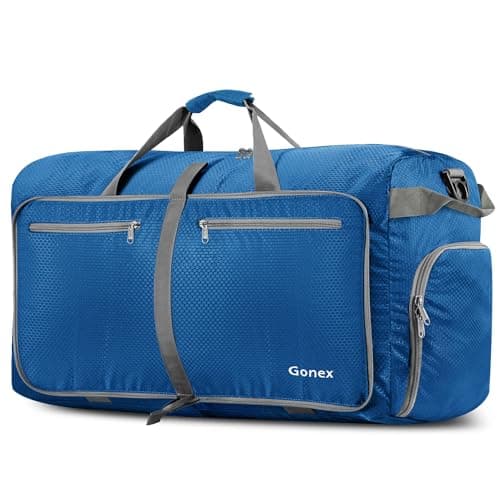
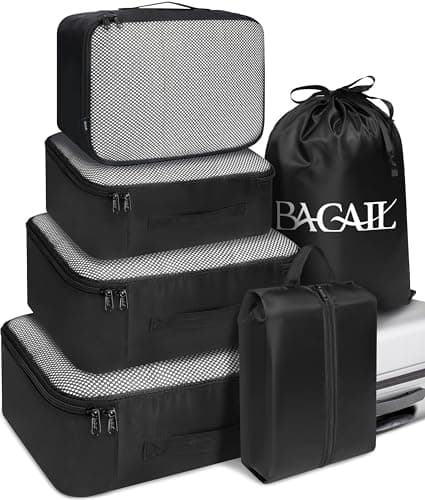
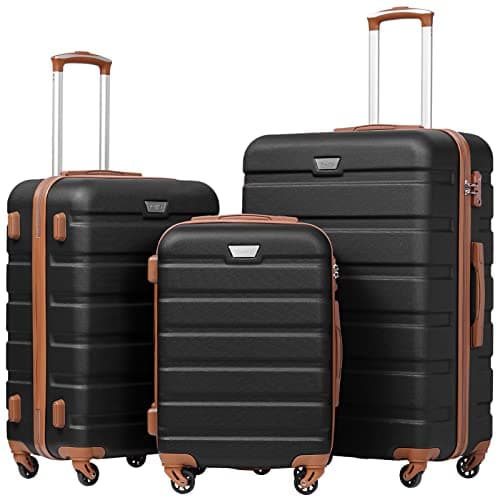
This is where the space actually comes from. A 20/24/28-inch set nests into the footprint of the 28 alone, which is why a set bought as a set is dramatically easier to live with than three cases bought separately over the years. If your cases are mismatched, nest what you can and accept one or two orphans. Soft duffels and packing cubes collapse into almost nothing and should go inside the hard cases, not beside them.
Then use the volume. The inside of a stored suitcase is the best dead space in most homes: out of season bedding, winter coats, spare pillows, the ski kit. Two rules - nothing damp, and nothing you need in a hurry, because retrieving it means unstacking the nest.
Where to put them, by how much space you have
A spare closet: the best option. Upright on the wheels if the shelf is deep enough, or flat on a high shelf. Keep them off a concrete floor. Under a bed: excellent for soft bags and for cabin cases; most carry-ons at around 9 inches deep will clear a standard bed frame, and a duffel will clear almost anything. On top of a wardrobe: the classic answer, and fine as long as you can get the case down safely - a 28-inch case overhead is heavier than it looks, especially full. A small flat with none of the above: treat the largest case as furniture. Stand it upright in a corner behind a door, or use it as the base of a side table with a cloth over it. A hard-shell case is structurally fine as a plinth.
Why not the garage, the basement or the loft
Because all three are temperature-cycling, humidity-cycling spaces, and that is exactly what luggage materials dislike. In a damp garage or basement, a lining absorbs moisture and grows mould, and a case standing on a concrete floor wicks it up directly. In a loft, summer heat can soften adhesives and warp a shell, and plastics left in heat for years become brittle - a shell that cracks on its first trip after two summers in a roof space did not crack from the impact alone. If one of those is genuinely your only option: get the case off the floor on a pallet or shelf, use a breathable cover, add desiccant, and check it once a year.
What to buy if storage is the binding constraint
Three things change the problem rather than manage it: a set that nests properly so three cases take one footprint, a packable duffel that disappears when it is not in use instead of occupying a shelf, and packing cubes so the clothes stored inside the cases stay organised and do not have to come out. The picks below are the site's own registry entries for exactly those jobs, with the scores they earned on their own roundups; prices are live and we have not lab-tested them - see how we test.
Should you store luggage with the zip open or closed?
Open, or at least cracked. A sealed case traps the humidity that was in it when you closed it, and a lining held against a shell in still, damp air is where mildew starts. Leaving an inch of zip open lets the case equalise with the room. If the room itself is humid, add a silica gel sachet or an open box of baking soda inside and replace it annually.
How to get a musty smell out of a stored suitcase
Air it outside in dry shade for a day first - most of the smell leaves with the moisture. Then vacuum the lining, wipe it with a cloth lightly dampened with a dilute white-vinegar solution, and let it dry completely before closing. For a persistent smell, leave an open container of baking soda sealed in the case for several days and repeat. If the lining is visibly mouldy rather than just musty, that is a cleaning job with a proper method - our cleaning guide covers it, and a lining that has been wet for months is often not recoverable.
Storing a case upright versus flat
Flat is gentler on a soft case, because standing a heavy softside upright for years lets the fabric sag around the frame. Upright is fine for a hard shell and saves floor space, but do not stand it on its wheels on concrete for years - the wheels take a permanent flat spot and the concrete wicks damp. Never stack heavy objects on top of an empty hard case; the shell is engineered to resist impact, not sustained static load, and a slow deformation does not come back out.
When storage is really a replacement problem
If the reason you cannot store your luggage is that you own five mismatched cases accumulated over fifteen years, the honest fix is not a storage system. It is keeping the two you actually use and letting the rest go - most are past the point where a wheel or handle failure is worth repairing anyway. Our guide to how long luggage lasts sets out how to tell, and best luggage sets is where to replace the lot with something that nests.