The honest answer is that luggage life is measured in trips, not years, and the number that matters is whether the first part to fail is replaceable. A case flown twice a year will usually outlast its owner's interest in it regardless of what it cost. A case checked twice a month will lose a wheel, and from that point its life depends entirely on whether the brand sells you a new wheel. That is why we rank brands on service networks and warranty scope rather than on claimed durability - nobody can test a decade in a lab, and anyone who says they have is selling something.
What follows is what actually wears out and in what order, the arithmetic for deciding what to spend, and the point at which a case is genuinely done.
The failure order, which is remarkably consistent
Wheels first. They are the only part in constant contact with the ground, they take every kerb, and on a spinner they take side loads they were never designed for. Worn bearings, flat-spotted treads and sheared casters are the number one reason a case gets retired - and they are also the easiest part to replace. See wheel replacement.
Zippers second. Usually the slider, not the teeth - a slider's jaws spread with use until the teeth no longer mesh behind it, which looks like a broken zip and is a five-minute repair. Overpacking accelerates it enormously: zipper repair.
The telescoping handle third. Grit in the tubes, a bent section from side loading, or a worn release. Mostly fixable, sometimes a part order: handle repair.
The shell, lining and feet last. A cracked shell is usually an event rather than wear - a single bad impact - and it comes with an airline claim deadline attached: cracked luggage. Linings tear at the corners from unbagged shoes and hard edges. The plastic feet on the bottom of a case wear through quietly and are almost never replaced.
The arithmetic that decides what to spend
Cost per trip, not price. Estimate honestly how many trips you take a year, multiply by the years you expect to keep the case, and divide the price by that. A budget case over twenty trips and a premium case over two hundred can land in the same place - and if the premium one carries a guarantee that repairs it for life, its denominator keeps growing while the budget one's stops.
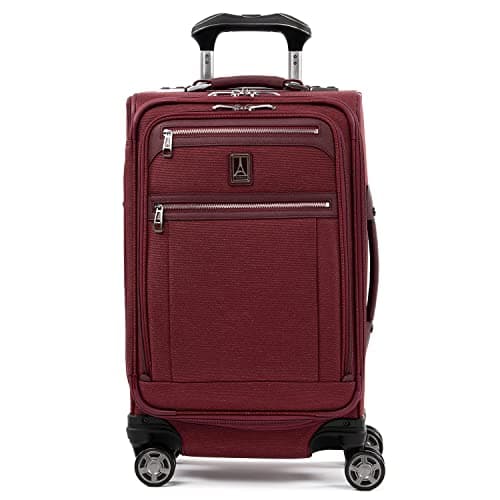
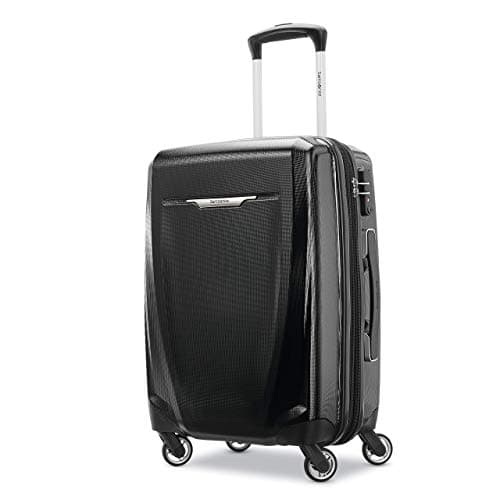
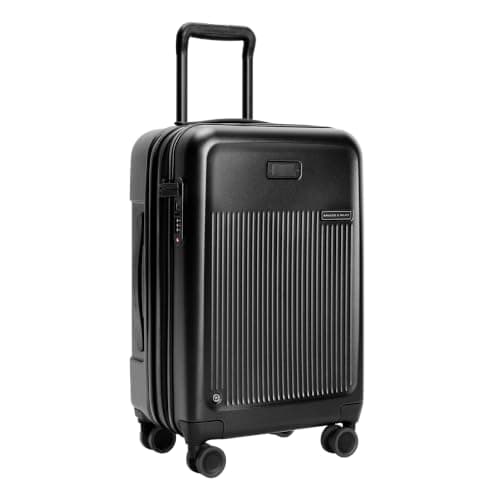
This is why the warranty is the durability specification on this site rather than a footnote. Briggs & Riley repairs its bags for life regardless of cause, airline damage included. Travelpro publishes a limited lifetime warranty plus the Trusted Companion Promise for airline damage, with a 120-day registration window. Samsonite and American Tourister publish 10-year limited warranties against defects, backed by the largest service network in luggage. TUMI publishes five years on travel, business and bag collections. None of those is a claim about how many trips the bag survives - they are claims about what happens when it does not, which is the only durability promise anyone can actually keep. Our warranties guide has each in full.
Five signs a case is finished
1. The frame or a mount has cracked. A wheel housing, a handle mount or the zipper frame. Those are structural, a patch fails under load, and the case is done. 2. The brand does not sell the part. Which is the normal situation with unbranded cases and the most practical argument for buying inside a service network. 3. It is the third failure. A wheel, then a zip, then a handle on the same case means you are maintaining a bag rather than owning one. 4. You no longer trust it. Packing around a bag's weaknesses is a real cost, even if nothing has actually broken yet. 5. It no longer fits the rules. A case bought when carry-on allowances were more generous may simply be too big now - the reason is in our carry-on size by airline guide, and no amount of condition fixes it.
What to replace it with
Choose for the failure that killed the last one. If it was wheels on a case you check monthly, buy into a warranty that covers airline damage. If it was a part nobody would sell you, buy a brand with a parts network. If it was a cracked shell, buy full polycarbonate rather than an ABS blend - our most durable luggage roundup ranks exactly on failure mode. The three below are the site's own registry entries for the three common answers, with the scores they earned on their own roundups.
What makes one case outlive another
Four things, in rough order of impact. Wheel construction - sealed ball bearings outlast plain bushings by a wide margin, and larger diameter wheels roll over kerbs and cobbles instead of stopping dead against them. Shell material - full polycarbonate flexes under impact and returns, where an ABS blend is more brittle and cracks propagate; our material guide sets out the differences. Where the stress is carried - external handle tubes, reinforced corners and stitched-through handle mounts all move load away from the points that fail. Whether parts exist - which is not a material property at all, and is frequently the whole answer.
Habits that add trips
Do not overpack - it is the common cause of burst zips and bent handle tubes, and it is free to avoid. Retract the handle fully before a bag goes into a hold. Pull the case in line behind you rather than dragging it sideways off the handle. Bag your shoes so soles do not grind through the lining. Clean the wheels after a beach or gravel trip, because grit in a bearing is what kills it. And store it clean, dry and indoors between trips - a case that spends the off-season in a damp garage ages far faster than one in a closet, which is the subject of our luggage storage guide.
Repair or replace: the quick test
Three questions. Is the failed part serviceable - a wheel, a zip slider, a handle assembly - or structural, meaning a frame, a mount or a shell? Does the brand sell the part, and is the case in warranty? And does the repair cost less than a meaningful fraction of a replacement? A serviceable part, available, on a case you otherwise like, is almost always worth repairing. A structural failure is not, at any price.
And if the airline broke it
Then it is not a durability question at all, it is a claim, and the deadlines are short - some carriers require damage to be reported within hours of arrival, before you leave the terminal. Our cracked luggage guide covers the damage process and airline lost my luggage covers the missing-bag process, including the liability limits that cap both.