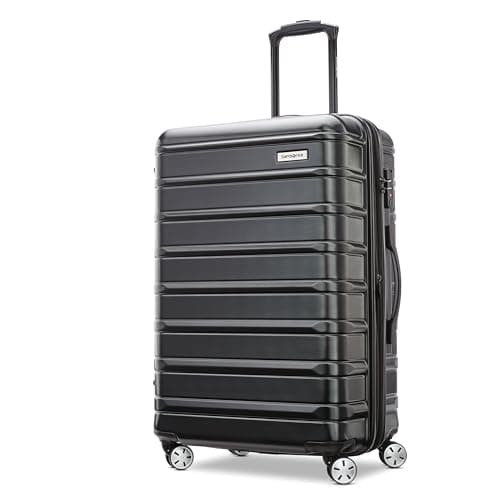
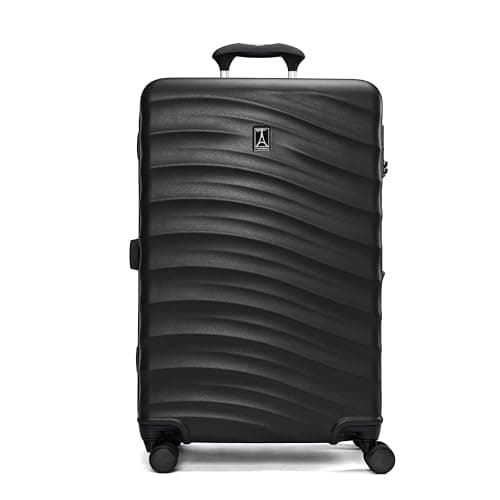
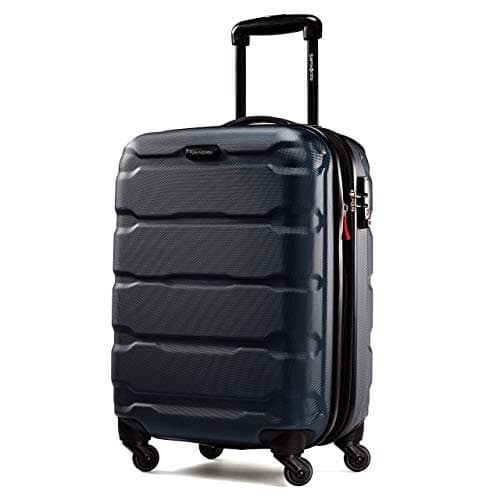
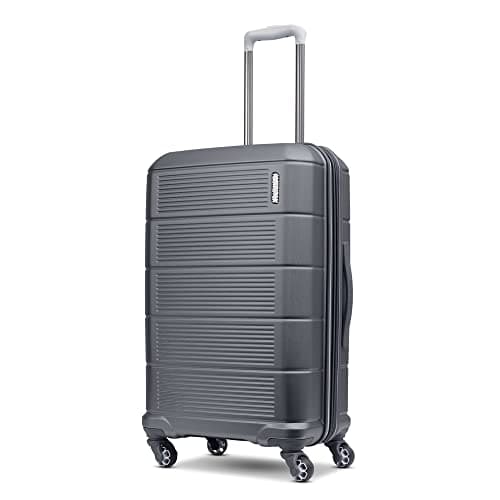
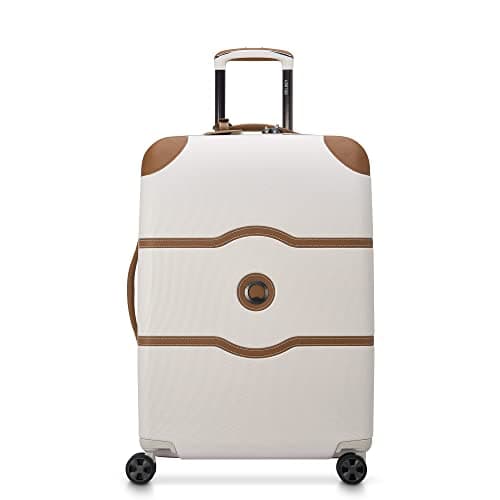
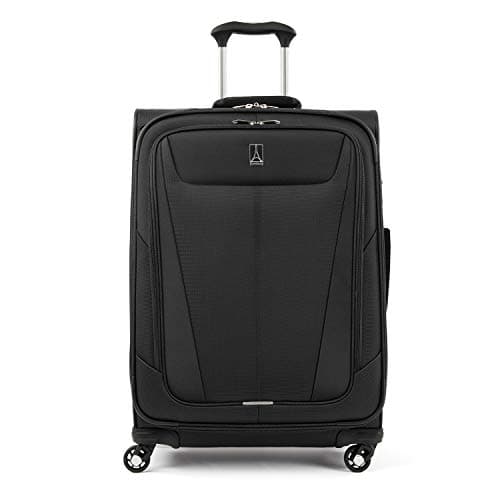
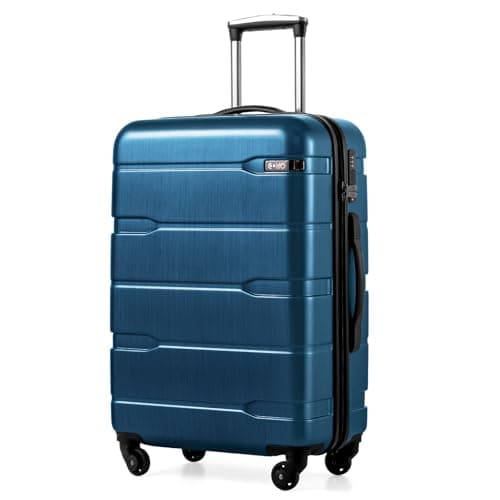
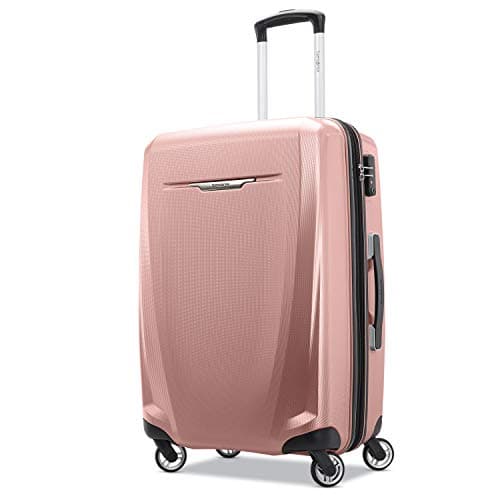
The best 24-inch luggage is the Samsonite Winfield 3 DLX Checked-Medium, and the reason has almost nothing to do with the number on the label. A medium checked case is decided by one piece of arithmetic: 50 lb minus the weight of the empty bag. The Winfield 3 DLX publishes 9.3 lb and a 100% polycarbonate shell with a 10-year limited warranty behind the largest repair network in luggage, so you spend a little under a fifth of your allowance on the bag and the rest on what you are taking. If you want the lightest hardside here instead, the Travelpro Maxlite Air V2 Checked-Medium publishes 76 liters inside 9.4 lb, and if the budget is the binding constraint the American Tourister Stratum 2.0 24-inch is the lightest case on this page at a published 8.75 lb.
This page exists because "buy the biggest case you can afford" is the most expensive advice in luggage. Twenty-eight inches looks like more bag for the money, and it is — but a 28-inch case reaches 50 lb before it is physically full of anything denser than clothing, so the extra volume is volume you are not allowed to use. A 24 to 25-inch case fills up at roughly the weight limit rather than well past it, which is why it is the size most people should check, and why it is the size that comes back from a trip without a counter conversation. Our 28-inch luggage roundup makes the opposite case for the trips that genuinely need the large size, and checked bag size and weight limits has the 50 lb and 62-linear-inch arithmetic in full.
So the ranking below uses four criteria, in this order. Published empty weight, because it is a direct subtraction from what you can pack and because it is the figure most listings bury. Published overall dimensions — height plus width plus depth, wheels and handles included — against the 62-inch (158 cm) oversize threshold, so you know the margin before you expand the case rather than at the desk. Shell and wheels, because a full medium case is a 50 lb load sitting on four small castors. And warranty scope, because wheels and handles are what actually fail on a checked bag and a ten-year number is only worth what it covers.
Dimensions, weights and capacities below are the manufacturer's or retailer's published figures, cited in Sources. We have not measured or lab-tested any of these cases, and where a maker does not publish a figure we say so rather than estimate it. Three picks are products the site has already researched on their own roundups and carry the scores they earned there. See how we test.
The published numbers, side by side
| Case | Published overall (in) | Linear in | Empty weight | Shell |
|---|
| Samsonite Winfield 3 DLX 25" | 27 x 17.25 x 11.4 | 55.65 | 9.3 lb | 100% polycarbonate |
| Samsonite Omni 2 24" | 26.5 x 17.75 x 11 | 55.25 | 9.0 lb | Polycarbonate |
| Travelpro Maxlite Air V2 25" | 27.5 x 17.5 x 11 | 56 | 9.4 lb | 100% polycarbonate |
| Samsonite Omni PC 24" | 26.5 x 17.75 x 11.75 | 56 | 8.34 lb | Micro-diamond polycarbonate |
| American Tourister Stratum 2.0 24" | 27 x 16.6 x 11 | 54.6 | 8.75 lb | Textured ABS |
| Coolife Medium Checked 24" | ~25.4 x 16.1 x 10.4 | ~51.9 | Not published | ABS + polycarbonate blend |
Two things that table makes obvious. Every case here clears 62 linear inches with six to ten inches of margin, so unlike the 28-inch class — where one popular pick publishes over the limit — size is not the risk at this size. And the spread in published empty weight is about a pound, which is a pound of clothing, and the reason the lightest cases rank where they do.
Is a 24-inch suitcase a carry-on?
No. A 24-inch case is a checked bag everywhere, and it is not close. The US domestic cabin template is 22 x 14 x 9 in including wheels and handles, and a 24-inch case publishes an overall height of 26 to 27.5 in — four to five inches over the limit on the single dimension airlines check first. There is no carrier where a 24 goes in an overhead bin. If you want the largest bag you can take into the cabin, that is the carry-on class and our best carry-on luggage roundup ranks it; the exact measurement rules are in what size is a carry-on.
24 inch or 28 inch? The 50 lb test
Decide it with one question: will you fill the bag before you hit the weight limit? Most US carriers cap a standard checked bag at 50 lb and most international economy allowances are 23 kg, which is almost the same number. A 24 to 25-inch case holding folded clothing reaches roughly that limit at roughly the point it is full, which is the definition of the right size. A 28-inch case holds far more volume than 50 lb of clothing occupies, so the extra space can only be used for dense items — and dense items are exactly what put a bag over.
Which means the honest rule is: one person, up to about two weeks — buy the 24 or 25. Two people sharing one bag, a month away, a move, or bulky gear — that is when the 28 earns its place, and our 28-inch roundup is the page for it. Buying a 28 for a solo week is how people end up paying overweight fees on a bag that was not even full.
What about 26-inch luggage?
Twenty-six inches sits between the two classes and behaves like a large medium rather than a small large. It is a sensible size if you are consistently a little short in a 24 and consistently a little over in a 28, and the arithmetic still works: a 26-inch case at around 55 to 58 linear inches stays inside the 62-inch threshold. The warning is the same one as the 28 — more volume than 50 lb occupies means the weight limit, not the bag, becomes your constraint. If you want a 26, the checked luggage roundup covers the size, and lightweight luggage ranks the field on empty weight across every size.
Linear inches: the number nobody checks until the desk
Airlines size a checked bag by linear inches — height plus width plus depth, with wheels and handles counted — against a standard 62-inch (158 cm) limit. Go over and the bag is oversize, which is a fee in its own right and frequently a larger one than overweight. Every case on this page publishes an overall figure between about 51.9 and 56 linear inches, so the whole 24-inch class has comfortable margin — the quiet advantage of this size over the 28-inch class, where published figures run right up to and sometimes past the limit. Two cautions: expansion counts, and two inches of expansion adds two inches of depth to the total; and a protruding external pocket or a bolt-on wheel housing counts too. Full arithmetic in checked bag size and weight limits, and how to measure luggage shows where to put the tape.
Hardside or softside at medium size?
At carry-on size this is a close call. At medium checked size the shell usually wins, for a specific reason: a checked bag is handled by machinery and spends hours out of your sight in a compartment that may be wet, and a molded shell answers both. Buy softside anyway if you routinely need the last-item flex, want external pockets you can reach without opening the case, or travel somewhere a fabric bag's lower weight matters more than its lower protection. Within hardside, polycarbonate over ABS is the single call that matters most — it flexes and returns where ABS cracks, especially in a cold hold — and every pick above names its shell. The full decision is in hardside vs softside luggage and polycarbonate vs ABS vs aluminum.
What a 24-inch case should come with
Four things, in order of how often their absence is regretted. An integrated TSA-approved lock, because a checked case is the one bag you cannot watch and a separate padlock is one more thing to lose. Dual spinner wheels, because eight contact points carry a 50 lb load better than four and steer better in an aisle. A warranty whose scope names wheels, zippers and handles, because those are the parts that actually fail — a ten-year warranty on the shell is a warranty on the part that rarely breaks. And an expander you treat as emergency capacity, not as the bag's normal size. Beyond that, the useful extras are a braked wheel (only Delsey, above) and a published packing dimension so you know what actually fits. The last five dollars are best spent on a luggage tag so the bag is identifiable on a carousel full of black cases.