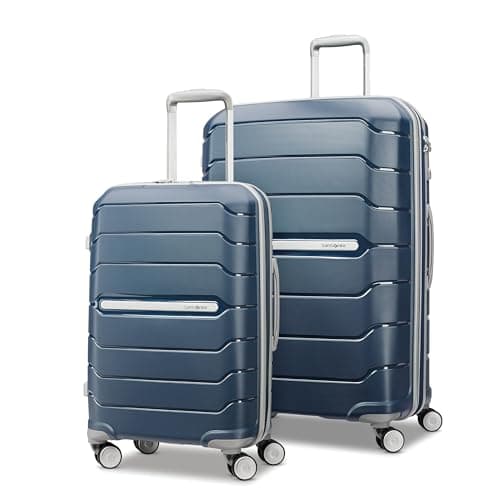
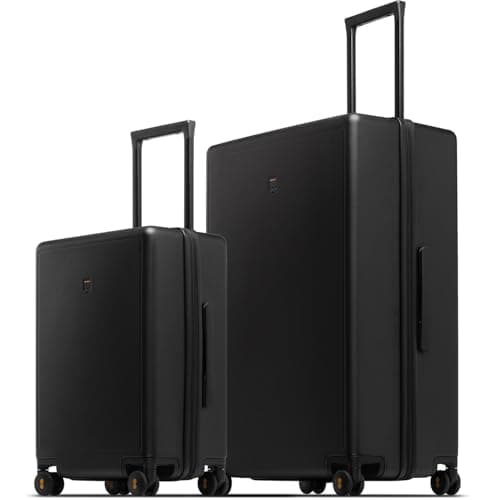
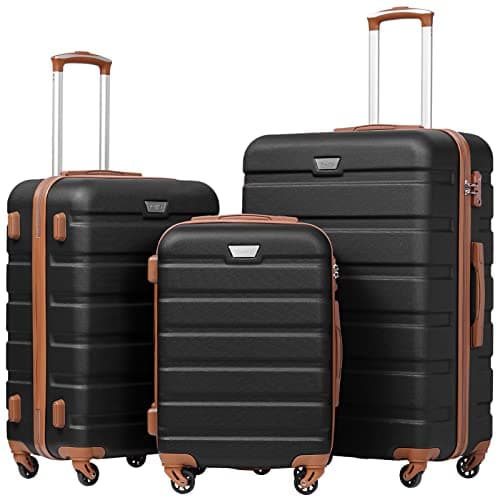
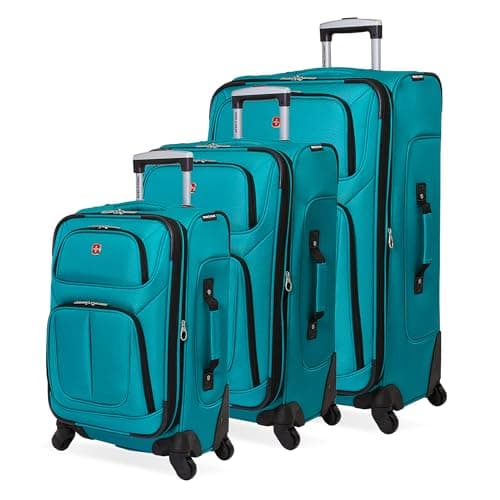
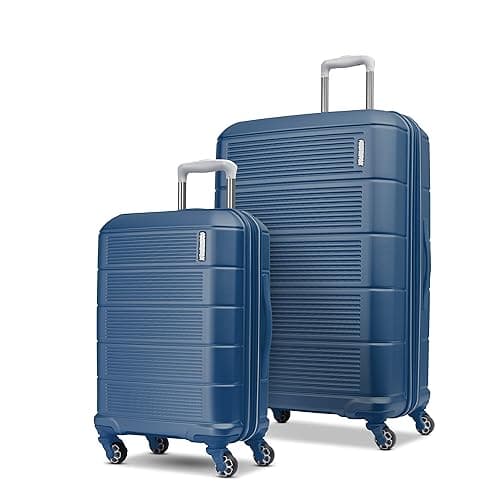
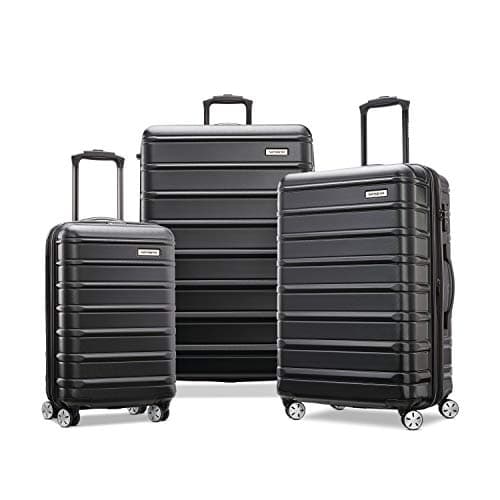
The best luggage set for a couple is the one whose pieces match how two people actually travel, which is not how the sets are sold. A weekend away is two carry-ons. A week is one shared checked bag plus a carry-on each. A long trip is two checked bags and the carry-ons for the essentials. So the useful set for two people is a carry-on and a medium or large checked case at minimum, with a third piece only if it is a size you will use - and never a 30-inch case, which two people packing together will push past 50 lb before it is half full.
That is why this page ranks sets on how the pieces divide between two travelers, whether the checked case stays liftable and under the weight limit when two people fill it, and whether the whole set nests into one closet footprint for the eleven months a year it is not in use. Matching finishes matter less than you would think - you will spot your own bags on a carousel by shape - but a consistent handle height and wheel behavior across the pieces matter more, because whoever is towing two cases wants them to move the same way.
Every set here is one the site has already researched on its own roundup, and the scores are the ones it earned there; we re-wrote the verdicts for two travelers. Specifications are the manufacturer's published figures and we have not lab-tested any of them - see how we test. If you are buying a set as a gift for a couple, the wedding luggage gift guide ranks the same field for a gifter; the main luggage set roundup ranks it for one traveler.
How two people should split a set
The formula that works: each traveler owns a carry-on outright, and the checked cases are shared. For a weekend, two carry-ons and nothing checked. For a week, one medium checked case packed together plus both carry-ons - clothes in the medium, everything you cannot afford to lose in the cabin bags. For two weeks or more, two checked cases. Note that a three-piece set gives you one carry-on, so a couple who both carry on regularly should buy a two-piece set and a second carry-on from the carry-on roundup rather than a set with a piece they will never use.
The shared checked bag and the 50 lb limit
Two people packing one case is the most reliable way to pay an overweight fee. A 28-inch case will take two people's clothes and shoes and hit 50 lb long before it is full; a 24- or 25-inch medium is the size where the space runs out at about the same time as the weight allowance, which is what you want. This is why the Stratum 2.0 and Omni 2 sets score well here despite not having the biggest cases. Weigh the packed bag at home, and read the checked bag limits guide for the arithmetic.
Nesting and the closet test
A set spends most of its life stored. Matched sets from the same line nest - the carry-on inside the medium inside the large - which is the difference between one closet footprint and three. Check that the pieces you are buying actually nest (two-piece sets with a 20 and a 28 do; a 21 and a 24 may not) and that the nested set fits where you intend to keep it.
Hardside or softside for a couple?
Hardside if your luggage mostly flies and you want wipe-clean protection; softside if it rides in a car as often as a plane, because fabric squashes into a trunk in a way a shell does not. A mixed approach - hardside checked case, softside carry-ons with outside pockets - is what many couples end up with, and there is nothing wrong with buying the pieces separately. Our hardside vs softside guide covers the trade-offs.
Four-piece sets and the tote question
Sets that add a tote or a toiletry case as the fourth piece are useful only if the extra piece is one you would have bought anyway. For a couple, a matching tote is often the second personal item - genuinely useful - while a hard toiletry case rarely is. The 4-piece set roundup ranks those bundles on whether the extras earn their place.
How we picked
We did not lab-test these bags
Everyone in this category says they tested twenty suitcases. We have not lab-tested any of these, and we say so. What we did instead: compiled each bag's published specifications, checked its dimensions against the airline sizers, ran the cost-per-trip and weight-to-capacity math, read the aggregated owner reviews, and scored every pick against a published rubric. The scores are judgments from documented research — not measurements we took, because we do not have a lab and we will not pretend we do. Where a number came from someone else's work, we name them in Sources.