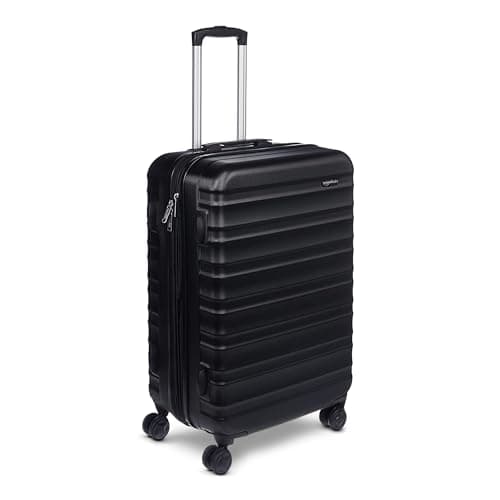
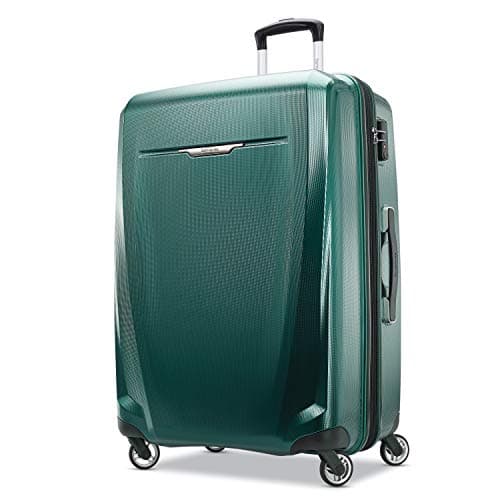
Checked luggage is judged by two numbers you do not control and one you do. The airline sets 62 linear inches (height plus width plus depth, wheels included) and 50 lb on most economy fares. What you control is how much of that 50 lb the empty case consumes — and the spread between a light and a heavy checked bag is roughly three pounds of clothing.
So we ranked on empty weight first, then shell material, then wheels. Shell matters more on a checked bag than a carry-on because this is the bag that gets thrown, stacked and driven over: a polycarbonate shell flexes and recovers, while ABS cracks, particularly in a cold hold. Wheels matter because a fully loaded large case puts far more strain on four small casters than a carry-on ever does.
Before buying, it is worth two minutes on our checked bag size and weight limits guide — particularly the part explaining why the biggest suitcase on the shelf is usually the wrong purchase. If you already know you want a medium, the best 24-inch luggage roundup ranks that size on its own, published weight by published weight, and best 28-inch luggage does the same for the large class.
Buy a medium, not a large
This is the most useful advice on the page and it goes against instinct. A 28-inch case is legal at roughly 62 linear inches, but clothes are light and bulky, so people fill the extra volume with heavy things and blow through the 50 lb limit with space to spare. A 25- or 26-inch medium is far easier to keep legal, lighter empty, and easier to lift into a car. If you genuinely need more capacity, two mediums beat one large — you stay under both limits and can leave one home.
Shell material matters more here than on a carry-on
A carry-on lives in a cabin. A checked bag is thrown, stacked under other bags, and spends hours in a cold hold where brittle plastics get more brittle. Polycarbonate flexes and springs back; ABS is the material that cracks. Where a pick uses a blend, we say so. Our materials guide covers the full comparison.
Wheels carry far more load
Four casters supporting 50 lb is a fundamentally different job from supporting a 20 lb carry-on, which is why wheels are the most common checked-bag failure. Prefer paired casters over single ones, and prefer brands that sell replacements — our wheel replacement guide explains what is fixable and what is not.
Flying long-haul changes the ranking - the 23 kg limit is weighed every time and the bag has to survive trains and cobbles. Our best luggage for international travel page reranks the checked cases for that, and the 28-inch luggage roundup covers the large cases with their published linear inches.
Whichever case you check, put a Bluetooth tracker in an interior pocket before it goes on the belt. The FAA allows the tag-style ones in checked bags, and on the Find My network the airline can be sent a live link to the bag - our best luggage trackers roundup ranks the AirTag, Chipolo, Pebblebee, Samsung and Tile tags by the network behind each.
Buying for a student changes the answer again, and in a direction this page does not cover. A checked bag that spends nine months of the year in a dorm closet has to be judged on where it lives as much as on how it flies, which pushes the right size down to a 24-inch medium and makes an integrated lock a real requirement - our best luggage for college students roundup reranks the field on storage footprint, move-in haul and four-year durability.
What we would actually buy
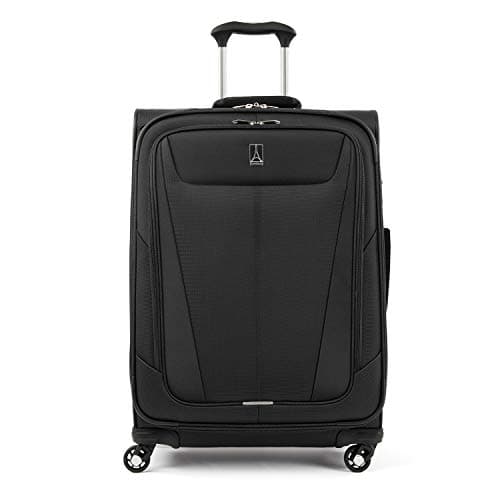
The Samsonite Winfield 3 DLX 28-inch if you want one hardside case to stop thinking about. The Travelpro Maxlite 5 medium if you have ever paid an overweight fee, because it hands you back the most clothing weight. The Amazon Basics 26-inch if the budget is firm — and buy the medium, not a large.
How we picked
We did not lab-test these bags
Everyone in this category says they tested twenty suitcases. We have not lab-tested any of these, and we say so. What we did instead: compiled each bag's published specifications, checked its dimensions against the airline sizers, ran the cost-per-trip and weight-to-capacity math, read the aggregated owner reviews, and scored every pick against a published rubric. The scores are judgments from documented research — not measurements we took, because we do not have a lab and we will not pretend we do. Where a number came from someone else's work, we name them in Sources.