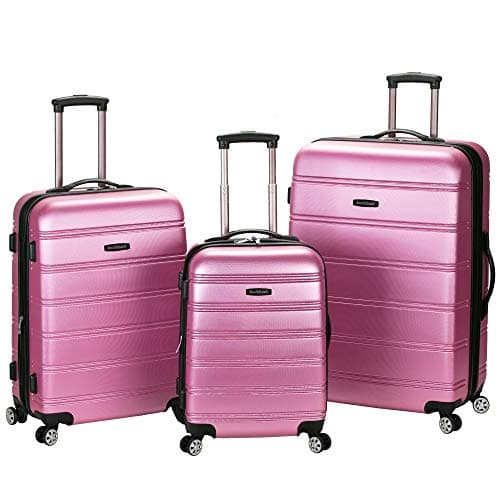
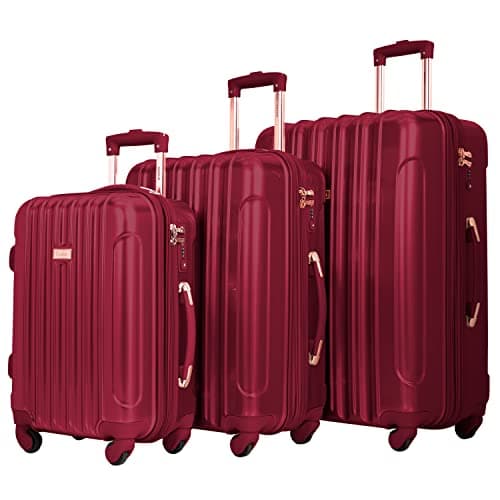
Almost every "luggage for women" listing is a standard case in a different color, and some of them carry a premium for it. That does not make the category meaningless — there are two design details that genuinely matter more to shorter travelers and to anyone who does not want to fight a 12 lb empty suitcase — but the details are measurable, and colorway is not one of them.
The two that count. First, empty weight per piece: a checked bag that weighs 11 lb before you pack it spends a quarter of a 50 lb allowance on itself, and you feel every pound of it lifting the case into a trunk. Second, handle height and stop positions: a telescoping handle with several locking stops lets a 5'3" traveler tow at a natural arm angle instead of a shrug. Everything else — the finish, the lining, the color — is taste, and taste is a perfectly good reason to choose one over another once the numbers match.
If you are buying for a household rather than one person, the main luggage sets roundup covers the field, and two-piece sets explain why three pieces is often one more than anyone needs.
Empty weight is the number that matters
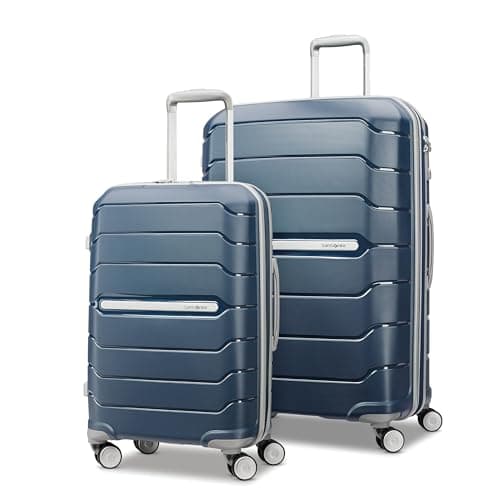
A 28-inch checked case can weigh anywhere from 8 lb to 12 lb before anything goes in it. Against a 50 lb airline allowance that spread is four pounds of clothes — and it is four pounds you lift into a car trunk, up a stairwell and onto a scale every single trip. It is the most consistent difference between a set you enjoy owning and one you resent, and it is the reason the Travelpro and Samsonite Freeform sets rank where they do despite plainer looks. Our lightweight sets roundup goes deeper on the arithmetic.
Handle height, and why nobody lists it
Telescoping handles typically lock at two or three heights, and manufacturers rarely publish the stop positions. The practical rule: a handle you tow at a natural arm angle keeps the case tracking straight behind you; a handle that is too tall forces your elbow up and makes a spinner wander. Shorter travelers are better served by cases with more stop positions, and by two-wheel uprights, which are pushed at an angle rather than pushed upright. Our spinner vs 2-wheel guide covers that difference in full.
Do not pay a premium for a color
The one genuinely useful thing a distinctive colorway buys you is recognition at the carousel — black cases all look identical at 40 mph. That is worth something, but it is worth the price of a luggage tag or a strap, not a price step. If two sets are close, choose the color you like. If one is meaningfully more expensive because of the color, buy the cheaper case and a bright tag.
Hardside or softside for this buyer
The trade is the same as always: molded shells protect fragile contents and look better; fabric shells are lighter, absorb overpacking, and have external pockets you can reach in a queue. For this list, the honest split is that the fashion-led sets are all hardside because a molded shell is the only surface that holds a finish, while the lightest sets are soft. Read our hardside vs softside guide before you let the styling decide it for you.
What we would buy
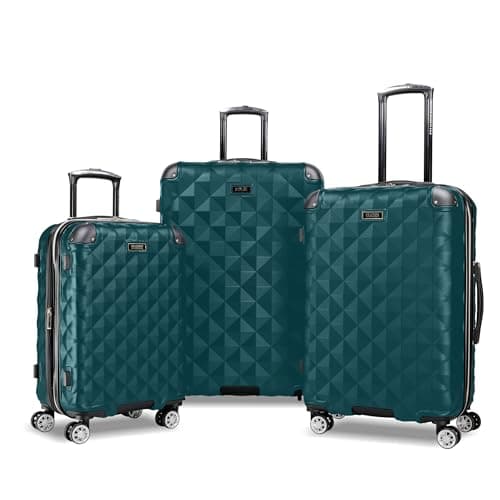
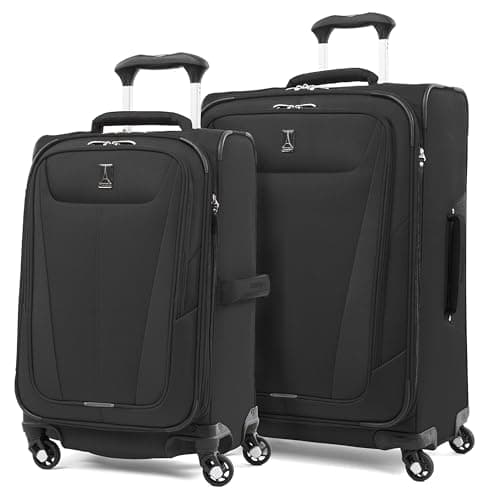
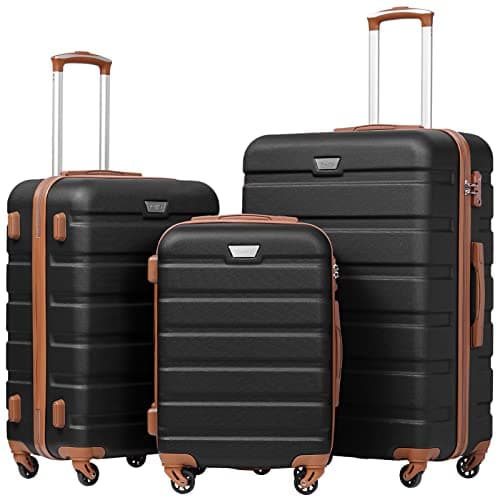
The kensie Alma if you want the look and full three-size coverage, and the Travelpro Maxlite 5 two-piece if you would rather never think about the weight again. On a tight budget, the Coolife three-piece is the sensible floor — and if you want to understand what you are giving up at that price, we wrote a full review of it.
The counterpart to this page is best luggage sets for men, which ranks the same category on different criteria - handle height, whether the large piece clears the 62-linear-inch checked limit, and whether the shell texture hides handling marks - so the order comes out differently. Worth reading if you are buying for two people at once.
How we picked
We did not lab-test these bags
Everyone in this category says they tested twenty suitcases. We have not lab-tested any of these, and we say so. What we did instead: compiled each bag's published specifications, checked its dimensions against the airline sizers, ran the cost-per-trip and weight-to-capacity math, read the aggregated owner reviews, and scored every pick against a published rubric. The scores are judgments from documented research — not measurements we took, because we do not have a lab and we will not pretend we do. Where a number came from someone else's work, we name them in Sources.