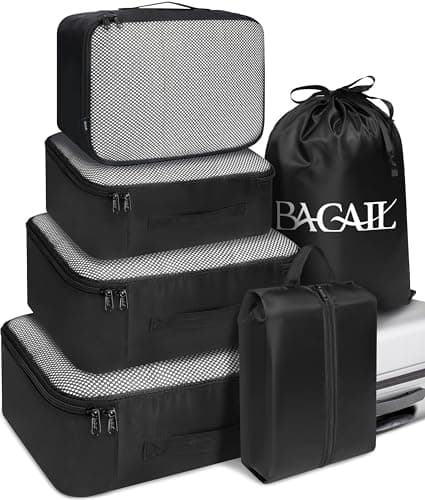
Let's start with the honest claim, because most packing-cube marketing overstates it. Standard packing cubes do not create space — they organize it. Putting clothes in a cube does not make them smaller; what it does is stop your bag becoming a single churned mass, so you can find a shirt without unpacking everything, and repack in two minutes instead of fifteen.
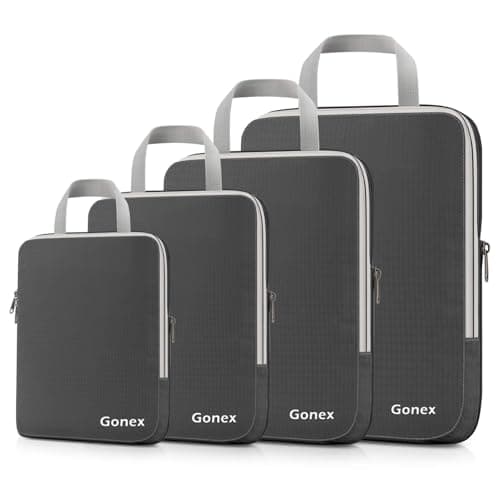
Compression cubes are different. They have a second zipper that squeezes air out of the bundle, and those genuinely do reduce volume — particularly with bulky, air-heavy items like knitwear, fleeces and jackets. With dense items such as jeans there is little air to remove, so the gain is small. Knowing which of those two products you are buying is the whole decision.
Cubes pair naturally with a strictly-sized cabin bag, so if you are here to fit more into a carry-on, read our packing guide alongside this — technique and cubes together do far more than cubes alone.
The place cubes earn their money fastest is around footwear - see how to pack shoes in a suitcase for the sole-to-sole, wheel-well method they support.
Do packing cubes actually save space?
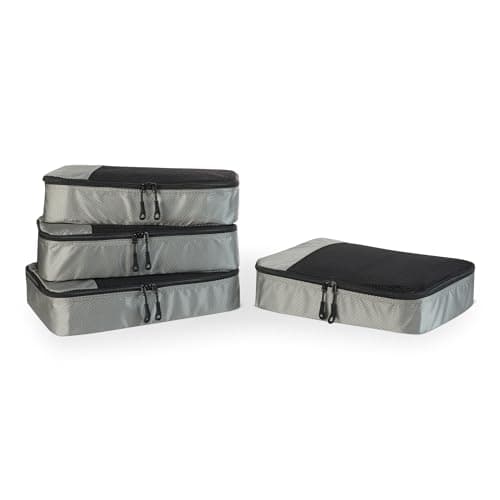
Standard cubes, essentially no. Clothes occupy the same volume inside a cube as outside it — the benefit is that the volume becomes rectangular and stackable rather than an amorphous heap, which uses the corners of a suitcase better and stops everything shifting in transit. Anyone claiming plain cubes double your capacity is selling something.
Compression cubes are the exception and the difference is physical: the second zipper forces air out of the bundle. That matters enormously for fleece, knitwear and puffer jackets, which are mostly air, and hardly at all for jeans, which are not. Buy compression for winter and bulky trips; buy standard cubes for organization.
What to look for
- Stitching at the corners. This is where cheap cubes fail — look for double stitching or bar tacks.
- Zipper quality. The zipper is the only moving part; a cheap one splits under a full cube.
- Mesh versus solid tops. Mesh lets you identify contents without unzipping and helps clothes breathe; solid tops protect better from dust.
- Sizes that suit your bag. Large cubes are useless if they do not lie flat in a carry-on — check the dimensions against your case, not against another cube set.
- Weight. Cubes count toward your allowance. On a weight-capped international flight, a heavy set costs you clothing.
How to actually use them
One cube per category, not one per day — tops, bottoms, underwear and socks, then a spare for laundry. Roll rather than fold inside the cube to reduce hard crease lines. Put the heaviest cube nearest the wheels so the bag stands up rather than tipping. And keep one empty cube for dirty clothes, which is the single most useful habit here. Full technique in our how to pack a carry-on guide.
What we would actually buy
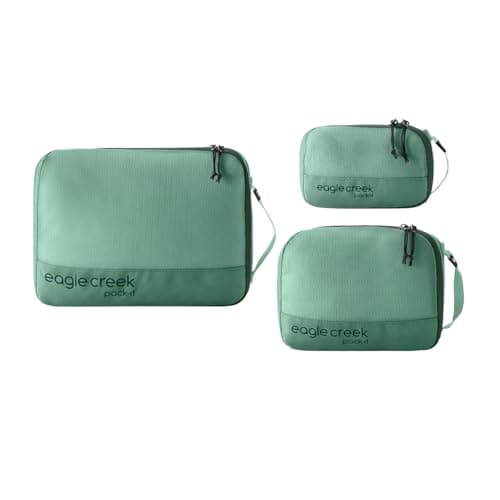
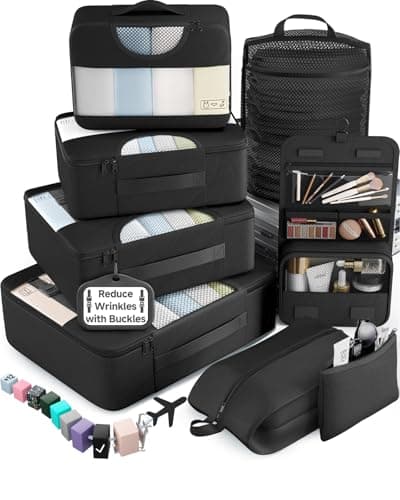
The BAGAIL six-piece set for almost everyone — it does the organizing job properly for very little. Add the Gonex compression set if you travel in winter or with bulky clothing, and buy Eagle Creek only if you travel constantly and want the last set you will need.
One thing worth settling before you buy any of these: plain cubes and compression cubes solve different problems, and only one of them actually frees space. Our do packing cubes save space guide works through the mechanism - plain cubes add fabric and corner voids and win on time, compression cubes expel the air between layers of soft clothing and win on volume - plus the weight problem the freed space creates on a checked bag.
How we picked
We did not lab-test these bags
Everyone in this category says they tested twenty suitcases. We have not lab-tested any of these, and we say so. What we did instead: compiled each bag's published specifications, checked its dimensions against the airline sizers, ran the cost-per-trip and weight-to-capacity math, read the aggregated owner reviews, and scored every pick against a published rubric. The scores are judgments from documented research — not measurements we took, because we do not have a lab and we will not pretend we do. Where a number came from someone else's work, we name them in Sources.