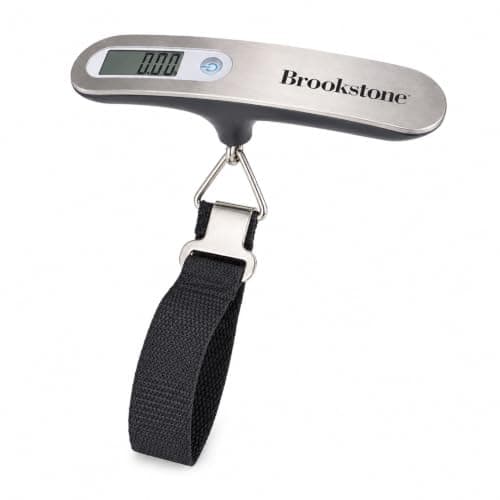
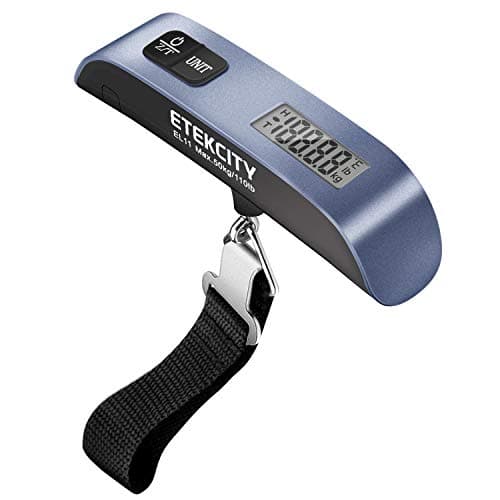
A luggage scale is the highest return-on-investment purchase in travel. Overweight-bag fees on US carriers commonly run several times the price of every scale on this page, and the fee applies to a bag that is one pound over just as much as one that is ten. Weighing at home takes thirty seconds and removes the entire category of problem.
These devices are simple and largely similar, so we ranked them on the three things that actually differ: stated capacity (a 110 lb limit covers any checked bag; a 50 lb one does not), how the reading holds (a scale that locks the number lets you set the bag down before you read it), and how easy the strap is to attach to a handle you are already struggling with.
Before you weigh anything, know the number you are weighing against — our checked bag size and weight limits guide has the current allowances by carrier, and international carry-on size covers the cabin-bag weight caps that catch people flying outside the US.
The numbers you are weighing against
Standard checked allowances on most US carriers sit at 50 lb (23 kg) in economy, with overweight fees starting immediately above it and stepping up sharply past 70 lb. Many international carriers use 23 kg for the same reason. Cabin baggage is where people get caught outside the US: a number of European and Asian airlines cap carry-on bags at 7 to 10 kg including the bag itself, which a 12 lb hardside case eats a large share of before you pack. The current figures by carrier are in our checked bag limits guide and international carry-on guide.
Buy 110 lb capacity, not 50
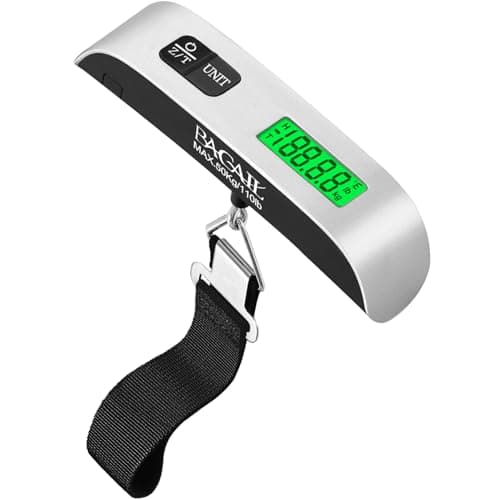
The most common specification mistake. A 50 lb scale cannot tell you how far over 50 lb you are — it just fails — and the whole point is to know how much to move into your carry-on. Every scale we would recommend states a 110 lb (50 kg) capacity, and it costs nothing extra.
How to weigh a bag properly
- Attach the strap to the suitcase's top handle, not a side handle, so the load is even.
- Lift the bag clear of the floor and hold it steady for a few seconds.
- Wait for the reading to lock, then set the bag down and read it.
- Weigh twice. If the two numbers differ by more than a pound, your lift was unsteady, not the scale.
Do not lift a heavy case with your back at an angle to read a display — that is why the locking readout on every pick above matters, and why a handheld grip is worth something on a 48 lb bag.
Accuracy, and how to check yours
These are consumer strain-gauge devices, and typical stated accuracy is within a fraction of a pound — more than enough when the decision is "48 or 52." If you want to verify yours, weigh an object of known weight (a sealed bag of flour, a dumbbell) and compare. If it reads consistently high or low by a fixed amount, it is still perfectly usable — just apply the offset. Airport scales are legally required to be certified and yours is not, so leave yourself a pound or two of margin rather than aiming for exactly 50.
Pack for the limit, not to it
The real fix is not weighing at the end, it is not building an overweight bag in the first place. A lighter empty case gives you more of the allowance to spend — our lightweight sets roundupcovers how much that varies — and compression cubes reduce volume rather than weight, which helps with sizers but not with scales. If you are consistently over, the answer is a lighter suitcase or fewer shoes, not a better scale.
The other small device worth leaving in a checked case permanently is a Bluetooth tracker — the FAA allows the coin-cell tags in checked bags, and our best luggage trackers roundup ranks them on the finding network behind each one, which is the spec that actually matters.
What we would buy
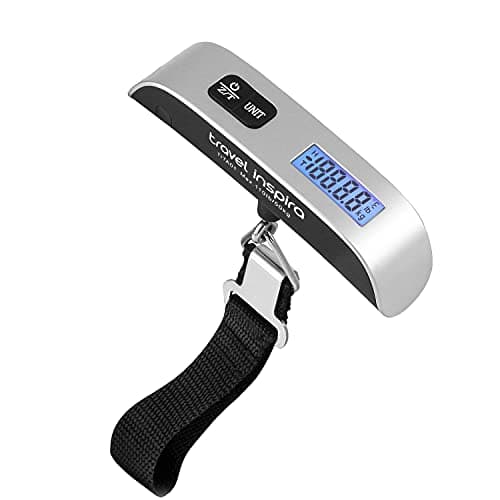
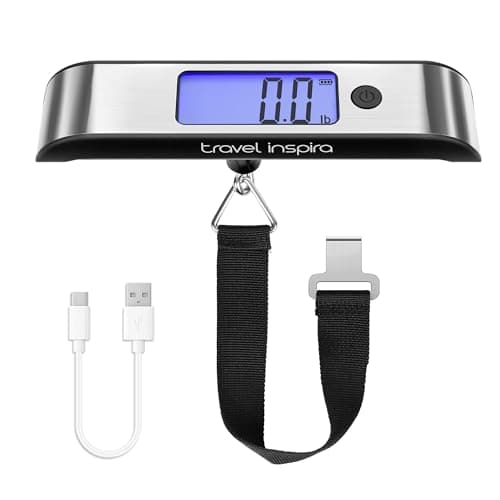
The Etekcity. It has the right capacity, a locking backlit display, and it costs so little that leaving one permanently in each suitcase is a reasonable thing to do. Upgrade to the rechargeable travel inspira if you fly often enough to be annoyed by a dead battery on a departure morning.
How we picked
We did not lab-test these bags
Everyone in this category says they tested twenty suitcases. We have not lab-tested any of these, and we say so. What we did instead: compiled each bag's published specifications, checked its dimensions against the airline sizers, ran the cost-per-trip and weight-to-capacity math, read the aggregated owner reviews, and scored every pick against a published rubric. The scores are judgments from documented research — not measurements we took, because we do not have a lab and we will not pretend we do. Where a number came from someone else's work, we name them in Sources.