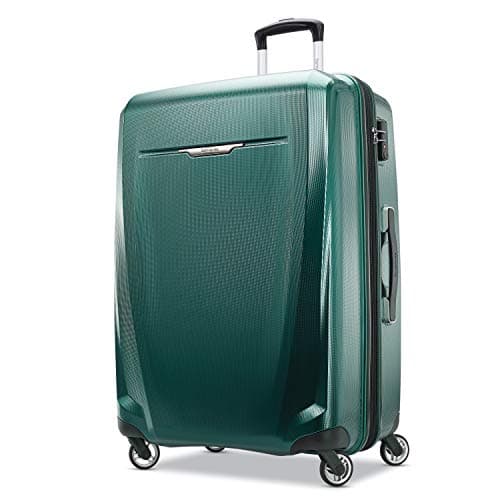
The best 28-inch luggage is the case that is actually legal to check and still leaves you most of your allowance. "28 inch" describes the height of the body; the airline measures height plus width plus depth, wheels and handles included, against a 62-linear-inch (158 cm) limit - and a 28-inch case can total 60 inches or 64 depending on how deep and wide it is, which is the difference between a normal bag and an oversize fee. So this page ranks large cases on published overall dimensions first, empty weight second, because a 28-inch case at 11 lb empty leaves 39 lb of clothes on a 50 lb allowance, and shell and wheels third, because a full 28-inch case is the heaviest thing the wheels will ever carry.
Be honest about whether you need this size. A 28-inch case is right for a family sharing one checked bag, a month away, a move, or a long trip with bulky gear. It is wrong for one person for a week - a 25-inch medium does that trip, weighs less, is liftable when full, and does not tempt you past 50 lb. Our trip-length sizing guide and the checked luggage roundup (which covers the mediums) are the pages to read if you are not sure.
Every case here is one the site has already researched on its own roundup, with the scores it earned there; dimensions and weights are the manufacturer's published figures, and where a maker publishes a number that is over the limit we say so rather than round it. We have not measured or lab-tested any of these - see how we test.
The short answer
Quick picks
| # | Product | Best for | Score | Price |
|---|
| 01 | Samsonite Winfield 3 DLX 28-Inch Checked SpinnerThe 28-inch case to beat. A full polycarbonate shell that flexes and springs back through baggage handling, a built-in TSA lock, dual spinner wheels that steer a heavy load, and Samsonite's 10-year limited warranty with the largest repair network in luggage - sized to the 62-linear-inch limit rather than over it. The catch every 28-inch case carries: it is heavy enough that filling it usually means breaking 50 lb, so weigh it before you leave. | Best 28-inch luggage overall | | $197.93·Amazon |
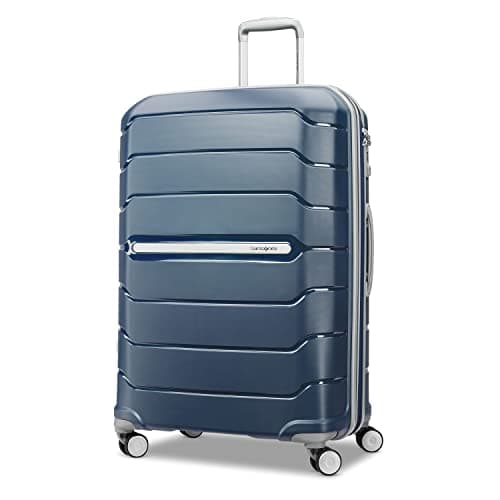
| 02 | Samsonite Freeform 28-Inch Large Hardside SpinnerThe lightest big hard shell in the mainstream market, and at 28 inches - where most shells get heavy fast - that is the size where it matters most. Freeform's whole brief is a large checked hardside that does not eat the allowance before you pack, with dual spinners, a built-in TSA lock and Samsonite's service network behind it. Light shells flex more under a full load, and a case this size is very easy to fill past 50 lb. | Best lightweight 28-inch luggage | | $189.99·Amazon |
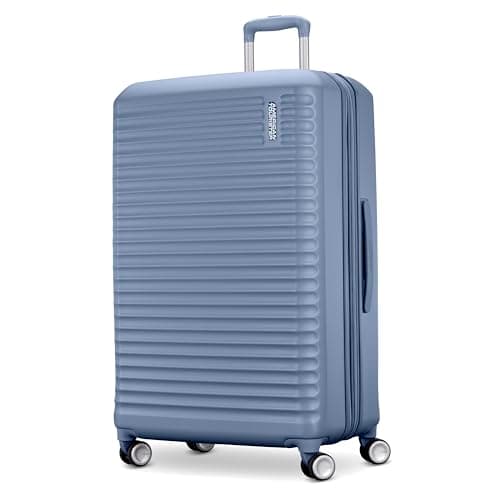
| 03 | American Tourister Stratum 3.0 Large 28-Inch SpinnerA lot of case for the money, and the one pick here we have to flag on size. American Tourister publishes 10.98 lb empty, a 1.5-inch expansion and a RightHeight adjustable handle - and overall dimensions of 32.5 x 18.5 x 12.5 inches, which add up to 63.5 linear inches, over the 62-inch standard before expansion. Airlines rarely measure a checked bag with a tape and usually check by eye, but the published number is what it is, and we would not buy this for a carrier that enforces size strictly. | Best value 28-inch luggage (with a size caveat) | | $121.99·Amazon |
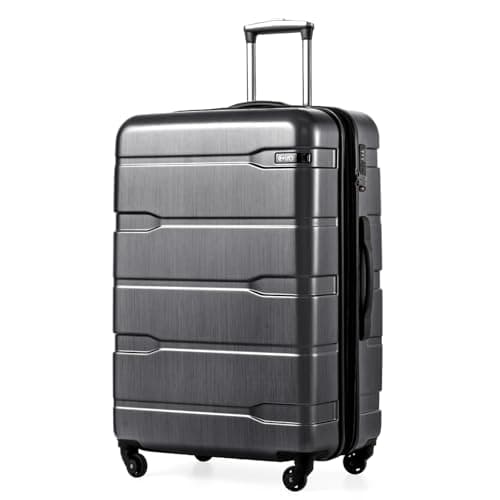
| 04 | Coolife 28-Inch Large Checked Hardside SuitcaseThe most 28-inch volume for the least money. A large hardside spinner with a TSA-style lock and a blended ABS+PC shell that is tougher than pure ABS, at a fraction of the branded price - genuinely useful if you need a big case once a year for a move or a long trip and cannot justify the Samsonite. The wheels are the weak point under a full 50 lb load, and the warranty support is limited. | Best budget 28-inch luggage | | $89.98·Amazon |
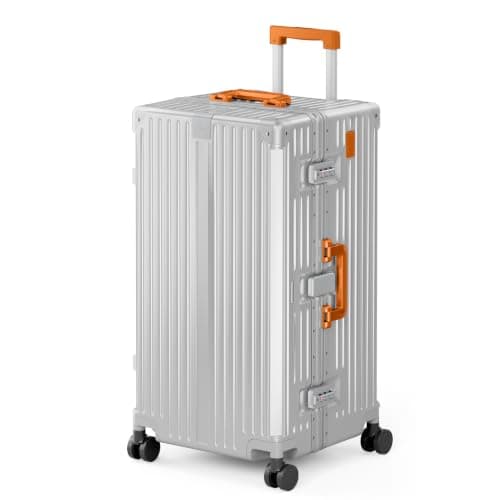
| 05 | ALPHA CAMP 28-Inch Aluminum-Frame Zipperless Trunk CaseThe 28-inch case for people who have had a zipper burst on a full checked bag. An aluminum frame with a latch closure on a trunk-style body - the strongest use case for zipperless, because a checked bag spends its life out of your sight in a baggage system, which is exactly where a latch beats a zipper. Heavy before you pack it, large enough to overpack past the airline limit, and from a brand with little history behind the warranty. | Best zipperless 28-inch luggage | | $199.99·Amazon |
#ad · Live prices from the Amazon Product API, as of Sep 17, 2026. Where we have no verified live price, we show none — a gap beats a number that has rotted.
In detail
The picks, in full
Best 28-inch luggage overall
Samsonite Winfield 3 DLX 28-Inch Checked Spinner
28-inch casePolycarbonateDual spinners10-yr limited warranty
The 28-inch case to beat. A full polycarbonate shell that flexes and springs back through baggage handling, a built-in TSA lock, dual spinner wheels that steer a heavy load, and Samsonite's 10-year limited warranty with the largest repair network in luggage - sized to the 62-linear-inch limit rather than over it. The catch every 28-inch case carries: it is heavy enough that filling it usually means breaking 50 lb, so weigh it before you leave.
- Weight
- 7
- Shell
- 9
- Wheels
- 8
- Warranty
- 9
- Value
- 8
Pros
- +Full polycarbonate shell survives hold handling far better than ABS
- +Sized to the 62-linear-inch limit rather than over it
- +Built-in TSA lock and dual spinner wheels
- +10-year limited warranty with a large repair network
Cons
- −Heavy enough that filling it usually means breaking 50 lb
- −Gloss shell shows every scuff from the first trip
Don't buy this if…
…you pack heavy items - at this volume you will hit the weight limit long before the case is full, and a 25-inch medium is the right size for you.
Why it wins at this size specifically: the shell. A large molded panel flexes more than a small one, and full polycarbonate is the material that flexes without cracking. The gloss finish shows every scuff from the first trip. Full review on the checked luggage roundup.
Best lightweight 28-inch luggage
Samsonite Freeform 28-Inch Large Hardside Spinner
28 in large checkedHardside shellDual spinner wheelsTSA lock
The lightest big hard shell in the mainstream market, and at 28 inches - where most shells get heavy fast - that is the size where it matters most. Freeform's whole brief is a large checked hardside that does not eat the allowance before you pack, with dual spinners, a built-in TSA lock and Samsonite's service network behind it. Light shells flex more under a full load, and a case this size is very easy to fill past 50 lb.
- Empty weight
- 9
- Capacity
- 10
- Build
- 8
- Wheels
- 9
- Value
- 9
Pros
- +Unusually light for a 28-inch hard shell
- +Dual spinner wheels steer a heavy load better than singles
- +Built-in TSA lock, so no dangling padlock to be cut off
- +Samsonite's service network is the widest available
Cons
- −A 28-inch case is very easy to fill past 50 lb - weigh it before you leave
- −Light shells flex more than heavy ones under a full load
Don't buy this if…
…you have any history of overweight fees - a bag this size invites them regardless of how light it starts.
The pick when the weight allowance is the binding constraint, which for a 28-inch case is almost always. On a 23 kg international limit, a couple of pounds of shell is a couple of pounds of clothes. Ranked on empty weight against every size on the lightweight luggage roundup.
Best value 28-inch luggage (with a size caveat)
American Tourister Stratum 3.0 Large 28-Inch Spinner
10.98 lb32.5 x 18.5 x 12.5 inExpands 1.5 inDual spinner wheels
A lot of case for the money, and the one pick here we have to flag on size. American Tourister publishes 10.98 lb empty, a 1.5-inch expansion and a RightHeight adjustable handle - and overall dimensions of 32.5 x 18.5 x 12.5 inches, which add up to 63.5 linear inches, over the 62-inch standard before expansion. Airlines rarely measure a checked bag with a tape and usually check by eye, but the published number is what it is, and we would not buy this for a carrier that enforces size strictly.
- Shell
- 7
- Weight
- 6
- Capacity
- 10
- Wheels
- 8
- Value
- 9
Pros
- +Enormous packing volume for the price — 27.5 x 18.5 x 12.5 in internally
- +Under 11 lb empty, which is competitive for a 28-inch molded case
- +Expansion gusset adds 1.5 in for the return leg
- +Same RightHeight handle system as the carry-on
Cons
- −A 28-inch body makes the 50 lb airline weight limit easy to breach before the case is full
- −The bigger the molded panel, the more it flexes — this is a value shell, not a rigid one
Don't buy this if…
…you fly a carrier known for measuring checked bags, or you weigh bags at the airport rather than at home - a 25-inch case is the safer size for most trips.
Ranked third because the value is real and the size problem is a published fact rather than a guess; buyers should decide with both in front of them. The big molded panels flex - this is a value shell, not a rigid one. The rest of the range is on the American Tourister roundup, and the linear-inch arithmetic is on our checked bag limits guide.
Best budget 28-inch luggage
Coolife 28-Inch Large Checked Hardside Suitcase
28-inch caseABS+PC shellSpinner wheelsTSA lock
The most 28-inch volume for the least money. A large hardside spinner with a TSA-style lock and a blended ABS+PC shell that is tougher than pure ABS, at a fraction of the branded price - genuinely useful if you need a big case once a year for a move or a long trip and cannot justify the Samsonite. The wheels are the weak point under a full 50 lb load, and the warranty support is limited.
- Weight
- 6
- Shell
- 6
- Wheels
- 5
- Warranty
- 5
- Value
- 9
Pros
- +Large capacity at a fraction of the branded price
- +Blended ABS+PC shell is tougher than pure ABS
- +Spinner wheels and a TSA-style lock included
Cons
- −Blend still falls short of full polycarbonate in a cold hold
- −Wheels are the weak point under a full 50 lb load
- −Limited warranty support
Don't buy this if…
…you check bags monthly - the wheels will not survive that duty cycle, and a wheel failure on a full 28-inch case is a bag you cannot move.
The honest budget pick: right for occasional use, wrong for frequent checking. A blended shell still falls short of full polycarbonate in a cold hold. Ranked against the other value cases on the checked luggage roundup.
Best zipperless 28-inch luggage
ALPHA CAMP 28-Inch Aluminum-Frame Zipperless Trunk Case
28-inch checkedAluminum frameLatch closureSpinner wheels
The 28-inch case for people who have had a zipper burst on a full checked bag. An aluminum frame with a latch closure on a trunk-style body - the strongest use case for zipperless, because a checked bag spends its life out of your sight in a baggage system, which is exactly where a latch beats a zipper. Heavy before you pack it, large enough to overpack past the airline limit, and from a brand with little history behind the warranty.
- Build
- 7
- Security
- 9
- Weight
- 4
- Wheels
- 7
- Value
- 8
Pros
- +Latch closure on the bag that actually leaves your sight — the strongest use case for zipperless
- +Trunk-style opening splits the case evenly rather than into a lid and a base
- +Aluminum frame stiffens the seam, which is where large cases fail
Cons
- −Heavy before you pack it — a real problem against the 50 lb checked limit
- −28 inches invites overpacking and overweight fees
- −Little brand history behind the warranty
Don't buy this if…
…you pack heavy - the empty weight of a 28-inch frame case eats a serious share of your 50 lb allowance.
A different answer to the same size question: the closure rather than the shell. How a latch case works, and where it is worse than a zipper, is on the zipperless luggage guide; the metal field is on the aluminum luggage roundup.
Linear inches: the number a 28-inch case lives by
Measure the three external dimensions at their widest points - wheels and handles included - and add them. A case at 30 x 20 x 12 inches is 62 linear inches and legal; at 32.5 x 18.5 x 12.5 it is 63.5 and over. Most 28-inch cases publish a total between 60 and 63, which is why this page lists the published figures rather than trusting the label. Expanding the case adds depth and can push a compliant bag over the line, so fly with the expansion closed unless you have measured it open. The full arithmetic is on our checked bag size and weight guide, and how to measure luggage shows where to put the tape.
Empty weight is the second number
A 28-inch hardside weighs roughly 9 to 12 lb empty; a lightweight one closer to 9, a frame case or budget molded case closer to 12. On a 50 lb allowance that is between a fifth and a quarter of your budget gone before anything goes in, and the volume of a 28-inch case is enough to fill the rest with clothes and shoes before the case is full. Weigh the packed bag at home with a luggage scale; the counter scale is the only opinion that counts, so build in a two-pound margin.
Who a 28-inch case is actually for
Two people sharing one checked bag on a trip of a week or more. One person for a month. A family with a child's clothes in the same case. A move, a semester abroad, a trip with bulky gear. For one person for one or two weeks, a 25- or 26-inch medium is the better bag: it fills up at about the same point the weight allowance runs out, it is liftable into a car trunk when full, and it fits a train rack. Two mediums beat one large for almost every purpose, and a couple's luggage set is often the better purchase than a single large case.
Wheels under a full load
A full 28-inch case is 50 lb on four small wheels, and the wheels are where cheap large cases fail. Look for dual-wheel spinners (two wheels per corner) rather than singles, and for a brand with a service network that replaces wheels - this is the reason the Samsonite cases sit above the budget pick despite costing more. Our wheel replacement guide covers what to do when one goes.
Hardside or softside at this size?
Hardside for protection through baggage systems and in the rain; softside for a lighter empty weight and the ability to squash into a trunk. At 28 inches the weight argument for softside is strong - Travelpro's Maxlite 5 checked cases are the fabric answer on our softside roundup - but a large soft case sags when half-full and offers little to fragile contents. If you are buying this size for a long-haul trip, the international travel luggage page ranks the field against a 23 kg limit.
How we picked
We did not lab-test these bags
Everyone in this category says they tested twenty suitcases. We have not lab-tested any of these, and we say so. What we did instead: compiled each bag's published specifications, checked its dimensions against the airline sizers, ran the cost-per-trip and weight-to-capacity math, read the aggregated owner reviews, and scored every pick against a published rubric. The scores are judgments from documented research — not measurements we took, because we do not have a lab and we will not pretend we do. Where a number came from someone else's work, we name them in Sources.
Questions
Frequently asked
Is 28-inch luggage too big to check?+
Usually not on size - most 28-inch cases publish an overall total at or just under the 62-linear-inch limit - but check the published height, width and depth, because some exceed it. On weight, a 28-inch case is very easy to fill past 50 lb, which is the fee most travelers actually pay.
What does 28 inch luggage mean?+
The height of the case body, roughly - brands measure it differently, and it does not include wheels and handles. The airline measures the total of height, width and depth with wheels and handles included, so a 28-inch case can be anywhere from about 60 to 64 linear inches overall.
How much does 28-inch luggage weigh empty?+
Typically 9 to 12 lb for a hardside, depending on shell material and construction; lightweight lines sit at the low end and aluminum-frame or budget molded cases at the high end. That empty weight comes out of your 50 lb allowance.
Is a 28-inch or 25-inch suitcase better?+
A 25-inch medium for one person on trips up to two weeks; a 28-inch case for two people sharing a bag, a month away, or bulky gear. The medium is easier to keep under 50 lb and to lift when full. Our
sizing guide maps trip length to case size.
Receipts
Sources
We do not run a testing lab, and we do not pretend to. Specifications come from the manufacturer's own listing or manual, and size and weight limits from the airline's official baggage-policy page. Where we could not verify something, we say so on the page rather than quietly leaving it out. Read our full method.