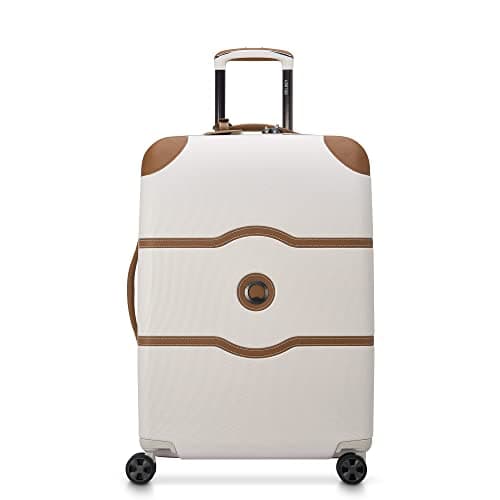
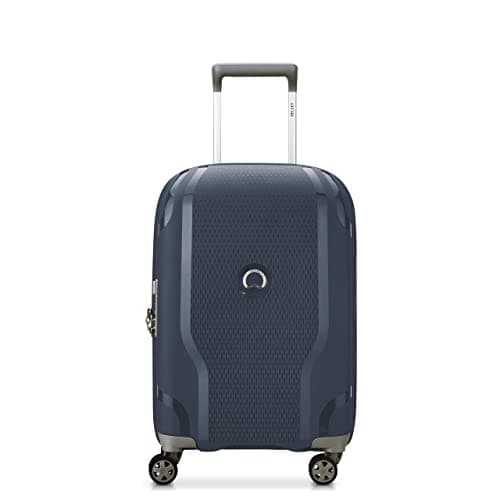
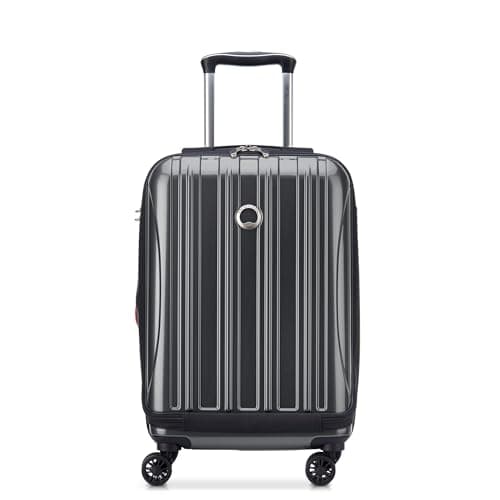
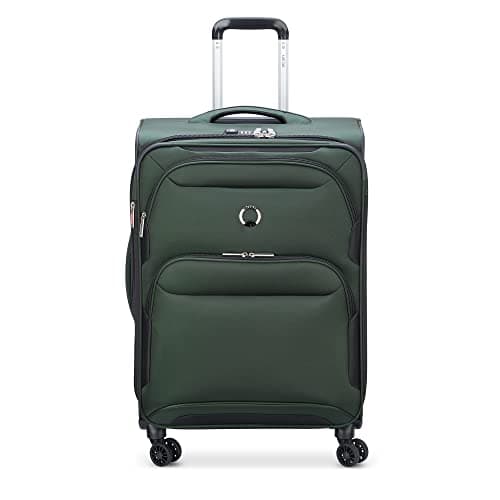
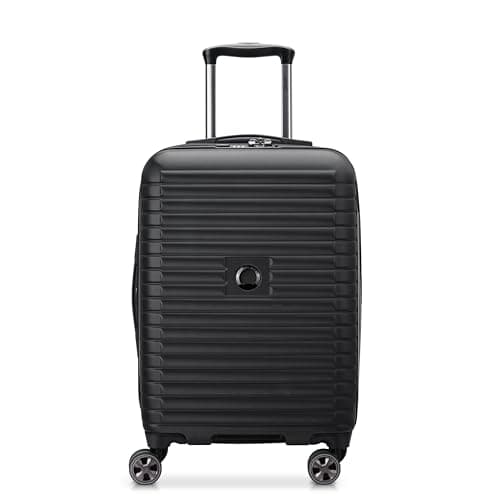
Delsey Paris occupies a genuinely useful gap in the luggage market. It is a French maker with decades of history and an actual service network, but its cases look considerably less like rental-fleet luggage than the American legacy brands — and cost a fraction of what the design-led direct-to-consumer names charge. If Samsonite feels too plain and Rimowa feels absurd, Delsey is the answer to that specific problem.
The range breaks into three tiers. Chatelet is the flagship: leather-look trim, braked wheels, the highest finish and the highest price. Cruise and Comete are the mid-range hardside lines — clean modern shells, spinner wheels, TSA locks, sensible money. Helium and Sky Max are the value lines, including the softside cases, where the price drops and the finish becomes ordinary.
One Delsey-specific feature is worth knowing about before you shop: several lines include braked wheels, a lock that stops the case rolling away on a sloped jet bridge or a train. Nobody else at this price does it, and people who have used it tend to refuse to go back. It is the most Delsey thing about Delsey.
What Delsey does not lead on is weight. These are conventional hardside cases and they weigh what hardside cases weigh, so if you fly carriers that weigh cabin bags, read our international carry-on size guide before committing to a molded shell at all.
The Delsey range, decoded
Chatelet is the flagship — leather-look trim, a braked wheel, the finish people buy the brand for. Cruise and Comete are the modern mid-range hardside lines, and between them cover most of what a normal traveler needs. Helium is the long-running value family, in both hardside (Aero) and softside (DLX) forms. Sky Max is the lightweight budget end.
Version numbers matter here more than with most brands. Delsey iterates lines rather than replacing them, so a Cruise 3.0 and a Cruise 2.0 can sit on the same retail page at different prices with different wheels. Check the version in the listing title, not just the line name.
The braked wheel is the reason to pick Delsey
Several Delsey lines include a wheel brake — a small lever that locks a castor so the case cannot roll away. It sounds like a gimmick until you have stood on a sloped jet bridge, or on a train, or on any platform with a camber, chasing a suitcase. No other brand at this price fits one as standard.
If that feature appeals, confirm it is on the specific model you are buying — it is not fitted across the whole range, and it is the single most common reason buyers are disappointed by a Delsey that looked right in the photos.
Where Delsey sits against the alternatives
Against Samsonite, Delsey generally wins on looks and loses on repair-network scale — Samsonite's service infrastructure is simply larger and older, which our Samsonite vs Delsey comparison works through. Against Travelpro, Delsey wins on hardside and loses on weight and warranty terms; that one is covered in Travelpro vs Delsey. Against the premium direct-to-consumer brands, Delsey costs far less and gives up interior refinement and trial periods.
Which sizes to actually buy
For carry-on, the 20-inch Cruise 3.0 body is the safe standard; the 19-inch bodies (Clavel, Helium Aero) are the pick if you want expansion you can still board with. For checked, take 24 or 25 inches rather than 28 or 29 — a bigger case does not give you more usable capacity, it gives you more room to exceed the 50 lb weight limit, as our checked bag limits guide explains.
What we would actually buy
The Cruise 3.0 carry-on for most people. The Chatelet Air 2.0 24-inch if you want the bag people notice and are prepared to pay for it. The Clavel if you want a real brand at a no-name price. Skip the Sky Max unless the price on the day is genuinely low, because the Helium DLX is a better bag for not much more.
How we picked
We did not lab-test these bags
Everyone in this category says they tested twenty suitcases. We have not lab-tested any of these, and we say so. What we did instead: compiled each bag's published specifications, checked its dimensions against the airline sizers, ran the cost-per-trip and weight-to-capacity math, read the aggregated owner reviews, and scored every pick against a published rubric. The scores are judgments from documented research — not measurements we took, because we do not have a lab and we will not pretend we do. Where a number came from someone else's work, we name them in Sources.