Weight is the only luggage spec that costs you money on a schedule. A US checked bag is capped at 50 lb before an overweight fee lands, so a 10 lb suitcase leaves you 40 lb of clothes and an 8 lb one leaves you 42 - two pounds of allowance you paid for once and then use on every single trip for a decade. That is the entire argument for lightweight luggage, and it is a strong one.
The catch is that manufacturers shed weight in three places: thinner shell or lower-denier fabric, smaller wheels, and lighter handle tubes. The first is usually fine; the second and third are where cheap lightweight bags fail. So we ranked these on empty weight relative to their size class and then discarded anything whose wheels or handle looked like the sacrifice. If you specifically want a cabin-sized bag rather than the full range, our lightweight carry-on picks go deeper on the 22 x 14 x 9 in class, and the checked bag limits guide has the airline-by-airline numbers.
How much does empty weight really cost you?
Run the arithmetic once and it changes how you shop. Against a 50 lb US checked allowance, a 10.5 lb case gives you 39.5 lb of contents and an 8 lb case gives you 42 - a larger packing budget, free, forever. On an international cabin allowance the effect is brutal rather than marginal: against a 7 kg limit, a 3.5 kg case leaves 3.5 kg of clothes while a 2.5 kg one leaves 4.5 kg, which is the difference between four days and a week. Our international carry-on size guide covers which carriers enforce that.
Where the weight was removed - and whether you should care
Lightweight cases save grams in four places. Shell or fabric thickness is the honest one; a thinner polycarbonate shell flexes more but rarely fails outright. Handle tubes are the one to watch - a light telescoping handle with play in it is the most common failure point on cheap bags. Wheels matter more than anything: small, hard, unsealed wheels are light, and they are also the part that dies first. Interior fittings - liners, dividers, compression straps - get deleted, which costs you organization rather than durability. Grip the handle at full extension and wobble it before you commit; that one test separates the good light bags from the flimsy ones.
Hardside or softside when weight is the priority
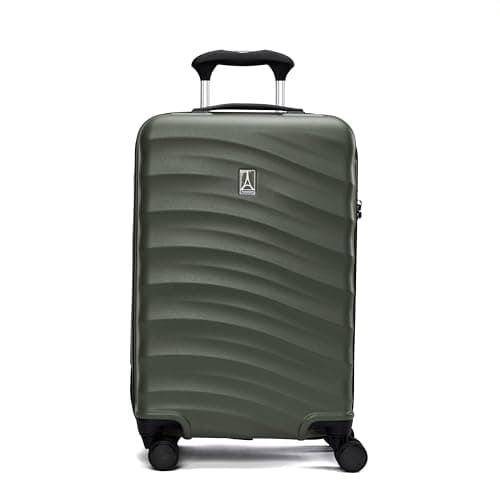
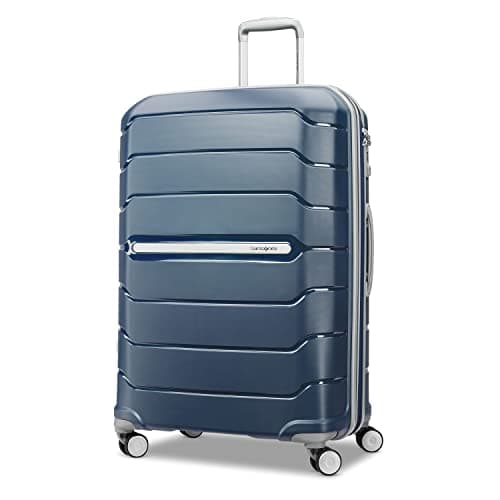
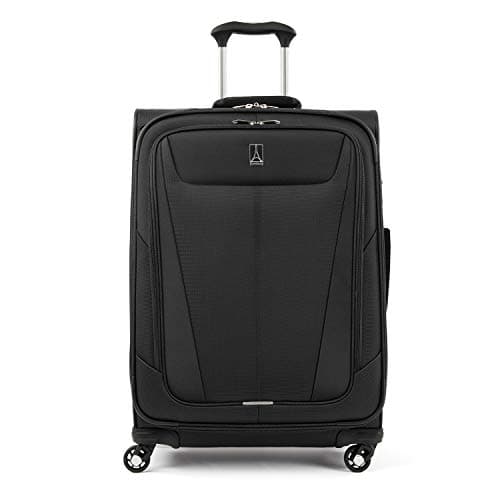
At the same volume a good softside bag is usually the lighter of the two and it flexes when you overpack, which is why the Travelpro Maxlite 5 tops this page. A hard shell costs you a pound or two and buys protection and weatherproofing. The gap has narrowed - Travelpro's Maxlite Air and Samsonite's Freeform both exist to close it - but softside still wins on the scale. The full trade-off is in our hardside vs softside guide.
Much of the weight difference between hardside cases comes down to shell material - polypropylene is about a quarter less dense than polycarbonate. Our polypropylene vs polycarbonate guide explains the trade, and the 28-inch luggage roundup applies it at the size where empty weight matters most.
Weigh it before you leave the house
Buying a light case only helps if you know where you stand at the door. A luggage scale costs less than one overweight fee and pays for itself the first time you use it - we rank them in our luggage scale roundup. Weigh the packed bag at home, not at the counter, where your only options are repacking on the floor or paying.
For the published empty weight of every case this site covers, collected in one table and set against the 50 lb checked cap and the 7 kg international cabin cap, see how much does luggage weigh. It also shows the pattern this list implies but does not state: the weight premium sits at both ends of the market, because cheap cases are heavy from unoptimized material and repair-for-life cases are heavy from the frame that makes the guarantee possible.
How we picked
We did not lab-test these bags
Everyone in this category says they tested twenty suitcases. We have not lab-tested any of these, and we say so. What we did instead: compiled each bag's published specifications, checked its dimensions against the airline sizers, ran the cost-per-trip and weight-to-capacity math, read the aggregated owner reviews, and scored every pick against a published rubric. The scores are judgments from documented research — not measurements we took, because we do not have a lab and we will not pretend we do. Where a number came from someone else's work, we name them in Sources.