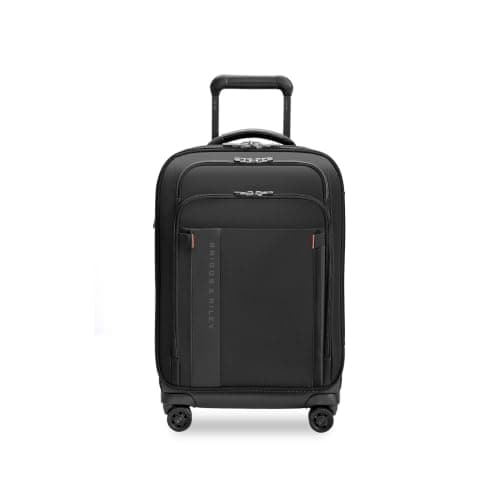
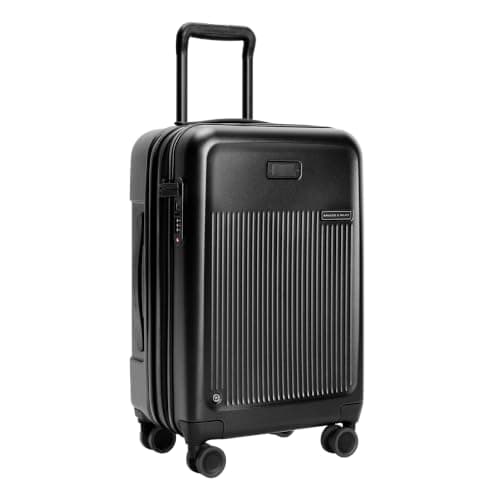
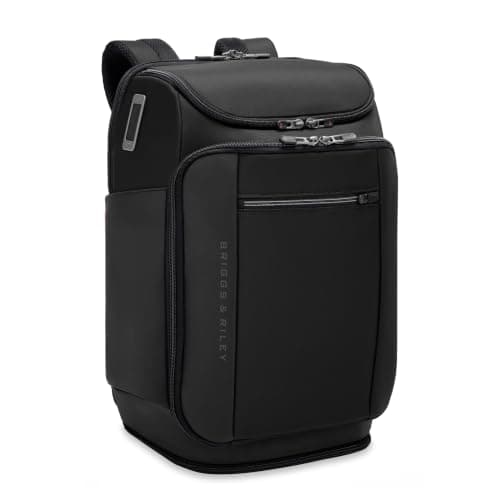
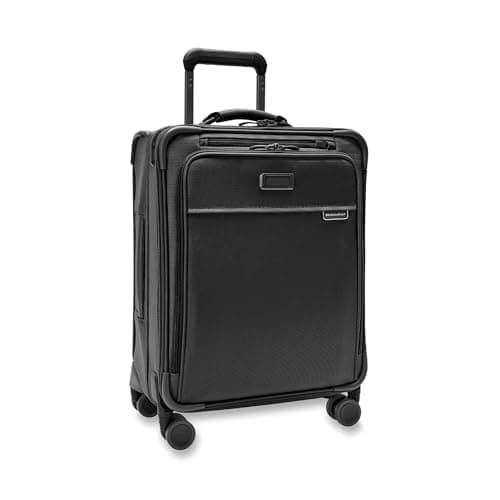
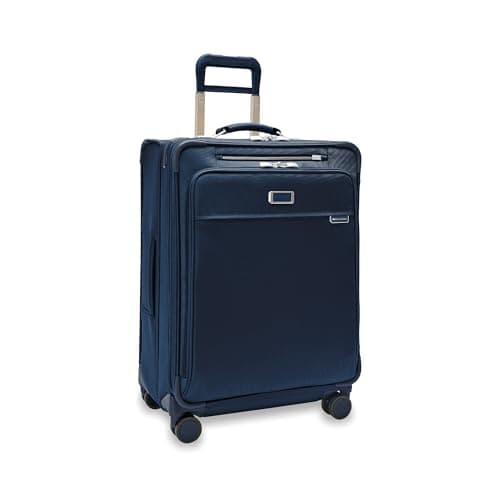
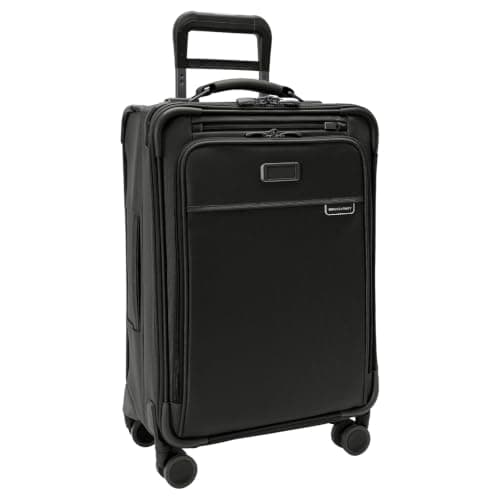
Almost every premium luggage warranty in this market covers manufacturing defects and excludes the way suitcases actually die: a wheel sheared off by a belt loader, a corner split on a transfer, a handle snapped in a hold. Briggs & Riley's Simple As That guarantee is the exception— the company's own published wording is that it covers "repair of all functional aspects of your Briggs & Riley bag for life," explicitly including damage caused by an airline, with no proof of purchase required. That single clause is the reason this brand exists at its price, and it is the reason this page is ranked the way it is.
So we did not score the guarantee. It is identical on every bag below — that is the entire point of the brand, and a column where all six picks score ten tells you nothing. Instead the ranking runs on the five things that genuinely differ from piece to piece, and there are three facts we verified from Briggs & Riley's own published specifications that should change how you shop the range.
One: the guarantee has exclusions, and they are not the ones people expect. Briggs & Riley's lifetime-guarantee page lists what it will not do — cosmetic wear; cleaning for odors or stains; normal scratches, dents, dings and scuffs; fabric discoloration from UV exposure; water damage from improper storage; and lost or stolen bags and their contents. Read that list once and it makes sense: the promise is function, for life, not appearance. A bag that comes back from Denver looking scraped and rolling perfectly is a bag the guarantee considers healthy. On shipping, the company's stated policy is that you pay to send the bag in and it ships the repaired bag back to you free. Our luggage warranties guide puts that wording alongside every other brand we cover.
Two: the Outsider handle is a capacity feature, and one collection does not have it. Briggs & Riley runs the telescoping handle tubes on the outside of the case body on its softside lines, which leaves a completely flat packing floor instead of two ridges through your shirts. It is the most useful thing the brand does after the guarantee. The hardside Sympaticocollection does not use it — its published feature list is an aircraft-grade aluminum telescoping handle with multiple stop heights, mounted conventionally. If you are choosing Briggs & Riley specifically for the flat interior, the hardside is not the bag you want, and nothing in the marketing tells you that.
Three: these bags are heavy, and that is the price of the promise. The Baseline Essential 22-inch carry-on is published at 10 lb empty. The Global 21-inch is 9.9 lb. The Baseline 26-inch checked case is 12.5 lb. The lightest suitcase here, the ZDX Essential, is 8 lb. For context, a typical mid-price polycarbonate carry-on lands around 6 to 7 lb. On a US domestic flight that costs you nothing at all, because cabin bags are not weighed. On the many international and low-cost carriers that cap the cabin bag at 7 kg — roughly 15.4 lb, bag included — a 10 lb empty case has spent about two thirds of your allowance before you pack a shirt. Our international carry-on sizing guide has the caps by region, and our lightweight luggage roundup is the honest alternative if that arithmetic decides your bag.
The five criteria below, in the order we weight them. Build — the fabric or shell and the hardware attached to it, which is what the guarantee is quietly betting on. Usable space — capacity for a given exterior footprint, which the Outsider handle and CX expansion both move. Weight— the empty figure, scored harshly, because it is this brand's one consistent weakness. Airline fit — published dimensions measured against the allowance, not against what a gate agent lets slide. And value, which here means the price against what else the same money buys, not against the rest of the Briggs & Riley catalog.
Every buy button carries the live Amazon price with a date stamp. We do not print prices in the prose on this page: a Briggs & Riley case is a several-hundred-dollar object whose price moves by colorway and by week, and a stale number on a bag like this is worse than no number at all.
Method note: we have not lab-tested these bags. Every dimension, weight, capacity, material and warranty term quoted here is Briggs & Riley's own published figure, taken from its product pages and its lifetime-guarantee page, and the scores are judgments from that documented research plus aggregated owner reviews. See how we test for what that means, and best luggage brandsfor where Briggs & Riley sits against the rest of the market.
Cross-shopping against the obvious alternative? Briggs & Riley vs Travelpro puts the two side by side on packing floor, warranty scope and price per trip.
What the Simple As That guarantee actually covers
Briggs & Riley's own published wording is that it covers "repair of all functional aspects of your Briggs & Riley bag for life." The company states that a bag damaged even by an airline will be repaired, free of charge, with no proof of purchase needed. That is a materially different promise from the limited warranties every other mainstream premium brand offers, which cover manufacturing defects and exclude carrier damage — and carrier damage is how luggage actually dies.
The exclusions are worth quoting because nobody quotes them. Briggs & Riley's guarantee page states that it does not cover cosmetic wear or cleaning due to odors or stains; it does not cover normal wear and tear, scratches, dents, dings or scuffs; it does not cover fabric discoloration from UV exposure or water damage from improper storage; and it does not replace lost or stolen bags or their contents. On shipping, the stated policy is that you pay to send the bag in and Briggs & Riley returns it to you free.
Read together, that is a coherent and honest position: the promise is that the bag will keep working, not that it will keep looking new. If an airline shears a wheel, splits a corner or snaps a handle, that is squarely inside the guarantee. If the bag comes home scraped and gray at the corners, that is you, and the guarantee says so. The company also suggests filing a claim with the carrier before you leave the airport if you want to hold the airline responsible; if you would rather just have the bag fixed, it says it will do that instead. Our warranties guidesets this wording against Samsonite's and Travelpro's term-limited cover.
The Outsider handle, and why a flat floor is worth a shirt
On a conventional suitcase, the telescoping handle runs on two tubes inside the case body. Every shirt you fold sits on top of those ridges, which costs you both volume and creases. Briggs & Riley mounts the tubes on the outside on its softside collections, which leaves the packing compartment with a flat floor from wall to wall. In practical packed volume that is worth roughly a shirt and a pair of trousers on a carry-on, and it is the reason Baseline holds more than its exterior footprint suggests it should.
The catch, again: the hardside Sympatico does not use it. Its published feature list is an aircraft-grade aluminum telescoping handle with multiple stop heights, mounted conventionally. If the flat interior is what drew you to the brand, buy a softside — Baseline if you want the ballistic nylon and the suiter, ZDX if you want two pounds and several hundred dollars back.
CX expansion is a return-leg feature, not a carry-on feature
Every expandable case on this page publishes two depths, and the second one is not carry-on legal. The Baseline Essential goes from 9 in to 11.5 in. The Sympatico goes to 11.25 in. The ZDX goes to 11 in. The US allowance is 9 in. So the honest way to use CX is the way Briggs & Riley describes it: expand for the journey home when you have bought things, then compress the case back down before you get to the gate. It is not a way to carry a bigger bag into the cabin, and treating it as one is how people end up gate-checking.
The compression half is the underrated part. Plenty of brands sell expansion; far fewer sell a mechanism that pulls the case back to its original footprint with the extra contents still inside. If you want the mechanics of the trade in general, our expandable carry-on roundup ranks the field, and our carry-on size guide explains where the 22 x 14 x 9 number came from and who enforces it.
The weight you are paying for
Briggs & Riley builds heavy bags, and it builds them heavy on purpose. Ballistic nylon, metal hardware, external handle tubes, reinforced corners and a mechanism that both expands and compresses all weigh something, and they are the same things the lifetime guarantee is betting on. That is a defensible trade, and on US domestic flights it costs you nothing, because cabin bags are not weighed.
It costs you a great deal on carriers with a 7 kg cabin cap — roughly 15.4 lb, bag included. The 8 lb ZDX leaves you about 7 lb of clothing. The 10 lb Baseline Essential leaves you about 5. The 9.9 lb Global 21 leaves you about 5.5, on exactly the international routes where those caps are most likely to be enforced. That is the whole argument for scoring weight as its own column, and if it decides your bag, the honest recommendation is a lighter case from our lightweight luggage roundupplus a Briggs & Riley pack, rather than a Briggs & Riley suitcase.
Which collection is which
Baseline is the flagship softside line: ballistic nylon, the Outsider handle, CX expansion up to 30%, self-repairing YKK zippers, an integrated tri-fold garment carrier. It is the most expensive and the most complete. Sympatico is the hardside line: a three-layer recycled polycarbonate shell, one-touch CX expansion, an aluminum telescoping handle, and no Outsider system. ZDX is the lighter, more affordable softside line in woven nylon, and it keeps the Outsider handle while dropping the suiter and some fabric grade. @work is the business-bag line, home of the Cargo backpacks we rank in best luxury travel backpacks.
One collection you may still find on retail shelves is worth flagging: Torq, the polycarbonate hardside line, no longer appears among the collections Briggs & Riley lists on its own site, although stock is still being sold. We did not feature it here for exactly that reason. A discontinued line is not a reason to avoid a bag from a company that repairs for life, but you should know you are buying a legacy product rather than a current one, and colorway and spares availability follow the current lineup.
Who should not buy Briggs & Riley
Three groups, honestly. Occasional travelers.The guarantee's value is a function of how many times a stranger throws your bag onto a belt loader. Fly twice a year and a Samsonite or Travelpro case at a fraction of the price is the rational purchase, and both carry long warranties of their own. Weight-capped flyers. Covered above; the empty-bag penalty recurs on every single flight and no warranty gives it back. Anyone buying on looks.Briggs & Riley is deliberately anonymous. If you want the bag to be an object as well as a tool, you are shopping TUMI or the metal cases in our aluminum luggage roundup, and that is a perfectly reasonable thing to want.
For how the Baseline compares against the Travelpro, TUMI, Samsonite and aluminum cases on pure durability, see our most durable luggage roundup, where it is the overall pick.
What we would actually buy
For most people entering the brand: the ZDX Essential carry-on. It is two pounds lighter and several hundred dollars cheaper than Baseline, it keeps the compliant 22 x 14 x 9 footprint and the flat floor, and the guarantee attached to it is word for word the same one attached to the flagship. The only reasons to spend up are the ballistic nylon and the suiter, and those are real reasons if you fly weekly in a jacket.
For someone who checks a bag most trips: the Baseline 26-inch, without hesitation, because a checked case is the one the airline actually handles and the guarantee is doing the most work there. For someone flying long-haul international on height-capped carriers: the Global 21, knowing it is an inch wide of the US standard. For someone who wants the guarantee without the suitcase price: the ZDX U-Zip pack, understanding that it is a carry-on-sized bag rather than a free personal item. And for anyone weighing this brand against its closest competitor, the argument is laid out in full in TUMI vs Briggs & Riley.