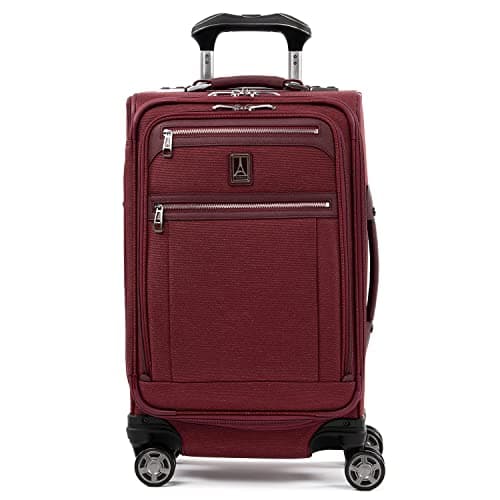
Business travel breaks luggage faster than anything else, because the failure mode is frequency. A vacation bag does six flights a year. A consultant's bag does six flights a month, mostly over hard terminal flooring, mostly at a walking pace fast enough to load the wheels sideways. That is why the bags below are ranked first on wheels, handle and warranty, and only then on how nicely they pack.
The three things that actually matter for work travel: a serviceable wheel and handle system, because that is what fails; front laptop access or an obvious top-load route to the laptop, because fumbling at security costs you every single trip; and a suiter or enough flat depth to carry a jacket without folding it into a crease. Everything else is preference.
If you travel with a garment that absolutely cannot crease, a dedicated garment bag beats any suiter panel. And if your personal item is doing half the work, the carry-on backpack picks cover that side.
Buy for the wheels, not the pockets
Ask anyone who flies for work what has failed on their luggage and you will hear the same two answers: a wheel and the telescoping handle. Almost nobody reports a torn shell. Frequency is what kills a bag, and the wheels take the whole of it — every terminal, every curb, every sideways load when you cut across a concourse. That is the argument for spending real money on a business carry-on when a $70 bag would pack the same clothes: you are buying a serviceable wheel assembly and someone to service it. Our wheel replacement guide covers what that repair actually involves.
Suiter panels, and when they are worth it
A suiter is a flat fold-over panel with a clamp that lets a jacket travel over one long fold instead of several short ones. It works — a jacket out of a suiter needs a hang, not a press. What it does not do is eliminate creasing entirely, and it costs you an inch of packing depth for the whole trip whether you use it or not. If you carry a jacket on most trips, take the suiter. If it is twice a year, skip it and use a garment bag on those trips instead.
Two-wheel or four for a commuter
Four-wheel spinners glide beside you in a terminal and are easier on your wrist. Two-wheel uprights have larger wheels mounted inside a recess, so they survive curbs and cobbles better and cannot be sheared off sideways. For pure airport-to-hotel travel, spinners win on comfort. For anyone who walks city blocks between meetings, the two-wheel case is genuinely more durable — the full argument is in our spinner vs 2-wheel guide.
Softside is the business default for a reason
Nearly every purpose-built business carry-on is softside, and it is not aesthetic. Fabric allows the front laptop compartment that gets you through security quickly, it absorbs the overstuffing that a last-minute schedule change causes, and it takes a scuff without showing it. Hardside is the better choice when you carry fragile equipment; otherwise the business case for soft is strong. See hardside vs softside for the full trade.
If the single feature you need is a laptop compartment you can reach without opening the case, our front-pocket carry-on roundup ranks the hardside and softside front-access cases on what the pocket costs in main-compartment space.
What we would actually buy
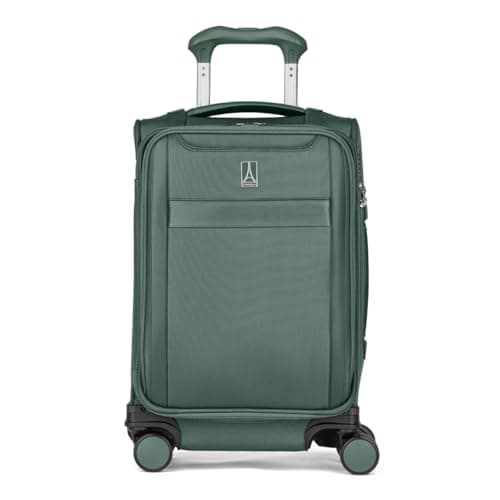
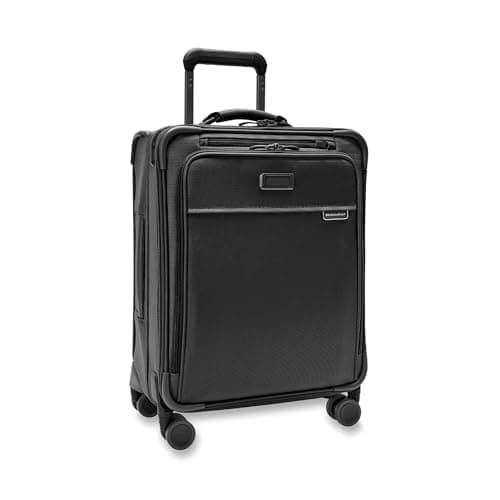
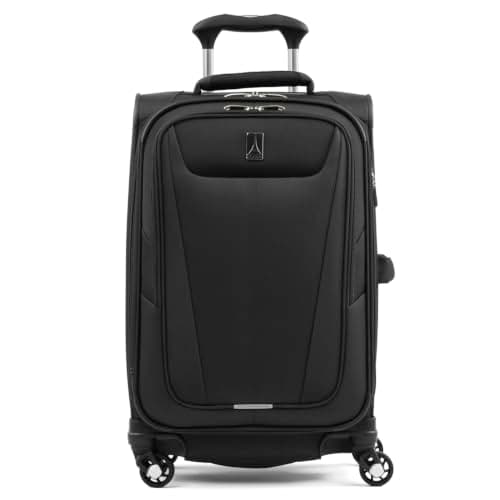
The Travelpro Platinum Elite for most business travelers — crew-grade build, a suiter, and a warranty that matches the use case. If you fly enough that luggage is genuinely disposable to you, the Briggs & Riley Global is the only bag here whose guarantee covers what airlines do to bags. If you fly monthly, the Maxlite 5 is the honest value pick and nobody will notice the difference.
How we picked
We did not lab-test these bags
Everyone in this category says they tested twenty suitcases. We have not lab-tested any of these, and we say so. What we did instead: compiled each bag's published specifications, checked its dimensions against the airline sizers, ran the cost-per-trip and weight-to-capacity math, read the aggregated owner reviews, and scored every pick against a published rubric. The scores are judgments from documented research — not measurements we took, because we do not have a lab and we will not pretend we do. Where a number came from someone else's work, we name them in Sources.