Skip to content
Suite & Sand

Hardside · Hardside Luggage

The best TUMI luggage, ranked by what the premium actually buys

TUMI makes some of the best-built bags you can order on Amazon, and it charges accordingly. Six pieces across four collections, ranked on materials, hardware, organization and airline fit - including the two carry-ons that are wider than the standard allowance and the warranty term almost everyone gets wrong.

By Stephen V.Updated How we test
#ad

We earn a commission when you buy through our Amazon links, at no extra cost to you. It never changes a verdict, and we say so when the cheaper bag is the better buy. How this works.

TUMI is the brand people buy once they have decided luggage is worth real money. The build quality is not in dispute — the fabric, the zippers and the wheel hardware are genuinely upper tier, and a TUMI bag bought today is very likely to still be in service in a decade. The useful question is narrower and almost nobody asks it: what specifically does the premium buy, and what does it not?This page is built around three facts we could verify from TUMI's own published copy on its current retail listings, and all three change how you should shop the range.

One: the warranty is five years, not lifetime.TUMI's own warranty statement, printed on its listings, reads that a product from its travel, business or bags collections is covered for five years, and any wallet or accessory for two. Five years on a suitcase is a good term. It is not the unconditional lifetime cover that buyers routinely assume comes attached to a four-figure case, and it is the single clearest reason a cross-shopper ends up with a Briggs & Riley instead. If you have never read what a luggage warranty actually promises, our warranties guide is the place to start.

Two: two of the most popular TUMI carry-ons are wider than the standard allowance. The US carry-on convention is 22 x 14 x 9 inches. TUMI's Alpha Large Dual Access carry-on is described on its own listing as measuring 22 x 16 x 9 inches, and the 19 Degree Large Expandable Carry-On is sold under a title that states 21.8 x 15.8 x 9.0 inches. Both are two inches over on width before you expand them. In practice both board US domestic flights constantly, because US gate agents rarely sizer-check a bag that looks like luggage — but "usually fine" is not the same as "compliant," and it is not what most people think they are buying. Our carry-on size guide explains where the number came from and which carriers enforce it.

Three: TUMI cases are heavy. The 19 Degree Large Expandable Carry-On is listed at 8.2 lb empty. The Alpha Large Dual Access is listed at 5.04 kg in its technical details — about 11.1 lb — while a separate line on the same listing gives 11.88 lb; we will not pretend to know which figure is the bare bag, and either way it is a heavy carry-on. That matters not at all on a US domestic flight, where cabin bags are not weighed, and it matters enormously on the many international and low-cost carriers that cap the cabin bag at 7 kg total. An 11 lb empty case has consumed roughly two thirds of a 7 kg allowance before you pack a shirt. Our international carry-on sizing guide has the weight caps by region.

So the ranking below is ordered on five criteria, in this order. Materials — what the shell or the fabric actually is, since this is the thing TUMI genuinely leads on. Hardware — wheels, handle stages, latches and locks, which is where premium luggage earns its life expectancy. Organization — whether the interior does something a cheaper bag cannot, because at this price a plain bucket is not good enough. Airline fit — measured against the published allowance rather than against what a gate agent lets slide. And value, which on this page is the harshest column on the board and is supposed to be: nothing here is a bargain, and our job is to say which pieces earn the money and which are paying for the badge.

Every buy button below carries the live Amazon price, date-stamped, because prices in this tier move by hundreds of dollars between colorways and weeks. We deliberately do not print prices in the prose — a stale number on a four-figure case is worse than no number at all.

Method note: we have not lab-tested these bags. Every dimension, weight, material and warranty term quoted here is the manufacturer's own published figure from its current retail listings, and the scores are judgments from that documented research plus aggregated owner reviews. Where two of TUMI's own published figures disagree, we say so rather than pick one. See how we test for what that means, and best luggage brands for where TUMI sits against the rest of the market.

The short answer

Quick picks

#ProductBest forScorePrice
01
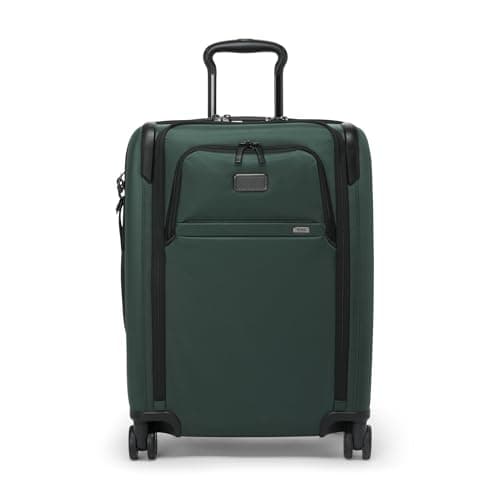
TUMI TUMI Alpha Large Dual Access Expandable 4-Wheeled Carry-On
TUMI Alpha Large Dual Access Expandable 4-Wheeled Carry-On

The one to buy if you buy one TUMI. Alpha is the ballistic-nylon line the brand was built on, and the dual-access front panel is the feature that justifies the collection: you reach a laptop, a passport or a charger through the front without opening the main compartment on a lounge floor. FXT ballistic nylon with a recycled lining is the toughest fabric in mainstream luggage, and a soft case absorbs the abuse a molded shell transmits. The costs are honest ones - it is wide, it is heavy, and the warranty is a term rather than a lifetime.

Best TUMI overall
8.6
$671.19Amazon
02
TUMI TUMI 19 Degree Large Expandable Carry-On
TUMI 19 Degree Large Expandable Carry-On

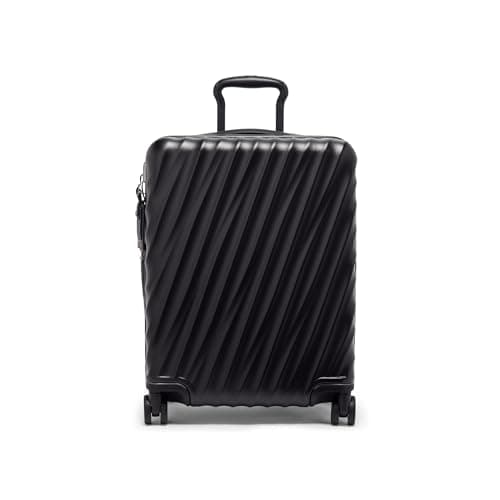
The hardside answer, and the most recognizable object TUMI makes. The 19 Degree shell is polycarbonate, sculpted into the angled ribs that give the line its name, and it is a genuinely rigid case with a low-profile integrated lock and a USB-C charging port built in. It is also 15.8 inches wide, 8.2 lb empty, and priced where a rational buyer starts asking hard questions. Buy it because you want a hardside TUMI and you like the shape, not because it out-packs the Alpha.

Best TUMI hardside
8.2
$724.99Amazon
03
TUMI TUMI Alpha Bravo Navigation Backpack
TUMI Alpha Bravo Navigation Backpack

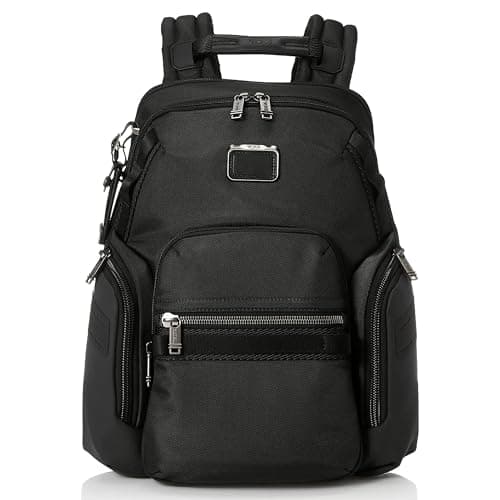
The best personal item TUMI sells, and the piece most likely to get used every single day rather than eighteen times a year. Listed at 16 x 14 x 7.25 in and 2.8 lb, it takes a 15-inch laptop in a padded back pocket, has a quick-access rear compartment for a phone and passport, and carries an add-a-bag sleeve so it rides on the carry-on handle instead of your shoulder. It is expensive for a daypack in absolute terms, which is the only real argument against it.

Best TUMI backpack
8.0
$550.00Amazon
04
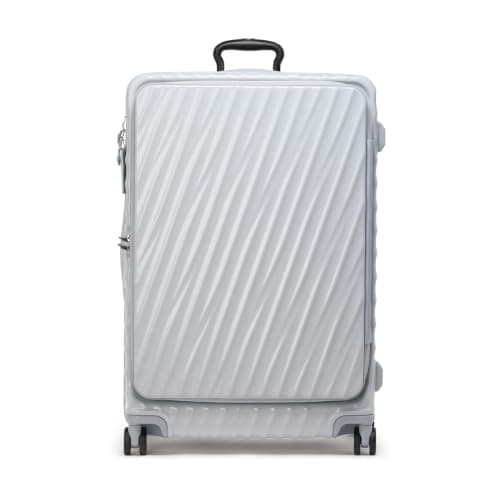
TUMI TUMI 19 Degree Front Access Large Expandable Checked Packing Case
TUMI 19 Degree Front Access Large Expandable Checked Packing Case

The checked bag for people who hate living out of a checked bag. A front-lid opening on a hard shell is unusual and genuinely useful - you get at the top layer without laying a 99-liter case flat on a hotel floor and unzipping the whole clamshell. Compression straps, a U-zip pocket and dual mesh pockets keep it organized, and it carries a TSA combination lock and retractable top and side handles. The catch is arithmetic: 99 liters is enough volume to breach a 50 lb airline limit well before the case is full.

Best TUMI checked bag
7.8
$1,050.00Amazon
05
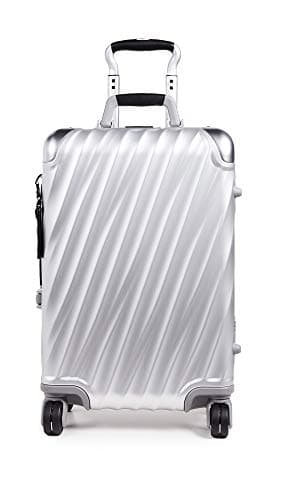
TUMI TUMI 19 Degree Aluminum International Carry-On
TUMI 19 Degree Aluminum International Carry-On

The halo piece, and we are going to be blunt about it. An aluminum 19 Degree is a beautiful object - a latched metal case with reinforced corners, a TSA-approved lock and a lined interior with adjustable clothing straps - and it is the most expensive thing on this page by a wide margin. It is also sized as an international carry-on at 20.5 in high, which is the one genuinely practical argument in its favor: it is the TUMI most likely to clear a strict European sizer. Buy it because you want it. Do not buy it expecting it to be the sensible choice.

The status piece
7.4
$1,295.00Amazon
06
TUMI TUMI Just In Case Tote
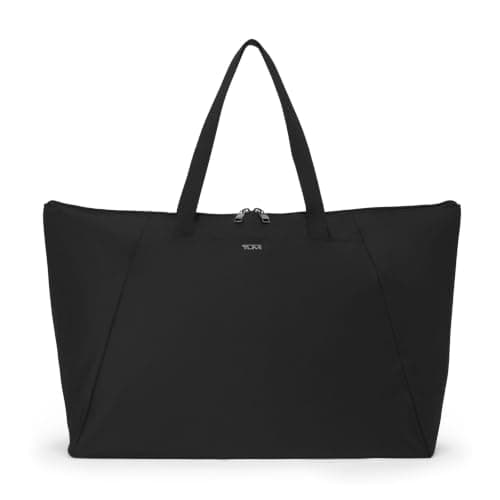
TUMI Just In Case Tote

The cheapest honest way into the brand, and a legitimately clever bag on its own terms. It folds flat into an included zip pouch, weighs 12 oz, opens to roughly 23 x 14 x 9 in as listed, and has a double-zip entry - so it lives inside your suitcase doing nothing until the trip home, when you have bought more than you can close the case on. It is a spare bag, not a main bag, and it is priced like a TUMI accessory rather than a packable tote from anywhere else.

Best TUMI accessory
7.0
$175.00Amazon

#ad · Live prices from the Amazon Product API, as of Aug 31, 2026. Where we have no verified live price, we show none — a gap beats a number that has rotted.

In detail

The picks, in full

01
TUMI TUMI Alpha Large Dual Access Expandable 4-Wheeled Carry-On

Best TUMI overall

TUMI Alpha Large Dual Access Expandable 4-Wheeled Carry-On

FXT ballistic nylonFront dual accessZip expansionUSB-C port
8.6/10

The one to buy if you buy one TUMI. Alpha is the ballistic-nylon line the brand was built on, and the dual-access front panel is the feature that justifies the collection: you reach a laptop, a passport or a charger through the front without opening the main compartment on a lounge floor. FXT ballistic nylon with a recycled lining is the toughest fabric in mainstream luggage, and a soft case absorbs the abuse a molded shell transmits. The costs are honest ones - it is wide, it is heavy, and the warranty is a term rather than a lifetime.

Materials
10
Hardware
9
Organization
9
Airline fit
7
Value
8

Pros

  • Dual-access front panel reaches the laptop compartment without unpacking the case
  • FXT ballistic nylon with a recycled lining is the toughest fabric in mainstream luggage
  • Softside body absorbs impacts that crack or scuff a molded shell
  • Built-in USB-C charging port and TUMI Tracer registration on the same bag
  • Zip expansion for the return leg, which a latched hardside case cannot offer

Cons

  • Listed at 22 x 16 x 9 in - two inches wider than the 22 x 14 x 9 standard, before expansion
  • Heavy: the technical details give 5.04 kg (about 11.1 lb), a separate line says 11.88 lb
  • Five-year warranty, not the lifetime cover buyers assume at this price
  • Fabric shows scuffing at the corners in a way a hard shell does not
  • The brand premium is real - this is two very good carry-ons worth of money

Don't buy this if…

you fly international carriers with a 7 kg cabin weight cap - an empty bag this heavy eats most of the allowance before you pack, and a lighter case will carry more of your clothes for the same total weight.

The dual-access panel is the reason to choose Alpha over 19 Degree, and it is worth being specific about why. On a normal carry-on, retrieving a laptop at security means laying the case flat and unzipping the clamshell, which is fine at home and awkward in a queue. The front panel here opens to a padded compartment while the bag stands upright, which turns a two-handed operation into a one-handed one. If you fly for work weekly, that is the single most-used feature on the bag — and it is why this piece also informs our business-travel carry-on thinking.

On the width: 16 inches is a real number, not a rounding artifact, and it is the honest knock on this bag. It clears a US domestic overhead bin without drama and it will fail a hard sizer at a European low-cost gate. If your flying is mostly domestic, ignore it. If it is not, read our carry-on size by airline table before you spend this much. The same case is ranked against the wider premium field in our best luxury luggage roundup.

$671.19View on Amazon

$838.9920% off

Price as of Aug 31, 2026. Prices change — Amazon's at checkout is the one that counts.

#ad · we may earn a commission from this link to TUMI Alpha Large Dual Access Expandable 4-Wheeled Carry-On

02
TUMI TUMI 19 Degree Large Expandable Carry-On

Best TUMI hardside

TUMI 19 Degree Large Expandable Carry-On

Polycarbonate shell21.8 x 15.8 x 9.0 in8.2 lb emptyUSB-C port
8.2/10

The hardside answer, and the most recognizable object TUMI makes. The 19 Degree shell is polycarbonate, sculpted into the angled ribs that give the line its name, and it is a genuinely rigid case with a low-profile integrated lock and a USB-C charging port built in. It is also 15.8 inches wide, 8.2 lb empty, and priced where a rational buyer starts asking hard questions. Buy it because you want a hardside TUMI and you like the shape, not because it out-packs the Alpha.

Materials
9
Hardware
9
Organization
8
Airline fit
7
Value
8

Pros

  • Polycarbonate shell is rigid and flexes back rather than cracking, unlike ABS
  • Low-profile integrated lock sits flush - nothing to snag on a belt
  • Zip expansion plus interior compression straps, which most hardside cases skip
  • Built-in USB-C charging port and TUMI Tracer registration
  • Four spinner wheels and a three-stage telescoping handle for height flexibility

Cons

  • Sold under a title stating 21.8 x 15.8 x 9.0 in - 1.8 inches over the standard width
  • 8.2 lb empty is heavy for a polycarbonate carry-on of this footprint
  • The sculpted ribbing that defines the look costs usable interior volume against a flat shell
  • Matte finishes show scuffs and the ridged surface makes them harder to buff out
  • Five-year warranty, the same term as the fabric bags, on a case that costs more

Don't buy this if…

you are buying a hardside case primarily for capacity - the angled shell is a design signature that takes space back, and a plain-shell polycarbonate spinner will hold more clothes for less money.

Polycarbonate is the right material at this price and it is worth knowing why: it flexes under load and returns, where the cheaper ABS used on bargain hardsides cracks and stays cracked. Our shell material guide works through the difference with the failure modes for each. What you are paying extra for here over a good mid-price polycarbonate spinner is the hardware and the shape, not the plastic.

The USB-C port is a genuinely useful inclusion and also a thing to check before you fly — the port itself is fine, but any lithium battery you connect to it has to travel in the cabin with you, not in a checked bag. Our guide to luggage with USB charging covers what airlines actually allow.

$724.99View on Amazon

Price as of Aug 31, 2026. Prices change — Amazon's at checkout is the one that counts.

#ad · we may earn a commission from this link to TUMI 19 Degree Large Expandable Carry-On

03
TUMI TUMI Alpha Bravo Navigation Backpack

Best TUMI backpack

TUMI Alpha Bravo Navigation Backpack

16 x 14 x 7.25 in2.8 lb15 in laptop pocketAdd-a-bag sleeve
8.0/10

The best personal item TUMI sells, and the piece most likely to get used every single day rather than eighteen times a year. Listed at 16 x 14 x 7.25 in and 2.8 lb, it takes a 15-inch laptop in a padded back pocket, has a quick-access rear compartment for a phone and passport, and carries an add-a-bag sleeve so it rides on the carry-on handle instead of your shoulder. It is expensive for a daypack in absolute terms, which is the only real argument against it.

Materials
9
Hardware
9
Organization
8
Airline fit
9
Value
5

Pros

  • Fits under a seat as a personal item at 16 x 14 x 7.25 in as listed
  • Add-a-bag sleeve slides over a carry-on handle - the feature that makes a two-bag airport work
  • Padded 15-inch laptop pocket plus a quick-access back pocket for phone and passport
  • Ballistic nylon body, so it takes floor-and-curb abuse without looking beaten
  • Daisy chain on the front, straps and side gussets accepts TUMI+ modular accessories

Cons

  • 2.8 lb before you load it - noticeably heavier than a nylon commuter pack
  • 15-inch laptop maximum, so a 16-inch machine is out
  • Very expensive for a bag with no wheels and one main compartment
  • The listing states it is not intended for use by children 12 and under
  • A loaded pack gets deeper than its listed 7.25 in, which some personal-item allowances measure

Don't buy this if…

you want to travel out of the backpack alone - this is a work pack that flies, not a one-bag travel pack, and bags of this shape do not hold a week of clothes.

If you already own a carry-on you are happy with, this is the TUMI to buy first. The add-a-bag sleeve is the reason: a pack that will not sit on your suitcase handle is a pack you carry on one shoulder through a terminal, and everyone who has done that with a laptop inside knows the difference. It is ranked against the rest of the premium pack field in our luxury travel backpack roundup.

One practical caution. Personal-item allowances are enforced far more often than carry-on allowances, because that is where airlines actually make fee revenue, and a packed backpack measures deeper than an empty one. Measure yours loaded against our personal item size by airline table rather than trusting the listed depth.

$550.00View on Amazon

Price as of Aug 31, 2026. Prices change — Amazon's at checkout is the one that counts.

#ad · we may earn a commission from this link to TUMI Alpha Bravo Navigation Backpack

04
TUMI TUMI 19 Degree Front Access Large Expandable Checked Packing Case

Best TUMI checked bag

TUMI 19 Degree Front Access Large Expandable Checked Packing Case

Polycarbonate hard shell99 L capacityFront-lid accessTSA combination lock
7.8/10

The checked bag for people who hate living out of a checked bag. A front-lid opening on a hard shell is unusual and genuinely useful - you get at the top layer without laying a 99-liter case flat on a hotel floor and unzipping the whole clamshell. Compression straps, a U-zip pocket and dual mesh pockets keep it organized, and it carries a TSA combination lock and retractable top and side handles. The catch is arithmetic: 99 liters is enough volume to breach a 50 lb airline limit well before the case is full.

Materials
9
Hardware
9
Organization
9
Airline fit
6
Value
6

Pros

  • Front-lid opening reaches the top layer without unpacking the case
  • 99 L of expandable capacity, which covers a genuinely long trip
  • Compression straps, U-zip pocket and dual mesh zip pockets as standard
  • Retractable top and side grab handles - the ones baggage handlers actually use
  • Four dual spinner wheels and a three-stage telescoping handle

Cons

  • 99 L will pass 50 lb before it is full - the bag lets you overpack into a fee
  • The listing publishes no empty weight, and we will not guess one
  • The front-lid compartment takes its depth out of the main compartment
  • The most expensive way to solve a problem a cheaper checked case also solves
  • Stock is colorway-dependent at this size, so the piece you want may not be the one available

Don't buy this if…

you already struggle with the 50 lb limit - a smaller checked case is a better bag for you than a bigger one, because the constraint that binds is weight, not volume.

Front access on a checked case is rarer than it should be, and it changes how a long trip feels: the difference between opening a lid for a jacket and unpacking a suitcase across a hotel bed is not small when you do it fourteen nights running. Whether it is worth this much more than a conventional large spinner is the real question, and our best checked luggage roundup has the alternatives at every price.

Before you buy any case this large, check the number that actually constrains you. Most US carriers cap a checked bag at 50 lb and 62 linear inches, and a 99-liter case gives you enough room to sail past the first one. Our checked bag size and weight limits guide has the figures, and a luggage scale costs a fraction of one overweight fee.

$1,050.00View on Amazon

Price as of Aug 31, 2026. Prices change — Amazon's at checkout is the one that counts.

#ad · we may earn a commission from this link to TUMI 19 Degree Front Access Large Expandable Checked Packing Case

05
TUMI TUMI 19 Degree Aluminum International Carry-On

The status piece

TUMI 19 Degree Aluminum International Carry-On

Aluminum shell20.5 x 13.5 x 9 inTSA-approved lockReinforced corners
7.4/10

The halo piece, and we are going to be blunt about it. An aluminum 19 Degree is a beautiful object - a latched metal case with reinforced corners, a TSA-approved lock and a lined interior with adjustable clothing straps - and it is the most expensive thing on this page by a wide margin. It is also sized as an international carry-on at 20.5 in high, which is the one genuinely practical argument in its favor: it is the TUMI most likely to clear a strict European sizer. Buy it because you want it. Do not buy it expecting it to be the sensible choice.

Materials
9
Hardware
8
Organization
6
Airline fit
8
Value
6

Pros

  • Aluminum is the stiffest shell format sold, and a latch closure cannot be burst open like a zipper
  • At 20.5 in high it is sized for international allowances, unlike the domestic-sized TUMIs above
  • Reinforced plastic corners protect the format's most vulnerable point
  • Lined interior with adjustable clothing straps and an ID tag included
  • Ages into a patina that many owners consider the point of the bag

Cons

  • Aluminum dents permanently on the first rough handling and does not spring back
  • Heavy - TUMI's bullet gives 135 oz (3.83 kg) while the technical details list 11 lb; we cannot reconcile the two
  • A latched aluminum case has no expansion, so the return leg has to fit in what you left
  • Scratches are permanent and visible, which not every owner enjoys
  • By a distance the worst value on this page in pure carrying terms

Don't buy this if…

you would be upset by the first dent - it is coming, it is structural to the format rather than a defect, and a polycarbonate case is the better bag for anyone who wants their luggage to keep looking new.

Two things are true at once about aluminum luggage. It is the most secure and most rigid format you can buy, and it will be dented within a handful of flights. Owners who love aluminum cases love them because of the marks, not in spite of them; owners who expected a premium case to stay pristine are the ones who regret the purchase. Our aluminum luggage roundup covers the whole format, including the far cheaper entrants.

The size is the underrated detail. At 20.5 inches tall this is shorter than TUMI's domestic carry-ons, which is exactly what you want if your flying involves European carriers with their own smaller cabin templates — see our international carry-on size guide. Measure before you commit; our how to measure luggage guide explains why the published number and the number a sizer sees are not always the same.

$1,295.00View on Amazon

Price as of Aug 31, 2026. Prices change — Amazon's at checkout is the one that counts.

#ad · we may earn a commission from this link to TUMI 19 Degree Aluminum International Carry-On

06
TUMI TUMI Just In Case Tote

Best TUMI accessory

TUMI Just In Case Tote

Folds into included pouch12 oz23.03 x 9.06 x 13.98 inDouble-zip entry
7.0/10

The cheapest honest way into the brand, and a legitimately clever bag on its own terms. It folds flat into an included zip pouch, weighs 12 oz, opens to roughly 23 x 14 x 9 in as listed, and has a double-zip entry - so it lives inside your suitcase doing nothing until the trip home, when you have bought more than you can close the case on. It is a spare bag, not a main bag, and it is priced like a TUMI accessory rather than a packable tote from anywhere else.

Materials
7
Hardware
6
Organization
5
Airline fit
10
Value
7

Pros

  • Folds completely flat into its own zip pouch and disappears inside a packed case
  • 12 oz, so it costs you almost nothing in a weight-capped allowance
  • Double-zip entry rather than an open top, which matters on a bag you carry through a terminal
  • Opens large enough to take a genuine second bag's worth of overflow
  • The one piece here that anyone can justify without a business-travel schedule

Cons

  • No structure and no padding - nothing goes in this that you would mind being sat on
  • No laptop protection at all, so it cannot double as your work bag
  • TUMI's warranty statement covers accessories for two years rather than five, and the listing does not make clear which side a packable tote falls on - worth confirming before you buy
  • Still costs many times what a generic packable tote costs, for the same folding trick
  • Handles are a shoulder carry at best - there is no comfortable long-haul way to carry it loaded

Don't buy this if…

you need it to hold a laptop or survive being checked - this is deliberately a lightweight overflow bag, and asking it to be a piece of luggage is asking the wrong thing of it.

The use case is narrow and real: you packed a carry-on properly on the way out, and on the way back you have gifts, a jacket you bought, and a case that will not close. A packable tote solves that for 12 oz of permanent carrying cost. If you want the same idea done with more structure and more finish, our luxury travel tote picks are the bags you carry on purpose rather than the ones you unfold in an emergency.

$175.00View on Amazon

Price as of Aug 31, 2026. Prices change — Amazon's at checkout is the one that counts.

#ad · we may earn a commission from this link to TUMI Just In Case Tote

Which TUMI collection should you actually buy?

TUMI's range looks bigger than it is, because the collections are defined by material and silhouette rather than by purpose. Four of them account for almost everything you will see on Amazon, and choosing between them is most of the decision.

Alpha is the ballistic-nylon core line and the default recommendation. It is softside, it expands, it takes impacts well, and the dual-access variants solve the laptop problem better than any hard shell can. Choose Alpha if you fly for work, if you overpack on the return leg, or if you want the bag most likely to still be in service in ten years.

19 Degree is the hardside line, sold in polycarbonate and in aluminum, and defined by the angled ribs that give it its name. Choose it if you want a rigid shell, if your luggage gets rained on, or if you simply prefer how it looks — which is a legitimate reason to buy a bag and we are not going to pretend otherwise. Understand that the ribbing costs interior volume against a flat-shelled case.

Alpha Bravo is the backpack and shoulder-bag line: ballistic nylon, modular accessory attachment points, laptop protection. Choose it for the personal item, and note that it is the TUMI you will use most days rather than most trips.

Voyageur and Just In Case are the lighter lines — softer, lighter, generally cheaper than Alpha. Choose Voyageur if weight is your binding constraint and you still want the brand; choose Just In Case for a spare bag that lives inside another bag.

Read the warranty before you read the reviews

This is the section we would most want a first-time TUMI buyer to read. TUMI's own published warranty statement, which appears on its retail listings, is that a product from its travel, business and bags collections is covered for five years, and any wallet or accessory for two. That is a solid term — considerably better than the one-to-three years typical of budget luggage — and it is not what a lot of people at this price point believe they are getting.

The comparison that matters is Briggs & Riley, TUMI's closest competitor in price, fabric and audience, whose Simple As That guarantee is unconditional for the life of the bag and explicitly covers airline damage. Airline damage is how luggage actually dies. If the warranty is the deciding factor for you, the decision is not close, and we work through it properly in TUMI vs Briggs & Riley. If design, the dual-access panel and the wider range matter more, TUMI wins on those and you are trading a warranty term for them knowingly. Our warranties guide explains what these documents cover in general — and, importantly, what none of them cover.

The width problem, stated plainly

The US carry-on convention is 22 x 14 x 9 inches including wheels and handles. Two of the TUMI carry-ons on this page publish widths above that: the Alpha Large Dual Access at 16 inches and the 19 Degree Large Expandable at 15.8 inches. This is not a defect and it is not unique to TUMI — several brands sell "large" carry-ons that trade strict compliance for capacity, and American Tourister does the same thing at the other end of the market. But it is a fact you should own before you spend, not discover at a gate.

What it means in practice: on US domestic flights, essentially nothing. Sizers exist and are almost never used on a bag that reads as normal luggage, and the bins on mainline aircraft take these cases without complaint. On regional jets, on European low-cost carriers, and on Asian carriers with their own smaller templates, an over-width bag is a genuine risk, and the consequence is a gate-check fee plus the bag going in the hold anyway. If most of your flying is in that second category, buy the aluminum international size — or buy a compliant case from our international carry-on roundup and put a TUMI backpack on top of it.

Weight is the constraint nobody prices in

TUMI builds heavy bags, and it builds them heavy for a reason: ballistic nylon, metal hardware, reinforced corners and multi-stage handles all weigh something, and they are also the things that make the bag last. That is a defensible trade, and on a US domestic flight it costs you nothing at all, because cabin bags are not weighed.

It costs you a great deal on the many international carriers that cap the cabin bag at 7 kg, roughly 15.4 lb, total. An 8.2 lb case leaves you about 7 lb of clothing. An 11 lb case leaves you roughly 4. That is the whole argument, and it is why we score airline fit as its own column rather than folding it into value. If you routinely fly weight-capped carriers, the honest recommendation is a lighter case — our lightweight luggage roundup is built entirely around that arithmetic — with a TUMI personal item rather than a TUMI suitcase.

Tracer, monogramming and what happens to the bag later

Two TUMI-specific features are worth understanding because they affect the bag's life rather than its first trip. TUMI Tracer is a registration program: each bag carries a unique number you register, so a found bag can be matched back to its owner. It is free, it takes two minutes, and it is the single most useful thing you can do on the day a bag arrives.

Monogramming is the opposite trade. A monogram patch is offered across much of the range and it makes the bag unmistakably yours — which is lovely if you keep it and a real problem if you resell it or pass it on. TUMI holds its value on the secondhand market better than most luggage brands, and a monogram is the fastest way to give that value away. If you are buying this as a gift, leave it unmarked; our luggage gifts guide covers the rest of the gift-specific traps.

What each price band actually buys

The accessory band. Packable totes, pouches and small organizers. This is the only band where a TUMI is a casual purchase, and the Just In Case tote is the pick — a clever bag that costs a multiple of what an equivalent generic packable costs. You are paying for finish and a name on a bag that spends most of its life folded.

The bag band. Backpacks, briefcases and lightweight totes. This is where we think TUMI is at its most defensible, because a work bag gets used several hundred days a year rather than a few dozen, and the per-use cost of a premium pack is genuinely low. The Alpha Bravo Navigation is the pick.

The suitcase band. Carry-ons in nylon and polycarbonate. Expect to pay roughly what two very good mid-tier carry-ons cost. It is worth it if you fly often enough that durability compounds, and it is not if you fly twice a year — a Samsonite or Travelpro case will serve occasional travel just as well, which is the argument our luggage brands ranking makes at length.

The four-figure band. Aluminum cases and large checked packing cases. Nothing up here is a value purchase and the page does not pretend otherwise. These are bought because the buyer wants them, and the only bad version of that decision is the one made while believing it is rational.

Who should not buy TUMI

Three groups, honestly. Occasional travelers — if you fly two or three times a year, the durability you are paying for will outlive your interest in the bag, and a Samsonite at a fraction of the price is the rational buy. Weight-capped flyers — covered above; the empty-bag penalty is real and it recurs on every single flight. Anyone whose deciding criterion is the warranty— Briggs & Riley's guarantee is better, and Travelpro's limited lifetime terms cover airline damage on many claims, which TUMI's five-year term does not.

What we would actually buy

For most people who fly for work: the Alpha Bravo Navigation backpack first, and a carry-on second. The backpack gets used daily, costs the least of the serious pieces, and solves the problem — carrying a laptop through an airport without ruining your shoulder — that TUMI is genuinely best at.

For someone buying one TUMI suitcase: the Alpha Large Dual Access, accepting the width and the weight, because the front panel is the feature you will use on every trip and the fabric is the reason the bag will still be here in a decade. For someone who flies internationally on weight-capped carriers: not a TUMI suitcase at all — a light case and a TUMI personal item. And for someone who has read all of this and still wants the aluminum: buy the aluminum. It is a beautiful object, you know exactly what it costs and how it will age, and that is an entirely reasonable way to spend money.
How we picked

We did not lab-test these bags

Everyone in this category says they tested twenty suitcases. We have not lab-tested any of these, and we say so. What we did instead: compiled each bag's published specifications, checked its dimensions against the airline sizers, ran the cost-per-trip and weight-to-capacity math, read the aggregated owner reviews, and scored every pick against a published rubric. The scores are judgments from documented research — not measurements we took, because we do not have a lab and we will not pretend we do. Where a number came from someone else's work, we name them in Sources.

Questions

Frequently asked

Is TUMI luggage worth the money?
It depends almost entirely on how often you fly. Above roughly monthly travel the durability compounds and the per-trip cost drops below that of a mid-price bag you replace twice; below a few trips a year it does not, and you are paying for headroom you will never use. What you are reliably buying is materials and hardware — FXT ballistic nylon, metal fittings, multi-stage handles — and what you are not buying is a lifetime warranty. Our luggage brands ranking puts that trade in context against every brand we cover.
What is TUMI's warranty?
TUMI's own published warranty statement is five years on products from its travel, business and bags collections, and two years on wallets and accessories. It is a limited warranty, which in luggage generally means manufacturing defects rather than damage inflicted by an airline. Briggs & Riley's guarantee is unconditional and explicitly includes airline damage, which is the core of our comparison of the two, and our warranties guide explains what these terms do and do not cover in practice.
Is TUMI luggage carry-on size?
Some of it is and some of it is not, which is the most useful thing on this page. The Alpha Large Dual Access is listed at 22 x 16 x 9 in and the 19 Degree Large Expandable is sold as 21.8 x 15.8 x 9.0 in — both wider than the 22 x 14 x 9 in US convention. The 19 Degree Aluminum International Carry-On is 20.5 in tall and sized for stricter international allowances. Check the exact piece against our carry-on size by airline table before you buy, because TUMI sells several sizes under similar names.
What is the difference between TUMI Alpha and 19 Degree?
Material and silhouette. Alpha is the softside line, built around FXT ballistic nylon, and it expands, absorbs impacts and offers front dual-access panels for a laptop. 19 Degree is the hardside line, sold in polycarbonate and aluminum, and it is rigid, weatherproof and defined by the angled ribbing that gives it its name. Alpha is the more practical bag for most travelers; 19 Degree is the more distinctive-looking one and the one to pick if you want a hard shell.
Is TUMI heavier than other luggage?
Generally yes. The 19 Degree Large Expandable Carry-On is listed at 8.2 lb empty and the Alpha Large Dual Access at about 11 lb, against roughly 6 to 7 lb for a typical mid-price polycarbonate carry-on. That is the cost of ballistic nylon, metal hardware and reinforced construction. It is irrelevant on US domestic flights, where cabin bags are not weighed, and it matters a great deal on carriers with a 7 kg cabin cap. If weight is your constraint, start with our lightweight luggage roundup instead.
Is TUMI better than Samsonite?
They are aimed at different buyers rather than competing directly. TUMI builds in better materials and hardware and charges several times more; Samsonite's range spans value to premium, its service network is the largest in the industry, and its ten-year limited warranty on many lines is longer than TUMI's five. For occasional travel Samsonite is the rational buy; for weekly travel TUMI's build quality starts to pay for itself. The Samsonite range is ranked separately.
Is TUMI sold on Amazon, and is it genuine?
TUMI is stocked on Amazon and the listings behind this page show TUMI as the manufacturer, with live prices and standard Amazon fulfillment. As with any premium brand, check the ships-from and sold-by fields before ordering rather than buying from an unfamiliar third-party seller, and keep the order confirmation - a warranty claim on a limited term needs proof of purchase from an authorized retailer.

Keep reading

Receipts

Sources

We do not run a testing lab, and we do not pretend to. Specifications come from the manufacturer's own listing or manual, and size and weight limits from the airline's official baggage-policy page. Where we could not verify something, we say so on the page rather than quietly leaving it out. Read our full method.