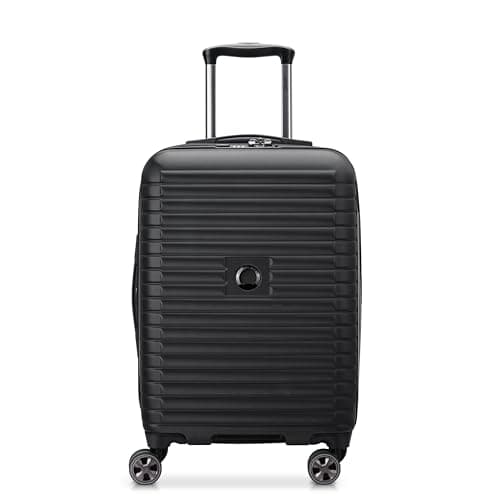
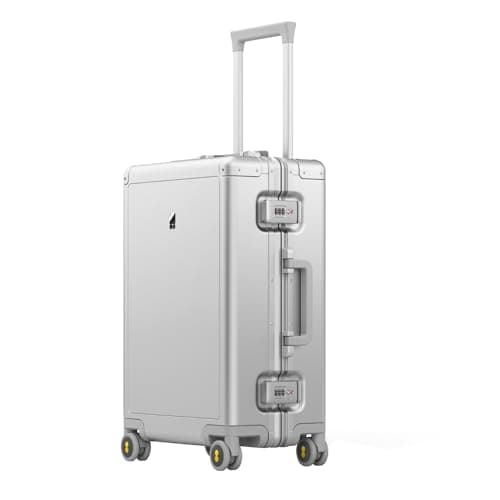
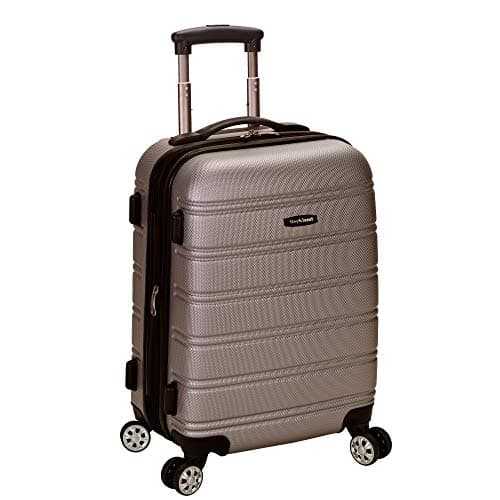
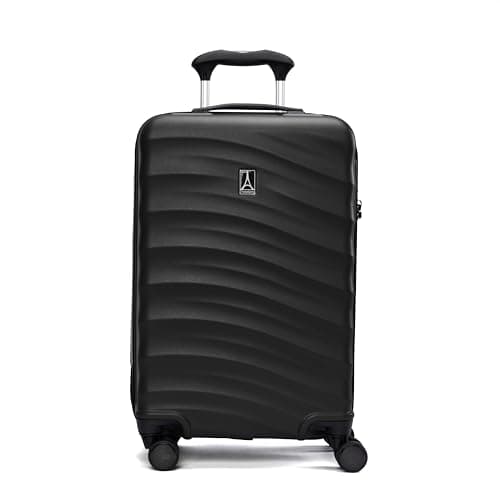
The best 20-inch case is the Travelpro Maxlite Air V2 Hardside Expandable Carry-On, and it wins for buyers who want a cabin bag that still clears a sizer when it is full: a 20-inch polycarbonate body, self-aligning spinner wheels and Travelpro's limited lifetime warranty, which names the wheels. If you want a case that cannot be unzipped by anyone with a ballpoint pen, the LEVEL8 Gibraltar Aluminum Zipperless Carry-On is the 20-inch answer at roughly three times the money. And if the budget is the whole brief, the Rockland Melbourne 20-inch is the cheapest spinner here that is honestly sized.
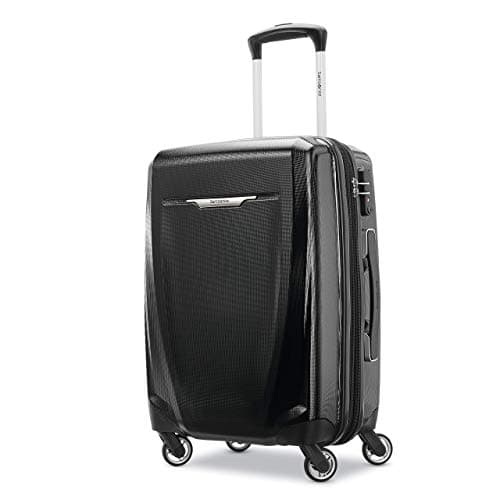
Here is the thing nobody selling luggage volunteers. A 20-inch case is almost never 20 inches. The number on the listing is the shell height. The number a gate agent measures is the overallheight, which includes the wheel housings underneath and the retracted handle on top — usually another 1.5 to 2.5 inches. That is why Samsonite's 20-inch Winfield 3 DLX publishes 22.25 x 14.5 x 9.5 in overall: a quarter inch over the US convention on height, half an inch over on width, and half an inch over on depth. It fits every soft sizer in America and it does not fit a rigid one.
So this page ranks on the overall figure where the maker publishes it, and says so plainly where they do not. The other three criteria are the ones that decide a 20-inch purchase. Closure type, because a zipper is the part that fails and the part a thief opens, and the 20-inch class is where aluminum-frame latch cases become affordable. Published empty weight, because on an international carrier working to a 7 kg (15.4 lb) cabin cap the case itself eats the allowance first. What the warranty names, because “10-year limited” and “limited lifetime, wheels included” are not the same promise.
For the other rungs on this ladder, our best 24-inch luggage covers the medium checked class and best 28-inch luggage covers the large. If you do not care about the label and only want the best cabin bag, best carry-on luggage ranks the whole field, and what size is a carry-on explains the allowance itself.
Every product here is one the site has already researched on its own roundup — the scores are the scores it earned there, and the verdicts are rewritten for the 20-inch brief. Specifications are the manufacturer's published figures; we have not lab-tested any of these. See how we test.
Published figures, side by side
These are the manufacturers' own published figures as they appear on the live listings, not measurements we took. Where a maker publishes only the body height and not the overall dimension, the table says so rather than guessing — an invented number is worse than a blank. Compare the overall column against the 22 x 14 x 9 in US convention.
| Case | Shell | Published overall size | Published empty weight | Closure |
|---|
| Travelpro Maxlite Air V2 20-inch | Hardside, expandable | Body published at 20 in; overall not published | Not published for this listing | Zipper |
| DELSEY Cruise 3.0 20-inch | Hardside | Body published at 20 in; overall not published | Not published for this listing | Zipper, recessed TSA lock |
| LEVEL8 Gibraltar 20-inch | Aluminum-magnesium | Body published at 20 in; overall not published | Not published for this listing | Latches, no zipper |
| Samsonite Winfield 3 DLX (20-inch model) | 100% polycarbonate | 22.25 x 14.5 x 9.5 in overall | 6.97 lb | Zipper, integrated TSA lock |
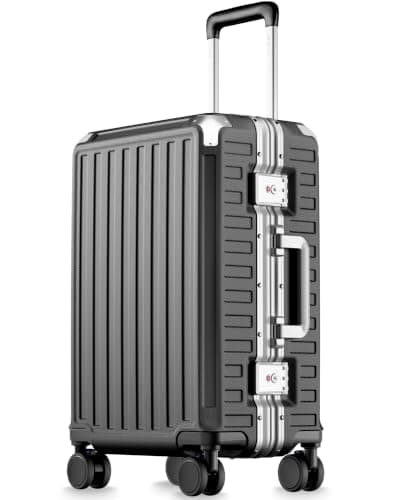
| LUGGEX aluminum-frame 20-inch | Polycarbonate, aluminum frame | Body published at 20 in; overall not published | Not published for this listing | Latches, no zipper |
| Rockland Melbourne 20-inch | ABS | Body published at 20 in; overall not published | Not published for this listing | Zipper |
The Samsonite row is the whole lesson. It is the only case here whose maker publishes the overall dimension, and that dimension is over the convention on all three axes for a bag sold as a 20-inch carry-on. Assume every other case on this page behaves similarly until you have put a tape measure on it.
Is a 20-inch suitcase a carry-on?
In the United States, yes, essentially always — and with margin, which is the reason to buy this size rather than a 22-inch one. The US convention is 22 x 14 x 9 inches including wheels and handles, so a 20-inch body plus roughly two inches of wheels and handle lands at or just under the limit instead of at or just over it.
Internationally it is tighter and it is not about inches. The common European and Asian cabin frame is 55 x 40 x 20 cm, which is 21.6 x 15.7 x 7.9 inches — note the depth: 7.9 inches, more than an inch shallower than the US convention. A 20-inch case clears the height easily and can fail the depth, especially expanded. Several of those carriers also cap cabin baggage by weight, commonly at 7 kg including the case, which is where empty weight stops being a comfort question and becomes a capacity question. Carrier-by-carrier figures are in carry-on size by airline and international carry-on size.
How much actually fits in 20 inches
A 20-inch case is roughly 35 to 40 liters of usable volume once the wheel wells and handle tubes have taken their share — and they take 15 to 20 percent of the gross box on any wheeled case. That is four to six days of clothing for most people packed flat, or seven to ten with compression cubes and a laundry plan. A 22-inch case buys you perhaps one extra day and costs you your margin on the sizer. If you want the arithmetic rather than the rule of thumb, we work it through in how many outfits fit in a carry-on.
Zipper or latches at this size
Twenty inches is the size class where the zipperless format becomes affordable, so the choice is real here in a way it is not at 28 inches. A zipper is the most common failure point on any case and the fastest to defeat — a split zipper chain can be re-zipped with no visible trace, which is why the format exists. Latches remove that, add weight, add cost, and remove the overstuff flex that lets a soft-packed zipper case swallow one more sweater. If your last case died at the zipper, buy latches. If it died at a wheel, buy the warranty that names wheels. The full argument is in zipperless luggage.
What fails on a 20-inch case, in order
Wheels first, always — they are the only part in constant contact with the ground, and a smaller case concentrates the same load on the same four casters. Zipper sliders second. Handle tubes third. The shell itself almost never fails on polycarbonate and does occasionally crack on ABS. This ordering is the ranking above: Travelpro's warranty names wheels and zippers, Samsonite's 10-year limited warranty covers the shell properly, and the budget picks compete on specification rather than service. Repair routes for all three failures are in wheel replacement, zipper repair and handle repair.