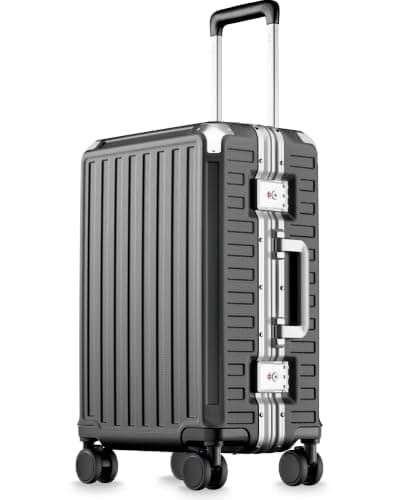
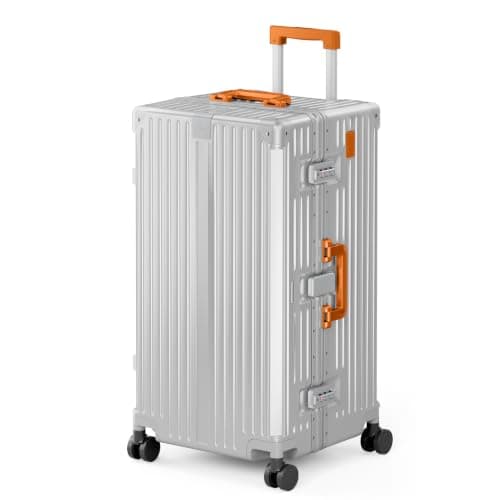
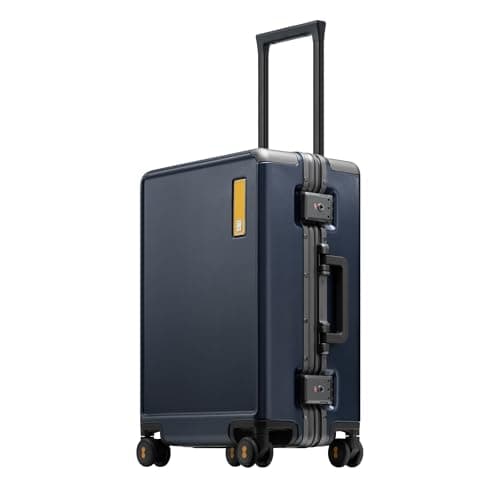
Zipperless luggage is a hardside case whose two halves close on a rigid frame - usually aluminum - held shut by latches, with a gasket along the seam, instead of on a zipper. It removes the two ways a zippered case is most often defeated: a main zipper bursting under an overpacked load, and the seam being opened with a pen and re-closed without a trace. In exchange it is heavier, it cannot expand, it usually costs more, and a latch that goes out of alignment is a harder repair than a zipper slider. Whether that trade is worth it depends almost entirely on whether the bag gets checked.
How a frame-latch closure works
The shell halves are bonded to a metal perimeter frame. When the case is closed, the frames meet and two or three latches - typically one on each long side, sometimes a third on the short side - clamp them together. A rubber gasket along one frame seals the seam, and on most cases at least one latch carries a TSA-recognized combination lock, so a screener can open the case with a master key rather than by cutting anything. On an all-aluminum case the shell panels are also metal; on a frame case the perimeter is aluminum and the panels are polycarbonate, which is how the format gets down to a sensible weight and price.
What it removes
The burst zipper. The most common failure of a full checked hardside is the main zipper splitting under load, usually at the corner where the teeth are under the most strain. A frame case has no teeth to split; overpacking a latch case means the latches will not close, which is a warning rather than a failure at 30,000 feet.
The pen trick. A closed coil zipper can be opened with a ballpoint pen pushed between the teeth, and then re-closed by running the slider back over the gap, leaving no sign of entry. A latched frame has no seam to push through, which is the security argument for the format on a bag you cannot watch.
Weather at the seam. A gasketed frame seals the main seam better than any zipper does. It is not waterproof - the wheel housings and handle mounts are not sealed - but rain on a tarmac stays out of the packing compartment.
What it costs
Weight. A metal frame and latches weigh more than a zipper and fabric flange. On a frame case with polycarbonate panels the penalty is modest; on an all-aluminum case it is substantial, and on a 7 kg cabin weight cap or a 23 kg checked limit it comes straight out of your clothes. No expansion. A latched case is a fixed volume; what you leave with is what you come home with. Price. The frame, the latches and the locks cost more to make than a zipper. Alignment. A frame that is bent by a hard drop may stop closing cleanly, and that is a harder repair than replacing a zipper slider - which is why the brand behind the case matters more here than on a zippered bag. Dents. On the all-metal versions, permanently, from the first rough handling; aluminum owners consider that the point, and buyers who do not should choose a frame case with polycarbonate panels.
What to look for
- Frame case or all-aluminum. If you want the closure, buy a frame case with polycarbonate panels - lighter, cheaper, and it does not dent. If you want the metal aesthetic, buy aluminum and accept the weight and the dents.
- Three latches over two on a checked-size case; a 28-inch seam held at two points bows in the middle when the case is full.
- A TSA-recognized lock built into a latch, not a padlock through a hasp. Our TSA luggage locks guide explains why a lock a screener cannot open gets cut.
- Published empty weight, and check it against your airline's cabin cap if the case is a carry-on. A maker that does not publish one is not a maker we would trust the frame from.
- Replaceable latches and wheels. The two parts most likely to need service. A brand with a parts channel is worth paying for on a case whose failure mode is mechanical.
- A gasket you can see running the full perimeter of one frame half.
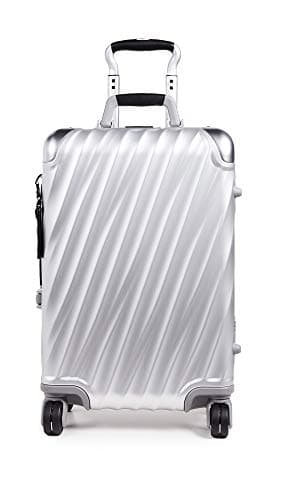
With those criteria in hand, the four cases below are the zipperless options the site already covers on its aluminum luggage, luxury luggage and TUMI roundups, with the scores they earned there. Prices are live from Amazon; we have not lab-tested any of them - see how we test.
Zipperless vs zipper: the honest comparison
A zippered hardside is lighter, cheaper, can expand for the trip home, and has a failure - the slider or a split tooth - that a luggage repair shop or the brand fixes routinely. A zipperless case is heavier, costs more, is a fixed volume, and has a failure - a bent frame or a broken latch - that is harder to fix, but it removes the two failures that end the life of most cheap hardsides. For a carry-on that never leaves your sight, the zipper's advantages win for most people. For a checked bag that is handled by three baggage systems on a connection, the frame's advantages start to matter. That is why the checked-size frame case is the one we would recommend most readily, and why our hardside roundup is still led by zippered polycarbonate.
Security in proportion
The pen trick is real and a latch case defeats it. But the same latch case can be opened by anyone with a TSA master key, which are not hard to find, and a determined thief with time and a bag out of sight will get into anything. The realistic security gain is against opportunistic entry on a bag in a hold or a hotel luggage room - not against a targeted theft. Do not pack anything in a checked bag, zipperless or not, that you cannot afford to lose; our checked luggage rules guide covers what should never go in the hold at all.
Zipperless and the airline sizer
Frame cases tend to be sized to the standard allowances rather than over them, because the frame cannot bulge the way a zippered shell does when overpacked - a latched case is the size it is. That cuts both ways: it will drop into a sizer it is designed for, and it will not squeeze into a bin that is an inch too small. Check the published dimensions against the carry-on size by airline table before you buy a zipperless carry-on.
Living with latches
Close the latches in the same order every time and check both before you let go of the handle; a case with one latch open swings open on a belt. Do not sit on the lid to close it - on a zippered case that is how zippers burst, and on a frame case it is how frames bend. If a latch stops closing cleanly, stop using the case until it is fixed; a frame that has bent is a case that will come off the carousel open. And expect the finish to change: brushed aluminum scratches and dents, and the frame on a composite case will show wear at the corners.