Five to seven complete outfits for most adults, packed flat in a standard 22 x 14 x 9 inch carry-on. With compression cubes and a willingness to re-wear trousers, eight to ten. If you need more than that out of a cabin bag, the answer is not a packing technique — it is doing laundry mid-trip, which turns any carry-on into an unlimited one.
Here is where those numbers come from, because a range is only useful if you can check it against your own wardrobe.
Step one: the gross box
A 22 x 14 x 9 inch case is 2,772 cubic inches, which is about 45 liters. That is the number airline allowances imply and it is not the number you can pack.
Step two: what the wheels and handle take
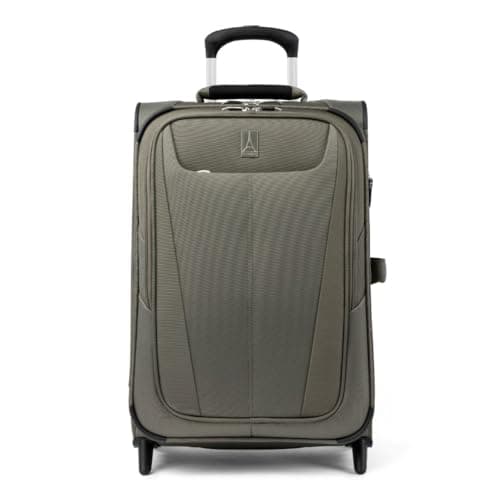
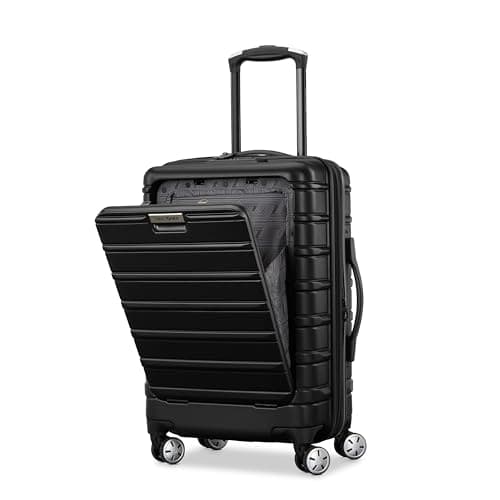
Every wheeled case loses volume to the wheel wells underneath and the telescoping handle tubes running up the back panel. On a spinner carry-on that intrusion is typically 15 to 20 percent of the gross box, which leaves roughly 37 to 40 liters usable. This is why published capacities for real carry-ons cluster in the high thirties and forties rather than at 45, and it is also why a two-wheel rollaboard with recessed wheel housings can publish more usable volume than a spinner of identical external size — Travelpro publishes 52 L for the Maxlite 5 22-inch inline rollaboard, against the high-thirties-to-forties figures typical of spinners. If the configuration question interests you, it is set out in spinner vs 2-wheel luggage.
Step three: what a garment actually occupies
Rough working volumes for folded adult clothing, which is the part you should adjust to your own wardrobe — a wool sweater and a technical t-shirt are not comparable objects:
| Item | Approximate folded volume | How many fit in 1 L |
|---|
| T-shirt | ~0.7 L | About 1.5 |
| Dress shirt or blouse | ~1.2 L | Under 1 |
| Trousers or jeans | ~2.5 L | Under 1 |
| Knit sweater | ~3.5 L | Under 1 |
| Underwear and socks, one day | ~0.4 L | About 2.5 |
| Pair of shoes | ~4 L | Under 1 |
| Toiletry bag (TSA liquids compliant) | ~2.5 L | Under 1 |
Build an outfit from that table — a top, a day's underwear, and a share of the trousers you are re-wearing — and a typical warm-weather outfit comes in around 2 to 2.5 liters. A cold-weather outfit with a sweater is closer to 4 to 5 liters. Take 37 usable liters, subtract one pair of shoes and a toiletry bag (about 6.5 L), and you have roughly 30 liters of clothing space: about twelve to fifteen warm-weather outfits' worth of volume on paper, which in practice becomes five to seven outfits once you account for the fact that nothing packs perfectly, nothing is a cube, and you will bring a jacket.
How many liters is a carry-on, by published capacity
These are manufacturers' own published figures from the live listings, not measurements we took. The spread is the expansion range where a maker publishes one.
| Case | Published capacity | Published size |
|---|
| Briggs & Riley ZDX Essential carry-on | 37.2 - 46.5 L | 22 x 14 x 9 in |
| Briggs & Riley Sympatico Essential 22-inch | 41 - 51 L | 22 x 14 x 9 in |
| Briggs & Riley Baseline Essential 22-inch | 37 - 48 L | 22 x 14 x 9 in |
| Briggs & Riley Baseline Global 21-inch | 37 - 49 L | 21 x 15 x 9 in |
| Briggs & Riley Baseline Essential 2-Wheel | 39 - 51 L | 22 x 14 x 9 in |
| Travelpro Maxlite 5 22-inch inline rollaboard | 52 L | 22-inch body |
Two things fall out of that table. First, the honest usable figure for a compliant cabin bag is high thirties to low fifties, not 45 — the expansion range is where the variance lives. Second, the unexpanded figure is the one that matters at a gate, because using the expansion zip on a cabin trip is the most common way a compliant bag becomes a gate-check. Treat the top of each range as a trip-home number.
How much fits in a 20-inch case, versus 24 and 28
Roughly: a 20-inch case is 35 to 40 usable liters (four to six outfits), a 24 or 25-inch checked-medium is 70 to 80 liters — Travelpro publishes 76 L for the Maxlite Air V2 25-inch — and a 28-inch case is 100 liters or more. Note what happens at the large end: a 100-litre case holds more clothing than a 23 kg airline allowance permits, which is why 28-inch bags are the most common cause of an overweight fee. Our best 20-inch luggage, best 24-inch luggage and best 28-inch luggage pages cover each rung, and what size suitcase for 23 kg works through the weight side.
What compression actually buys you
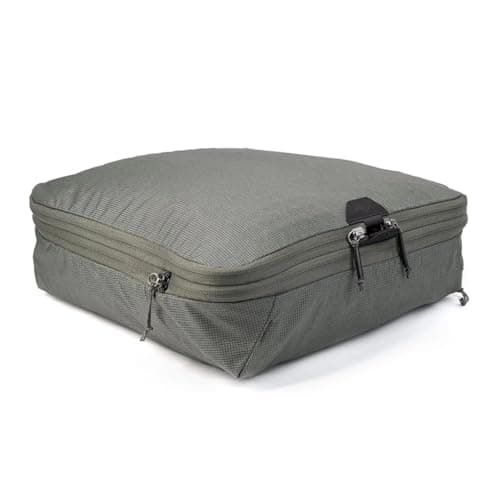
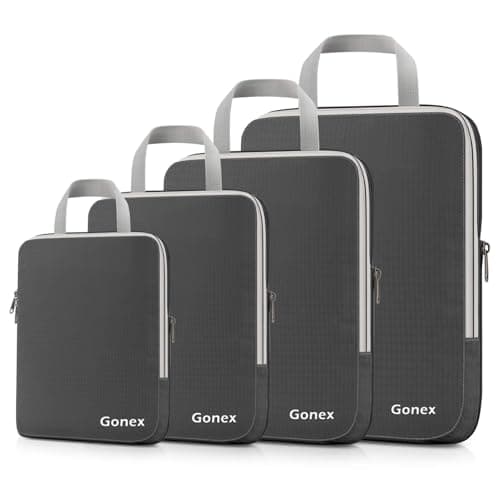
Compression cubes do not make clothes smaller; they remove the air between them and stop the pile re-expanding. On soft knitwear and anything bulky the gain is real — typically 20 to 30 percent of the pile's height, which on 30 liters of clothing is six to nine liters recovered, or two to three more outfits. On dress shirts and tailoring the gain is close to zero and the wrinkle cost is high. The honest summary: compress the soft things, fold the structured ones, and if you are travelling with a suit read how to pack a suit instead. The full evidence on whether cubes save space at all — including the case that plain cubes mostly organize rather than compress — is in do packing cubes save space.
The three things that change the answer most
Shoes. Each pair is about four liters, which is nearly two outfits. One pair worn and one packed is the discipline that turns a five-day carry-on into a seven-day one; the technique for making the packed pair cost less is in how to pack shoes in a suitcase. Outerwear. A winter coat is the single largest object you will consider packing; wear it onto the aircraft and the question disappears. Re-wearing. Outfits are not independent. One pair of trousers across three days is two and a half liters instead of seven and a half, which is the difference between a week and four days in the same case. Every “pack for two weeks in a carry-on” article is really an article about re-wearing.
Picks that change the arithmetic
Two ways to get more outfits into a cabin bag: remove the air from the pile, or buy the case with the most published usable volume. Here are the registry picks for each, chosen on the published figures above rather than on packaging claims.