Almost every bag this site recommends is disqualified from a safari before you pack it. The reason is the light aircraft — the single-engine Cessnas and twin-engine Caravans that fly you from an international airport to a bush strip — and the rules those flights impose are unlike any airline template we rank against anywhere else on this site. Published operator guidance is consistent on the two that matter: bags must be soft-sided, with no wheels and no rigid frame, and they must fit a cargo hold whose opening is published by one operator as around 28 x 48 cm.
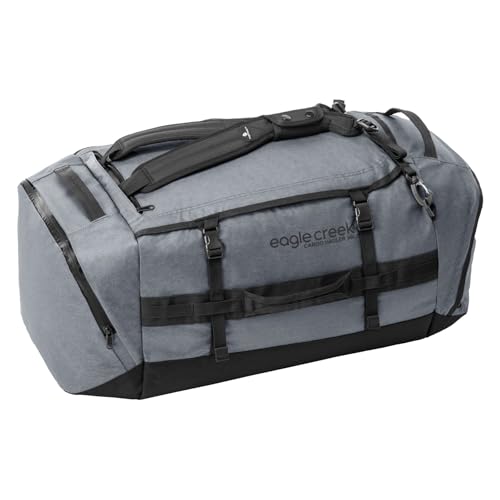
That first rule is the whole page. A hardside spinner cannot go. A wheeled duffel cannot go — and we will say the uncomfortable part plainly: the Eagle Creek Cargo Hauler Wheeled Duffel that wins our moving abroad page is not eligible here, because the wheels and their housing are exactly what the rule excludes. Different trip, different physics, different answer.
The second rule is the one that reorders the field, and it is the reason this page does not simply recommend the biggest soft duffel on the market. The weight cap on a bush flight is a TOTAL — your checked bag plus your hand luggage plus your camera gear, all of it, per person — and published figures run from 12 kg to 23 kg depending on the operator and the country. At the low end that is 26.5 lb for everything you own on the trip, with a long lens eating several pounds of it. You physically cannot fill a 70- or 90-liter bag inside that allowance. Which means the right bag for most safaris is smaller than a generic duffel roundup would tell you to buy, and that is the argument the ranking below is built on.
The five criteria, in the order they decide the bag
1. Soft-sided, no wheels, no rigid frame. This is a pass/fail gate, not a scored axis. A bag that fails it does not appear on this page at all, regardless of how good it is. Published operator guidance states bags must be packed in a soft bag with no wheels or frame so they can be manipulated into an irregular hold — the hold of a Caravan is not a box, and a rigid case wastes the space around it even when it fits.
2. Weight of the bag, against a total cap. Because the cap includes everything, every ounce the empty bag weighs is an ounce of clothing, binoculars or lens you leave at home. The spread on this page runs from about 2 lb 5 oz to about 3.4 lb — roughly a pound, which is 3% of a 15 kg allowance. Smaller than the moving-abroad spread, but not nothing.
3. Size against the published envelope. The most commonly published maximum is 25 x 30 x 62 cm (10 x 12 x 24 in), with one operator publishing a slightly more generous 16 x 12 x 24 in and noting that larger bags may be accepted if they can be manipulated to fit the hold. Read that caveat carefully, because it is the key to the whole dimension question — see the table below, where we do the arithmetic and find that essentially nothing on the market is inside that envelope on all three published axes.
4. Dust and water. Transfers happen in open-sided vehicles on dirt roads, bags ride on roof racks or in open beds, and the dust is fine enough to get through a cheap zipper. A coated or laminated shell fabric is worth real money here in a way it is not on a concourse. This is the one criterion where the premium bags earn their price.
5. What it does when it is empty. Tents and vehicles have no room for a rigid box, and you will live out of the bag for a week. A duffel that collapses, or folds into its own pocket, is genuinely better than one that does not — and a bag with stowable backpack straps solves the short walk from the strip to the vehicle that no wheel could have managed anyway.
What we deliberately do not rank on: liter capacity as a virtue. On this page more volume is frequently a liability, because a bag you cannot fill inside the weight cap is just a bigger thing to fit in a hold. Nor warranty length — it matters for a decade of ownership, which is not what is being decided here, though we state it on every pick.
Before you buy anything: get your operator's actual number
We want to be straight about the state of the published record, because it is messier than most pages on this topic admit. The figures conflict, and they are operator-specific. Published guidance we could read gives 15 kg (33 lb) per person including hand luggage, soft bags required for one Kenyan operator; 20 kg total inclusive of luggage and hand luggage/camera equipment for another operator's own fact sheet; 23 kg for a third; and a country-level split of 20 kg (44 lb) in Botswana, Namibia and South Africa against 12 kg (26.5 lb) elsewhere. We found no published baggage rules on the own-brand sites of several of the carriers most often named in this context during this pass, and some of the operator material that is readable is several years old.
So treat every number on this page as the shape of the constraint rather than as your allowance. Your tour operator knows your actual figure and your actual aircraft; ask them before you buy a bag. If you are told 15 kg, buy at the smaller end below. If you are told 20 or 23 kg, or you are sharing an allowance across a couple, the larger picks come into range.
The envelope table, from published figures
Every dimension here is the maker's own published figure, set against the most commonly published safari envelope of 25 x 30 x 62 cm. This is the table that explains why the dimension rule is not what it looks like.
| Bag | Published dimensions | vs 62 cm length | Empty weight | Wheels / frame |
|---|
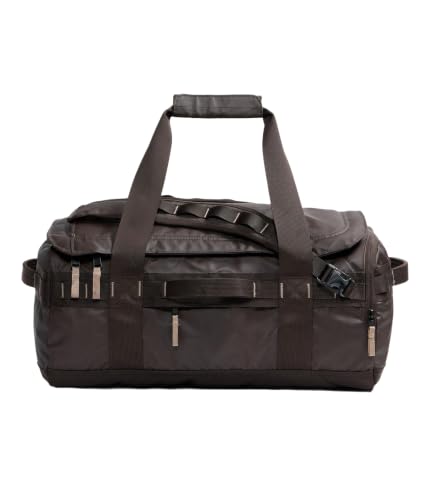
| TNF Base Camp Voyager, 42 L | 58.4 x 37.3 x 25.9 cm | 3.6 cm clear | 1,055 g (2 lb 5 oz) | Neither |
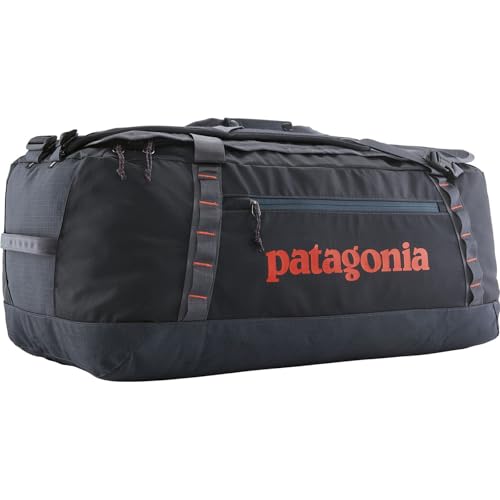
| Patagonia Black Hole, 70 L | 66 x 36 x 28 cm | 4 cm over | 1,366 g (~3 lb) | Neither |
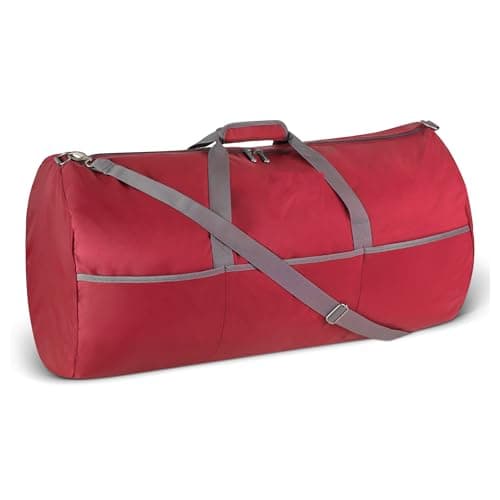
| Eagle Creek Cargo Hauler, 90 L | 73 x 32 x 37 cm | 11 cm over | 1,200 g (2 lb 10 oz) | Neither |
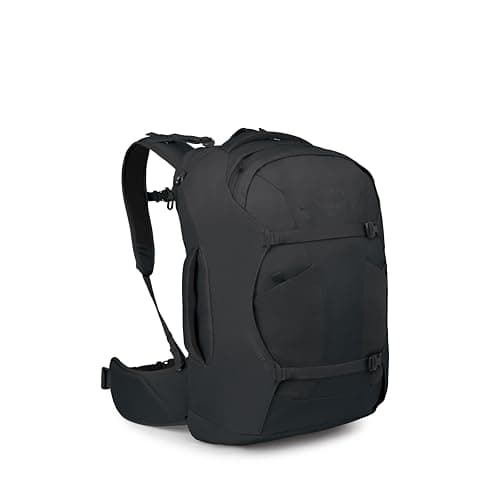
| Osprey Farpoint 40L | ~55 x 35 x 23 cm | 7 cm clear | ~1.44–1.55 kg | LightWire frame |
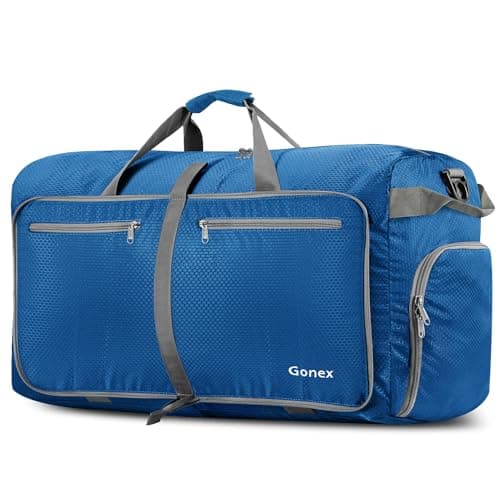
| Gonex 60 L foldable | Not published | — | Not published | Neither |
| Amazon Essentials XL foldable | Not published | — | Not published | Neither |
Three things that table makes obvious, and the first one is the important one.
Nothing here is inside 25 x 30 x 62 cm on all three published axes — not one bag. Every single pick is over on width, and three are over on length. That is not because the market has failed; it is because the published envelope describes a soft bag after it has been squashed into a hold, not a bag measured on a shop floor. The test that actually gets applied is whether the loader can push your bag through an opening published at around 28 x 48 cm and work it into the space available. A 37 cm-wide duffel packed two-thirds full goes through a 28 cm opening because fabric moves; the same duffel stuffed to its seams does not. Which leads to the single most useful piece of advice on this page: under-pack the bag. The weight cap will force you to anyway.
Length is the axis to shop on. It is the one dimension a soft bag cannot lose by being under-packed — a 73 cm duffel is 73 cm long whether it is full or empty, because the end panels set it. That is why the 42 L bag tops this page and the 90 L bag does not, even though the 90 L bag is the lighter of the two per liter.
And the weights are closer than the volumes. A 42 L bag at 2 lb 5 oz and a 90 L bag at 2 lb 10 oz are five ounces apart. Empty weight is a real criterion here but it is not the discriminator it was on our moving abroad page, where the spread was nearly seven pounds. On safari the discriminators are the pass/fail gate and the length.
Why a 42-liter bag beats a 90-liter one here
This is the counter-intuitive part, so it is worth the arithmetic. Take a 15 kg (33 lb) total allowance. Subtract the empty bag at about 2 lb 5 oz, a day pack and its contents, and a camera body with one telephoto lens — a modest kit runs 5 to 8 lb. You have something like 20 to 24 lb left for clothing and everything else.
Twenty-odd pounds of safari clothing — which is mostly lightweight long sleeves, two pairs of trousers, a fleece for the pre-dawn game drive and a wide hat — occupies roughly 40 to 50 liters packed normally, and less in compression cubes. So a 42 L bag is correctly sized: you fill it, it holds its shape, and it is the shortest bag in the field. A 90 L bag carrying the same 20 lb is two-thirds empty, floppy, 11 cm over the published length, and harder for a loader to place. The big bag is not more capable here. It is just bigger.
The exception is real, though, and it is why the larger bags are ranked rather than dismissed. On a 20 or 23 kg operator, with a couple sharing one bag, or on a trip that pairs safari with a beach week or a city stop, the larger duffels come properly into range. Our how many outfits fit in a carry-on guide works the clothing-volume arithmetic from dimensions if you want to check the sizing against your own list.
Packing for the weight cap, not the volume
Four habits that matter more than the bag you choose, because the cap is what will actually bite.
Wear the heavy things onto the aircraft. Boots, fleece and long trousers worn do not count against a checked allowance on most operators — though note that on a bush flight where the cap is a per-person total, some operators weigh you and your bags together, which defeats this. Ask.
The camera gear is the problem, not the clothes. A body and a long lens can be a fifth of a 15 kg allowance. If photography is the point of the trip, budget the kit first and the wardrobe second, and consider whether one zoom replaces two primes.
Laundry is usually included. Most safari camps wash clothing daily, often at no charge, which is the single biggest reason you can pack for a week rather than a fortnight. Confirm it with your camp — and note that many camps will not launder underwear, for cultural reasons, so pack enough of that.
Lock nothing you cannot open fast. Bags get handled by many people across several transfers and a padlock on a duffel is as likely to delay you as to protect anything. Our locks guide covers which types are worth carrying; on this trip, a tracker is the more useful purchase than a lock, because the failure mode here is a bag that misses a connection rather than a bag that gets opened.
Finally, the international leg. You are flying a normal airline to get to Africa, where a wheeled case would be the easier bag — so some people check a suitcase to the gateway city and switch. That works if your itinerary has a night there and your operator will store the case, and it is a hassle otherwise. The simpler answer, and the one these bags are built for, is to fly the whole way with the soft bag; a 42 to 70 L duffel is a perfectly ordinary checked bag on an intercontinental flight, well inside the 62-linear-inch standard every one of them clears with room to spare.