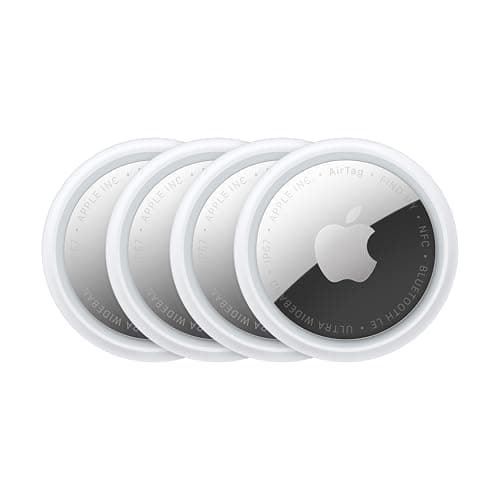
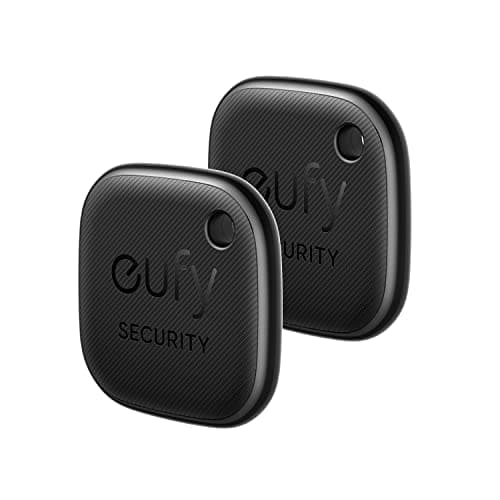
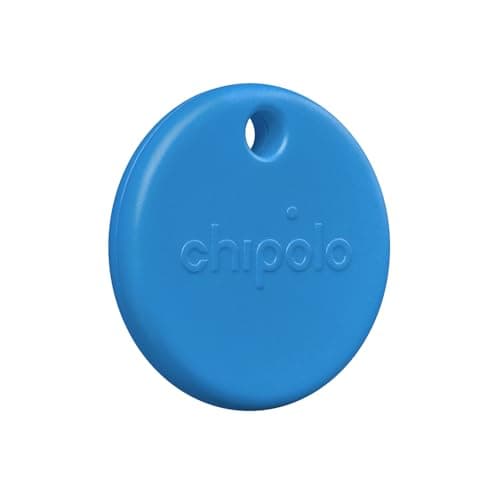
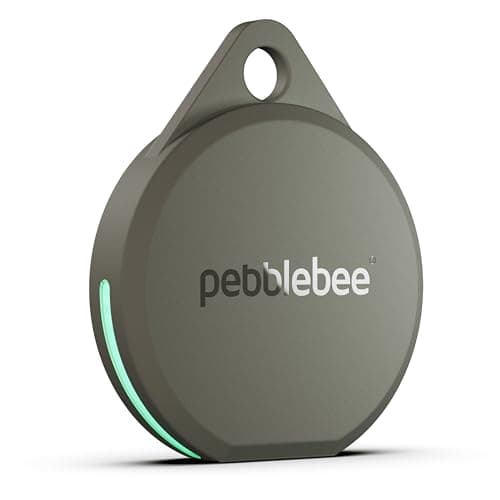
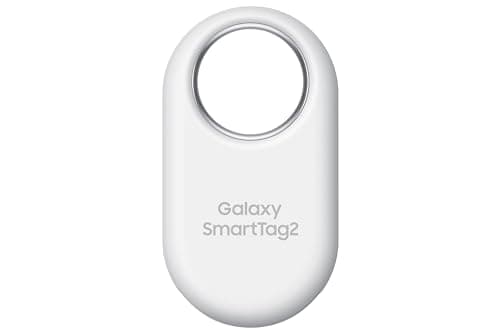
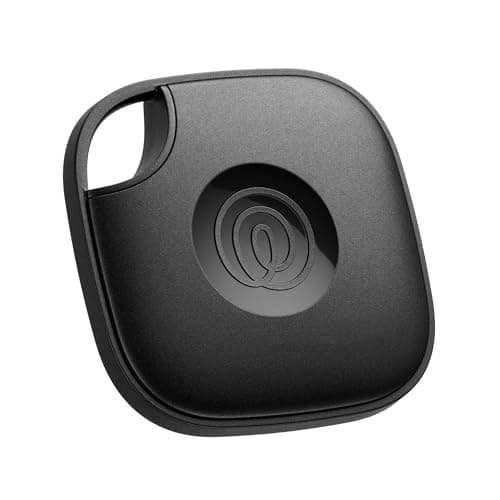
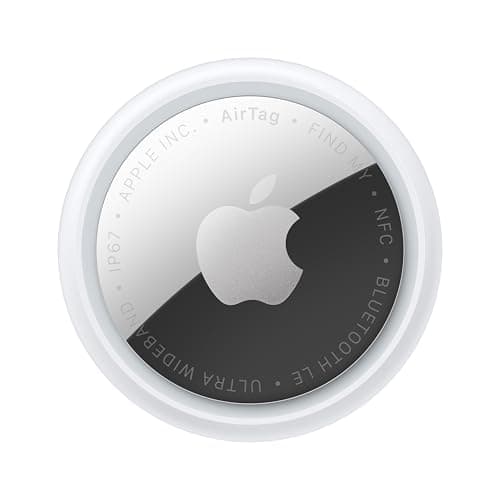
A luggage tracker does not track your luggage. It has no GPS and no cellular radio. It is a Bluetooth beacon that whispers an encrypted identifier every few seconds, and it only reports a location when a phone on the same finding network happens to walk past it and relays the fix. That single fact decides this whole category: the best tracker is the one whose network has the most phones in the baggage hall you are standing in, and everything else — loudness, battery, price — is secondary.
So we ranked these on the things that actually differ. Network reach: Apple's Find My runs on every iPhone; Google's Find Hub runs on Android; Samsung's SmartThings Find is relayed only by Galaxy devices; Tile's network is Tile and Life360 app users. Airline sharing: since iOS 18.2, Apple's Share Item Location lets you hand a temporary link to an airline's baggage desk, and eighteen carriers were named at launch — no equivalent is live on the other networks yet. Finding tools: ultra-wideband precision finding that points you to the bag, versus a Bluetooth ring you follow by ear. Battery: a replaceable coin cell you can swap in a hotel room, a sealed rechargeable, or a sealed cell that makes the tag disposable when it dies. And value, judged on what the tag does rather than the number on the button — the buy buttons below show today's price.
Two things before the picks. Every tag here is legal in a checked bag: the FAA's PackSafe chart allows lithium-powered baggage trackers in checked baggage if the device does not exceed 0.3 grams of lithium metal or 2.7 watt-hours, and a CR2032 coin cell is rated at 235 mAh at 3 volts — roughly 0.7 Wh, a quarter of the cap. And a tracker does not prevent a lost bag; it shortens the argument about where the bag is. If you are checking a case, the checked luggage rules guide covers what else can and cannot go in it, and the best checked luggage roundup is where the bag itself gets chosen.
The network is the product
Every tag on this page is a Bluetooth beacon with no location hardware of its own. When your phone is out of range, the tag's position is whatever the last passing phone on its network reported, encrypted end to end so the relaying phone never knows what it relayed. That makes the size of the crowd the only spec that matters at 2 a.m. in a foreign baggage hall. Apple's Find My is relayed by every iPhone; Google's Find Hub by Android phones; Samsung's SmartThings Find by Galaxy devices only; Tile's by phones with the Tile or Life360 app open in the background. Buy the tag on the network your own phone belongs to, then prefer the larger crowd where you have a choice — which is why the two cross-platform tags here, the Chipolo POP and the Pebblebee Clip 5, are the pick for Android owners over the Galaxy-only SmartTag2.
Airline sharing: what exists and what is announced
Apple's Share Item Location (iOS 18.2 and later) generates a link to a Find My accessory's position that you give to the airline. The recipient authenticates with an Apple Account or a partner email, sharing stops when you mark the item found, you can revoke it at any time, and it expires after seven days. Eighteen airlines were named at the November 2024 launch, including Delta and United in the US, and SITA is integrating it into WorldTracer, the baggage-tracing system used by more than 500 airlines. Any Find My accessory qualifies — the AirTag, the eufy, or a Chipolo or Pebblebee paired to Find My — not just Apple's tag. Google has announced airline partnerships for Find Hub tracker sharing with Aer Lingus, British Airways, Cathay Pacific, Iberia and Singapore Airlines; we treat that as announced rather than something to rely on until it is live at your carrier. Samsung and Tile have nothing comparable. If you fly one airline often, check its delayed-baggage page for whether it accepts tracker links before you buy.
Can you put a tracker in a checked bag?
Yes, in the US. The FAA's PackSafe chart (updated November 2025) states that "baggage location tracking devices (or bag tags) powered by lithium batteries are allowed in checked bags if devices do not exceed 0.3 grams (lithium metal) or 2.7 watt hours." A CR2032 coin cell is rated at 235 mAh and 3.0 volts on Energizer's datasheet, which is about 0.7 Wh — well inside the limit — and the small rechargeable cells in the Pebblebee and Tile are of the same order. This is a different rule from the one for smart luggage with built-in power banks, which must be carried on unless the battery is removed; our USB charging luggage guidecovers that case. Airlines outside the US set their own policies, so the airline's own dangerous-goods page is the authority for your route.
Where to put it
Inside the bag, in a zipped interior pocket or the lining side of a divider, not on the exterior handle. Anything hanging off a checked bag is the first casualty of a conveyor, and a tag clipped to a luggage tag walks off with it. Bluetooth passes through polycarbonate and nylon well enough for the network to relay it; what an interior placement costs you is speaker volume, which is why ring loudness is a smaller factor for luggage than it is for keys. Some cases now build in a dedicated tracker pocket — the Béis Carry-On Roller in our Monos vs Béis comparisonis one — but any zipped pocket does the job.
Precision finding, and why it matters less for luggage
Ultra-wideband is what gives the AirTag and the SmartTag2 an on-screen arrow and a distance readout when you are within a few meters. It is superb for keys down the back of a sofa. For a suitcase it matters in exactly one situation: a carousel or a lost-luggage room full of identical black spinners, where walking toward the arrow beats pressing "play sound" and listening. If you own a UWB phone it is a reason to prefer the AirTag over the eufy; if you do not, the two are the same tag on the same network and the eufy is cheaper.
Replaceable, rechargeable or sealed
A replaceable CR2032 (AirTag, eufy, Chipolo, SmartTag2) is the lowest-maintenance option for anyone who flies a few times a year: it sits for a year or more, and the cell is sold in every pharmacy on earth. A sealed rechargeable (Pebblebee) suits the monthly flyer who charges everything anyway, with the understanding that when the cell wears out the tag is done. A sealed non-rechargeable (Tile Mate) is simplest of all and is disposable by design at roughly three years. None of these is wrong; the mistake is buying a rechargeable and then discovering it flat the morning of a flight, which is the same mistake we warn about with rechargeable luggage scales.
What a tracker will not do
It will not stop a bag being mis-tagged, mis-routed or left on a tarmac, and it will not make an airline deliver it faster than its own process allows. What it does is replace "we are looking into it" with a location you can show an agent, which is the difference between a bag that is genuinely lost and a bag that is sitting in the wrong terminal. Pair it with the basics: a name and phone number inside the case, a photo of the packed bag, and a checked case that is not the cheapest one on the shelf — our most durable luggage roundup is the place to start on that.
What we would buy
On an iPhone, the AirTag — the single if you have one case, the four-pack if you have a set. On Android, the Chipolo POP paired to Find Hub, or the Pebblebee Clip 5 if you would rather charge than swap a cell. On a Galaxy phone inside a Samsung household, the SmartTag2 is defensible for the battery alone; outside one, take the Chipolo. The Tile Mate is the answer only when one tag has to be set up from both an iPhone and an Android phone, and you accept the smaller crowd that comes with it.