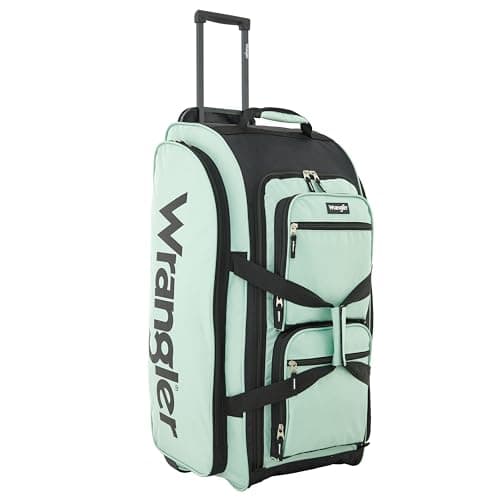
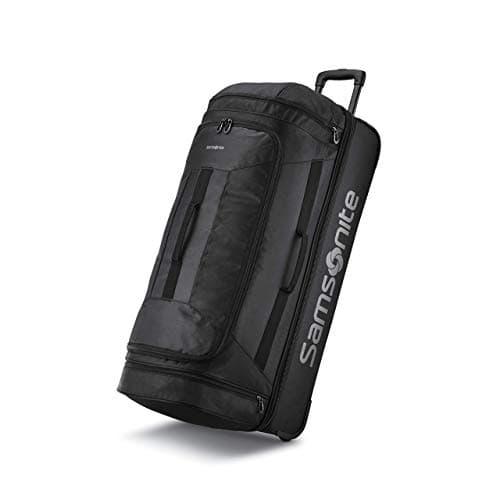
A rolling duffel solves a problem neither a suitcase nor a duffel solves cleanly: you want the soft, squashable, over-stuffable shape of a duffel, but you do not want to carry 45 lb of it across an airport. Bolt two wheels and a telescoping handle onto a duffel and you get a bag that packs like fabric and moves like luggage.
The trade is specific and worth understanding. Wheels and a handle cost you two things: weight and interior volume. The wheel housing and handle tubes intrude into the bag, typically taking a wedge out of the base and a channel up the back — which is why a 90 liter rolling duffel holds noticeably less than a 90 liter carry duffel. Makers rarely subtract that from the headline number.
We ranked six on the things that decide whether one of these lasts: wheel and housing construction (this is where rolling duffels fail, without exception), usable capacity after the intrusion, whether the bag still works when carried — because you will carry it up stairs and over gravel — and drop-bottom or split-compartment design, which is the feature that separates a thought-through bag from a duffel with castors screwed on.
Almost every bag in this category is a checked bag. The wheels and handle push most of them past cabin allowances even before you pack, so treat these as hold luggage and check the numbers in our checked bag limits guide before you buy the largest one you can find.
Rolling duffels fail at the wheels. Every time.
There is no ambiguity about this. The fabric outlives the wheels, the zippers outlive the wheels, and the handle usually outlives the wheels. So the wheel system is the only specification worth studying carefully.
Two configurations dominate. Inline skate wheels — larger diameter, recessed into a housing, sealed bearings on the better bags — roll over curbs and gravel and are much harder to shear off. Small castors are cheaper, roll fine on smooth floors, and are the first thing to break on a bad curb. If the listing shows small exposed wheels on a large bag, expect a short life. Our wheel replacement guide covers what you can fix yourself when it happens.
The volume the wheels take away
The handle tubes run up the back panel and the wheel housing occupies the base corners. Together they typically remove a meaningful share of the interior — and manufacturers quote the external volume regardless. That means a 90 liter wheeled duffel and a 90 liter carry duffel are not the same bag.
The practical consequence: buy one size larger in a rolling duffel than you would in a carry duffel, and expect the packed shape to be less flexible around the base because the housing is rigid.
Drop-bottom is the feature to look for
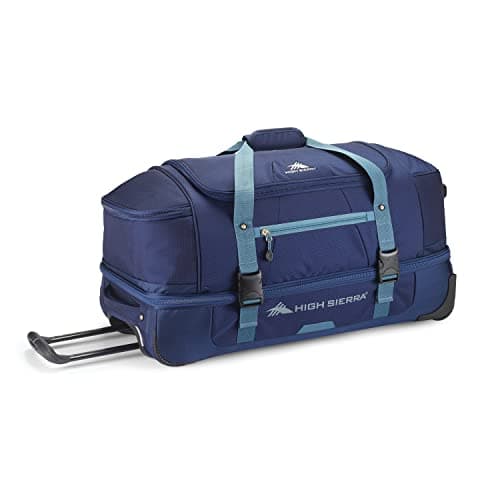
A drop-bottom design splits the bag into a main compartment and a separate zippered lower section. In a large soft bag with one cavity, boots and wet kit end up against your clothes; a drop-bottom fixes that structurally rather than asking you to pack around it. It is the clearest signal that a bag was designed as a travel bag rather than assembled from a duffel and a wheel kit.
Size against the weight limit, not against the shelf
Rolling duffels are sold in sizes up to 110 liters, and almost nobody can use that. The standard checked allowance is 50 lb before overweight fees, and 110 liters of clothing, books or gear passes that comfortably. Buy the size you can fill within the weight limit, which for most people means 28–32 inches or roughly 70–90 liters. Our checked bag guide has the per-airline numbers.
What we would actually buy
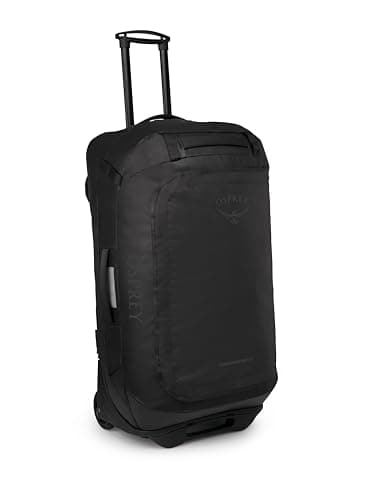
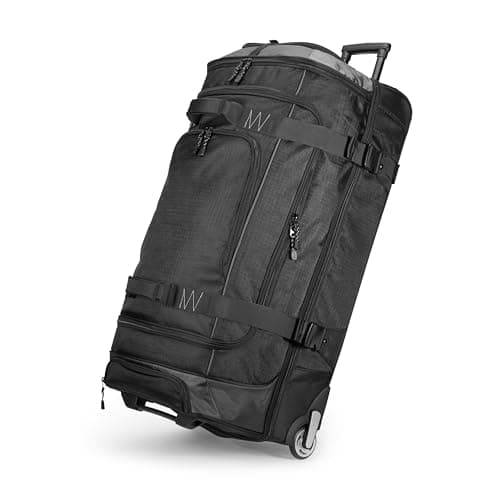
The Samsonite Andante for airport travel, because inline skate wheels plus a real parts network is the combination that survives. The High Sierra Fairlead if the drop-bottom compartment solves a problem you actually have. The Osprey Transporter if you genuinely need to carry the bag as well as roll it — nothing else here comes close on that. And if the bag is for one trip, the Wrangler is honest about being exactly that.
How we picked
We did not lab-test these bags
Everyone in this category says they tested twenty suitcases. We have not lab-tested any of these, and we say so. What we did instead: compiled each bag's published specifications, checked its dimensions against the airline sizers, ran the cost-per-trip and weight-to-capacity math, read the aggregated owner reviews, and scored every pick against a published rubric. The scores are judgments from documented research — not measurements we took, because we do not have a lab and we will not pretend we do. Where a number came from someone else's work, we name them in Sources.