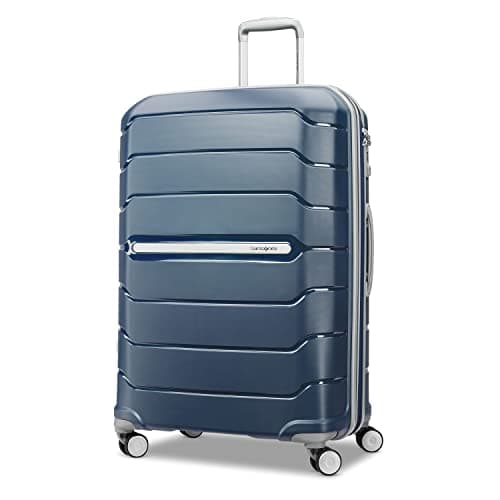
A modern carry-on weighs 5 to 10 lb empty. A medium checked case (24 to 25 inches) weighs 8.75 to 9.4 lb. A large 28-inch case is over 11 lb. Those are published manufacturer figures for cases this site covers, not estimates - and the reason they matter is that the empty weight is the part of your allowance you have already spent. On a 50 lb US checked bag, a 9 lb case leaves you 41 lb. On a 7 kg (15.4 lb) international cabin cap, a 9 lb carry-on leaves you 6.4 lb, which is a laptop, a charger and almost nothing else.
Two separate rules are at work and people conflate them constantly. US carriers generally do not weigh cabin bags - they measure them, which is why a heavy hardside carry-on is a non-issue on a domestic flight and a real problem abroad. Most European and Asian carriers do weigh them, commonly at 7 kg, and that is where a two-pound difference in empty weight becomes a third of your allowance. For checked bags the cap is near-universally 50 lb (23 kg) and 62 linear inches; our checked bag size and weight limits guide has the numbers by carrier and carry-on size by airline has the cabin rules.
Published empty weights, by size
Every figure below is the manufacturer's own published number from the live listing - we have not weighed these bags. Where a maker publishes two figures for the same bag, we say so rather than picking one.
| Case | Size class | Published empty weight |
|---|
| Osprey Ozone 2-Wheel Carry-On 40L | Carry-on | 4.476 lb |
| Delsey Clavel 19-inch | Carry-on | 5.3 lb |
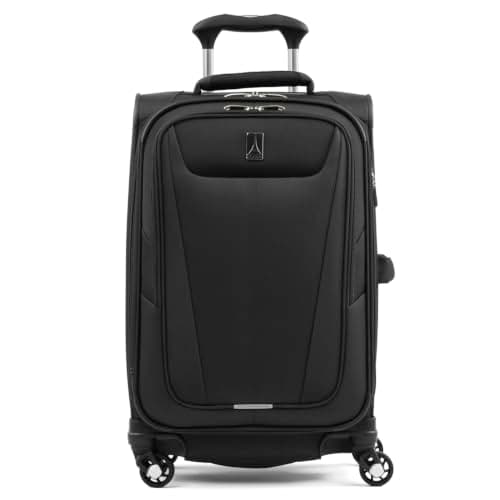
| Travelpro Maxlite 5 Carry-On | Carry-on (softside) | ~5.4 lb |
| American Tourister Disney 21-inch | Carry-on | 6.1 lb |
| Samsonite Omni PC 20-inch | Carry-on | 6.81 lb |
| Samsonite Winfield 3 DLX Carry-On | Carry-on | 6.97 lb |
| American Tourister Stratum 3.0 Carry-On | Carry-on | 7.3 lb |
| Away The Carry-On | Carry-on | 7.5 lb |
| Briggs & Riley ZDX Essential Carry-On | Carry-on (softside) | 8 lb |
| TUMI 19 Degree Large Expandable Carry-On | Carry-on | 8.2 lb |
| American Tourister Moonlight 21-inch | Carry-on | 8.2 lb |
| Briggs & Riley Sympatico Essential 22-inch | Carry-on | 8.6 lb |
| Briggs & Riley Baseline Global 21-inch | Carry-on (ballistic nylon) | 9.9 lb |
| American Tourister Stratum 2.0 24-inch | Medium checked | 8.75 lb |
| Samsonite Omni 2 24-inch | Medium checked | 9.0 lb |
| Samsonite Winfield 3 DLX 25-inch | Medium checked | 9.3 lb |
| Travelpro Maxlite Air V2 25-inch | Medium checked | 9.4 lb |
| American Tourister Stratum 3.0 28-inch | Large checked | 10.98 lb |
| Briggs & Riley Baseline 26-inch | Medium-large (ballistic nylon) | 12.5 lb |
Three things the table shows that the category does not advertise
Softside is not automatically lighter. The lightest carry-on here is a two-wheel hardside pack at 4.476 lb; the heaviest is a ballistic-nylon softside case at 9.9 lb. Format is a weak predictor. Structure is the real variable - every ounce of frame, organizer panel and reinforcement is weight, and the bags built to be repaired for life are the heaviest bags in the category precisely because of it.
Spinner wheels cost weight. Four casters and their mounts weigh more than two recessed inline wheels, which is a large part of why the Osprey Ozone two-wheeler is the lightest case in the table. Our spinner vs 2-wheel guide works through the rest of that trade.
The weight premium sits at both ends. Cheap cases are heavy because the material is thick and unoptimized; premium repair-for-life cases are heavy because they carry a frame. The lightest bags in the table are mid-market cases from brands that compete on the scale - Travelpro Maxlite, Delsey Clavel, Samsonite Freeform and Winfield.
The arithmetic, done properly
For a checked bag: 50 lb allowance minus the published empty weight is your real packing budget. A 9 lb medium leaves 41 lb. An 11 lb large leaves 39 lb - which is the quiet reason a big case is a bad deal: it gives you more cubic inches and less weight to fill them with. The practical consequence is that a 28-inch case full of clothes is almost always overweight before it is full, and our best 24-inch luggage page argues the medium case from exactly this number.
For an international cabin bag: 7 kg is 15.4 lb. A 5.4 lb softside carry-on leaves 10 lb of belongings; an 8.2 lb hardside one leaves 7.2. That is the difference between packing for four days and packing for two, and it is why our international carry-on page ranks on empty weight first.
For a US domestic cabin bag: the weight does not matter at all, because the bag is measured and not weighed. What matters is whether it fits the sizer - see what size is a carry-on.
How to weigh a bag without an airport scale
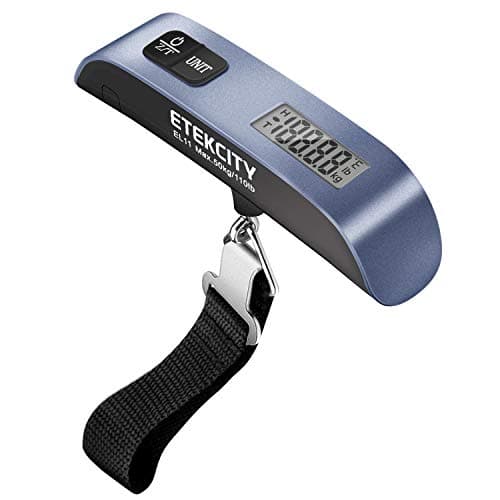
A hanging luggage scale is the accurate way and costs very little. The bathroom-scale method works but is worse than people think: standing on a scale holding a bag, then subtracting your own weight, compounds two readings and routinely lands three or four pounds out - which is exactly the margin that matters at a check-in desk. If you use it, weigh yourself three times first and take the median. Better: weigh the empty case once, write the number inside the lid, and from then on weigh only what goes in it.
What to buy when the number is the constraint
Three registry picks, all researched on their own roundups: the lightest full-featured cabin bag the site covers, the lightest large checked case, and the scale that makes the whole question answerable at home instead of at a desk.
Why makers publish different weights for the same bag
Three legitimate reasons, and one less so. Some figures are shipping weight rather than bag weight, which includes packaging. Some are for a different size in the same collection - a range page will quote the carry-on weight against a photo of the large case. Some differ by colorway or trim level, which is real. And some are simply inconsistent: TUMI publishes 5.04 kg and 11.88 lb for the same Alpha Dual Access carry-on, which are not the same number. Where we find two published figures we state both; our TUMI roundup does exactly that.
How much should a suitcase weigh?
As a target, aim for an empty checked case under 10 lb and an empty carry-on under 7 lb - both achievable at mid-market prices, as the table shows. Below those numbers you start trading away structure: a 4 to 5 lb case is a light case, and it is also a case with less frame protecting the contents. Above them you are either buying repair-for-life construction, which is a deliberate and defensible trade, or you are buying thick cheap plastic, which is not.
Where the rest of the weight goes
Once the case is chosen, the remaining levers are the obvious ones and they are worth real pounds. Shoes are the heaviest thing most people pack and the easiest to halve - the method is in how to pack shoes in a suitcase. Liquids are dense and mostly replaceable at the destination. Books are the single worst weight-per-volume item in a suitcase. And a set of plain packing cubes adds fabric and therefore weight, which our packing cubes guide is honest about. The full packing-to-weight method is in how to pack a suitcase.
If you are over at the desk
Move weight into the cabin bag, not out of the trip. US domestic cabin bags are measured rather than weighed, so a laptop, books, shoes and toiletries can usually be moved from a checked bag into a carry-on or a personal item at no cost - the limits are in our personal item size guide. On a 7 kg international cabin allowance that trick does not work, which is why the empty weight of both bags matters more on those routes. And if the bag is over on size rather than weight, the measuring method - over the wheels and handles, never the brochure figure - is in how to measure luggage.