Three rules do most of the work. Pair each shoe heel-to-toe and sole-to-sole, so the pair occupies a rectangle instead of two awkward shapes. Put them at the hinge end of the case, over the wheels, which is both the strongest part of the bag and the lowest point when the case stands up - so the heaviest items are where they should be and the case does not tip. Fill the insides with socks, underwear and chargers, because a shoe is a rigid container and leaving it empty wastes the volume you are already paying to carry. Do those three and the shoe problem is mostly solved.
The rest is about keeping them clean, keeping their shape, and not packing more of them than you need - which is the real reason shoes dominate a suitcase.
The rules, in order of how much space they save
1. Wear the biggest pair. Boots and chunky trainers should be on your feet on travel days, not in the case. This is worth more than every packing technique on this page combined, and it matters most on a weight-capped airline where a pair of boots can be two kilos of your allowance.
2. Pair them opposed. Sole to sole, one heel against the other's toe. A pair packed this way is a neat rectangle; a pair packed side by side in the same orientation is a wedge with dead air around it.
3. Stuff them. Socks, underwear, belts, chargers, a rolled t-shirt. This recovers the volume and, for leather shoes, holds the shape so the toe box does not collapse under whatever is packed on top.
4. Line them up along the hinge end, over the wheels. The heaviest items belong closest to the wheels so the case rolls stable and does not tip when you let go of the handle, and the hinge end is the structural edge. In a carry-on, that also keeps the flat middle of the case free for the folded clothes.
5. Bag every pair. A shoe that has walked a city pavement is going into a case with your clothes. A dedicated shoe bag, a drawstring bag, or - the universal fallback - a disposable shower cap from the hotel, which is exactly the right shape and costs nothing.
Dress shoes, and keeping them uncreased
Leather dress shoes crease when the upper folds, and they fold when something heavy is packed on top of an empty shoe. Three measures, all cheap. Stuff them firmly enough that the toe box holds its shape - rolled socks work, and shoe trees work better if you are already carrying them. Pack them in the middle of the layer rather than at the edge where the case flexes. And put nothing rigid and heavy directly on top; a soft layer of clothing between the shoes and the next item is enough. If the trip involves a suit, our guide to packing a suit covers the whole outfit, and the garment bag roundup covers the bags with dedicated shoe compartments.
Heels, boots and trainers
Heels pack opposed - heel of one against the toe of the other - and want the heel itself protected, because a stiletto heel is both fragile and perfectly shaped to punch through a lining. Wrap each one or use a structured shoe bag. Boots should be worn rather than packed where possible; if they must go in, lay them flat along the length of the case, stuff the shafts so they do not fold at the ankle (a fold crease in leather is permanent), and accept that tall boots effectively cost a whole layer of a cabin case. Trainers are the easiest - pair them opposed, stuff them, bag them.
How many pairs should actually go
For most trips: the pair you travel in, plus two. One smart or dressy pair and one alternative to what you are wearing. That covers nearly every itinerary, and every pair beyond it is dense weight you will carry for a week and wear once. If you are packing a carry-on only, make it the travel pair plus one - our how to pack a carry-on guide builds a full week around that constraint, and what size luggage for a week covers the case size that makes it comfortable.
What to pack them in
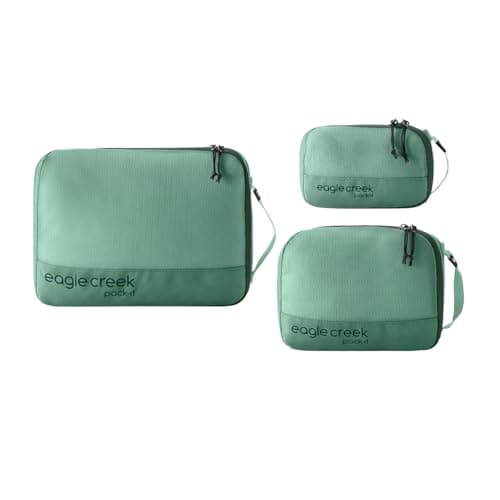
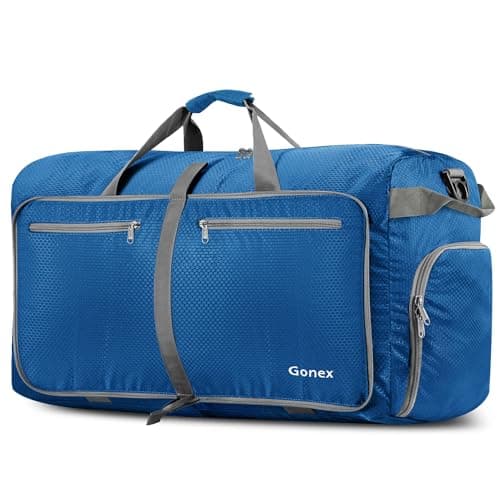
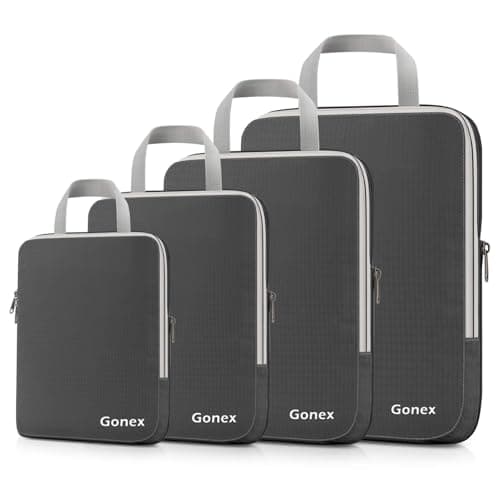
The three picks below are the site's own registry entries that address this directly: a compression cube set that takes the clothing volume down so the shoes have somewhere to go, an organisational cube set with a shoe sleeve, and a duffel with a dedicated shoe compartment for trips where the footwear is the point. Scores are the ones each earned on its own roundup; prices are live, and we have not lab-tested any of them - see how we test.
Keeping the smell out of everything else
Shoes that have been worn for a day go into a bag before they go into a case, every time - that single habit prevents most of it. For shoes that are already a problem: an overnight airing before you pack, a sprinkle of baking soda left in them and tipped out before packing, or a dryer sheet tucked in each shoe. Never pack damp shoes. A pair that is even slightly wet sealed in a case for a day comes out smelling permanently of it, and the damp transfers to whatever is next to it. If the trip ends with wet shoes, bag them separately and air the case when you get home - see how to clean luggage.
Checked bag or carry-on?
Shoes are the single best argument for a checked bag on a longer trip, because they are dense and dense items hit a weight limit rather than a volume one. In a carry-on they cost you volume you cannot spare; in a checked bag they cost you allowance you usually have. If you are one-bagging, the rule is strict: travel pair plus one, no exceptions, and make the second pair something that packs flat. Our carry-on vs checked bag guide sets out the wider trade.
Protecting the case as well as the shoes
A hard sole with grit in the tread is abrasive, and a heel is a point load. Bagging shoes protects the lining as much as the clothes - a lining worn through by an unbagged boot heel is a common and entirely avoidable failure. In a softside case, keep hard soles away from the outer fabric panels; in a hardside case, keep heels off the mesh divider.
The shoes-first packing order
If you want a repeatable sequence: shoes in first, bagged and stuffed, along the hinge end over the wheels. Then the heavy folded items in the same half. Then cubes of clothing filling the remaining volume. Then soft, crushable items in the gaps and along the lid. Finally anything flat and creasable - a suit, a dress shirt - laid across the top so nothing presses it. That order puts the weight low and over the wheels and the creasable items where nothing sits on them, which is the whole of packing in one sentence. How to pack a carry-on walks the full method.
Shoes are also the heaviest thing in most suitcases, which matters more than the space they take: on a checked bag the binding constraint is the 50 lb limit rather than the volume. The full packing-to-weight method, including where shoes belong in the load order and why the heaviest items go flat against the back panel at the wheel end, is in how to pack a suitcase.