Luggage is expensive for four reasons, and they are not equally honest. The biggest single driver at the top of the market is the guarantee: a company promising to repair your case for life regardless of who broke it has to hold money against that promise, and you pay for the reserve whether or not you ever claim. After that: the wheel assemblies, which are the only genuinely engineered components on a suitcase; the shell material and its tooling; and brand, which is real and which you should decide about with your eyes open. The short verdict: under about six flights a year, buy the cheap bag — the arithmetic never catches up. Over about twenty, buy the expensive one.
Driver one: the warranty is an insurance reserve
This is the part the category never spells out. There are three tiers of promise in luggage, and they cost very different amounts to make. A term warranty against defects in materials and workmanship — the ten-year and five-year wordings — covers manufacturing faults for a fixed period and explicitly excludes the airline that sheared your wheel off. It is cheap to offer, because manufacturing faults are rare and the airline is the thing that actually breaks luggage. A limited lifetime warranty that names the parts — wheels, zippers, extension handles — is materially more expensive, because those are the components that genuinely fail and the company is now on the hook for them for as long as you own the bag. And a lifetime functional repair regardless of cause is the most expensive promise in the industry: it does not ask how the bag broke, which means the manufacturer absorbs airline damage, your own carelessness and a decade of hard use.
That last promise is a service contract bundled into a suitcase, and you are paying for it up front. Whether it is worth it is purely a function of how much you fly — which is the arithmetic further down this page. The wordings, including the exclusions that survive even the unconditional guarantees, are set out in luggage warranties explained.
Driver two: wheels are the only real engineering
A suitcase is a box, a zipper, a handle and four wheels, and only the wheels are a designed mechanical assembly. A budget caster is a plastic wheel on a plastic mount. A premium one has sealed bearings, a metal axle, a reinforced mount bolted through the shell rather than riveted to it, and in the better cases a self-aligning mechanism that returns the wheel to true after a side load. That matters because spinner wheels almost never fail from wear — they fail when a sideways impact twists the caster off the mount, and the difference between a wheel that survives that and one that does not is the single largest cost difference in the hardware.
Which is also why the cheapest durability upgrade in luggage is not more money, it is fewer wheels: two recessed inline wheels have half the parts of four exposed casters and sit inside the shell footprint where impacts do not reach them. A mid-price two-wheel rollaboard is structurally tougher than an expensive spinner. The format argument is in spinner vs 2-wheel luggage, and the failure-point ranking is in the most durable carry-on luggage.
Driver three: the shell and what it costs to make
Hardside shells are injection-moulded or vacuum-formed, and the mould is a large fixed cost amortised across the production run — which is exactly why a brand with one popular case can price it low and a brand with twelve niche shapes cannot. The material matters too: polycarbonate flexes under impact and returns to shape, while cheaper ABS is stiffer and cracks, and polycarbonate costs more per kilogram. Aluminum is the most expensive of all, because it is fabricated rather than moulded, and what you get for it is a shell that dents permanently instead of cracking and a latch closure instead of a zipper. On softside cases the equivalent spread is polyester against ballistic nylon, and the gap is real but smaller — fabric essentially does not fail either way. The materials are compared in polycarbonate vs ABS vs aluminum and polypropylene vs polycarbonate.
Driver four: brand, and why Rimowa and TUMI cost what they do
Some of it is real and some of it is positioning, and it is worth separating them. The real parts: hardware feel that you notice on every single trip, a repair infrastructure that will have the exact wheel for your six-year-old case, and resale value that mainstream luggage simply does not have. The positioning part: luggage is one of the few consumer goods that is seen in public by strangers at a moment when people are self-conscious about status, and brands price accordingly.
One correction worth making, because the assumption is almost universal at this price: a four-figure case does not necessarily come with a lifetime guarantee. TUMI publishes five years on its travel, business and bag collections and two years on wallets and accessories. Briggs & Riley, which costs less, publishes a lifetime functional repair regardless of cause. If the guarantee is what you are buying, read the published term rather than inferring it from the price. We go through the published figures for both in TUMI vs Briggs & Riley and best luxury carry-on.
The arithmetic: cost per trip
This is how to decide, and it takes one minute. Divide the price by the number of trips you expect to get out of the bag. A budget carry-on flown twice a year for six years is twelve trips. A premium carry-on flown thirty times a year for fifteen years is four hundred and fifty. The premium bag can cost ten times as much and still come out cheaper per trip — at that flight count. At two trips a year it never does, because the budget case will also still be working in year six: a case flown a handful of times a year sees so few hardware cycles that the expensive engineering is never exercised.
The crossover sits somewhere around twenty flights a year. Below about six, buy the cheap bag with a clear conscience. Between six and twenty, buy the middle — a polycarbonate case from a mainstream brand with a ten-year warranty and parts availability — which is where the value curve in this category genuinely flattens. Above twenty, the unconditional guarantee stops being a luxury and starts being the cheaper option, because a bag that is always repairable is never a replacement purchase. The full working is in how long does luggage last.
What gets cheaper and what does not
Worth knowing before you shop. Prices in this category move a lot — mainstream luggage is heavily discounted around the main retail events, and the same case can swing substantially inside a single quarter, which is why every price on this site is read live from the Amazon API and date-stamped rather than typed into the copy. What does not get cheaper is the premium guarantee tier: brands selling a lifetime repair promise discount rarely and shallowly, because the reserve behind the promise does not get cheaper just because it is November. If you are buying mainstream, timing helps. If you are buying the guarantee, it does not. Our luggage deals page tracks the mainstream end.
One case per tier
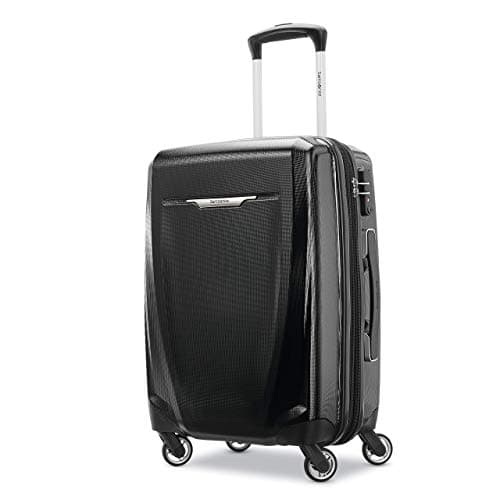
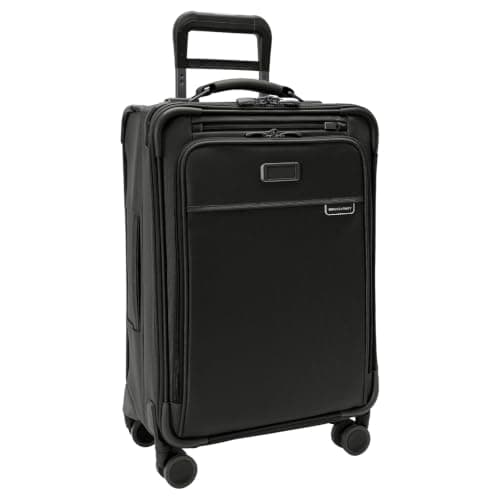
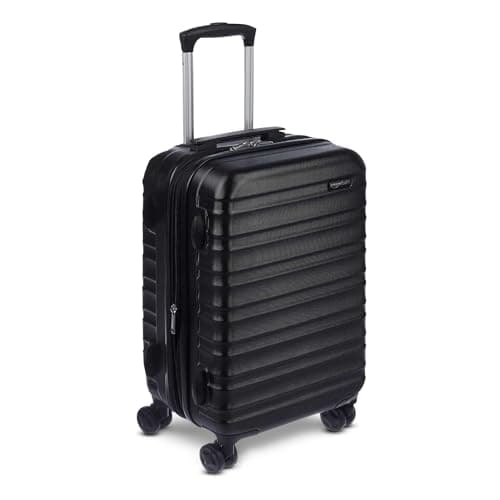
The follow-up question to “why is it so expensive” is always “so what should I actually buy”. Here is one case at each of the three tiers described above, so you can see what the money changes. Prices are read live and date-stamped; we do not print them in prose because they move.