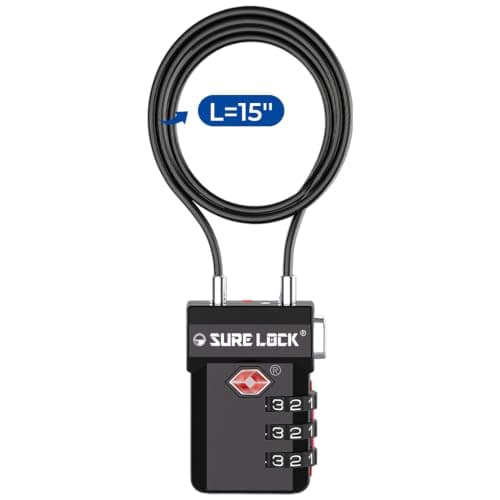
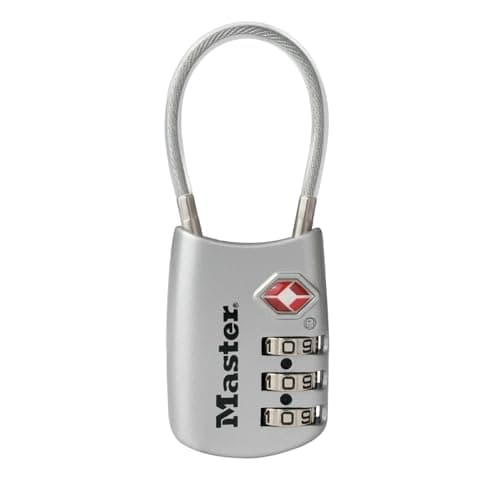
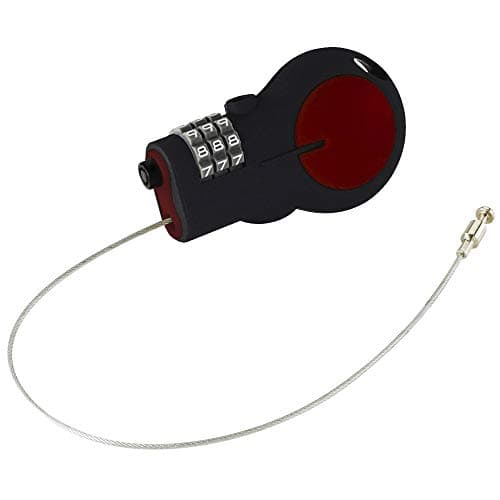
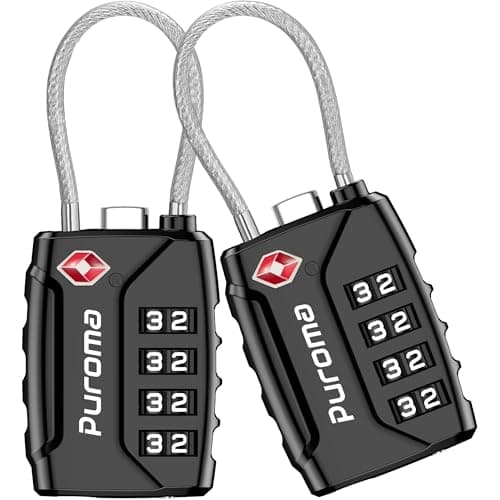
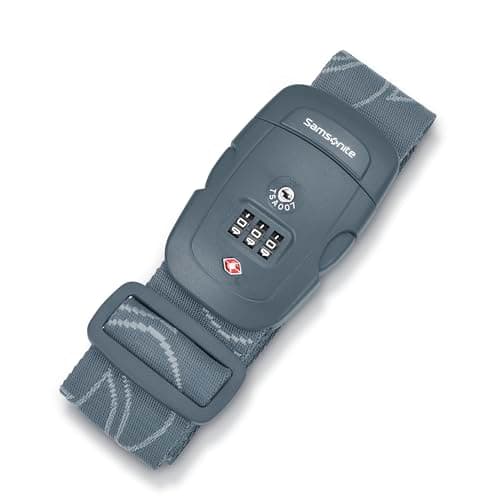
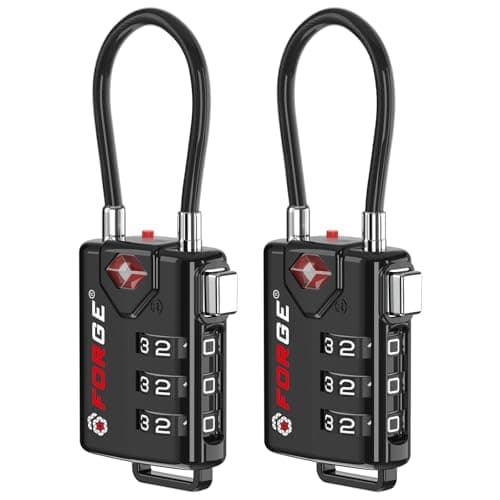
The best luggage lock for most people is the Forge TSA Open Alert Cable Lock, and the reason is one spec almost no roundup leads with: the shackle. A lock with a rigid 2 to 3 mm steel shackle will not pass through a large proportion of the zipper pulls actually fitted to suitcases and duffels, which is the most common reason a luggage lock gets returned. A flexible braided-steel cable threads through anything — two pulls sitting at awkward angles, a duffel's D-ring, a backpack's double sliders. Buy the cable first and the combination second. If you want the cheapest lock that does the same job, the Master Lock 4688EC publishes a 1-1/2 in flexible braided steel shackle at the lowest cost per lock on this page.
It is worth being blunt about what you are buying, because the category markets itself dishonestly. A TSA-recognized lock is not a security device. It is a device that lets a screener open your bag with a master key and close it again, instead of cutting the lock off — and that is the entire value proposition. Master Lock's own support page puts it plainly: a TSA lock "allows TSA agents to open and relock your luggage without having to cut open the lock." How TSA-recognized locks work explains the master-key systems, the Travel Sentry red diamond and the Safe Skies torch in full; this page is the ranked buy list.
So the ranking below uses five criteria, in this order. Screener compatibility, because a lock that is not recognized gets cut. Tamper evidence, because an open-alert indicator is the only way you learn your bag was opened without standing there. Fit on a real bag, which is the shackle question above and the one that decides whether the lock is used or binned. Recovery, because forgetting a three-digit code you set in a hurry at a check-in desk is the likeliest failure, not theft. And cost per lock, because you need more than one — most cases have two compartments and most compartments have two pulls.
Dimensions, materials and mechanisms below are the manufacturer's or the live listing's published figures, cited in Sources. We have not cut, picked or drop-tested any of these locks, and where a maker publishes no figure we say so rather than estimate it. See how we test.
The shackle is the spec that decides it
Luggage locks come in two mechanical families, and the difference matters more than the brand on the body.
| Type | What it is | Fits | Trade |
|---|
| Cable lock | A flexible braided-steel loop, from about 1-1/2 in to 30 in long | Almost any pair of zipper pulls, a D-ring, a strap loop, two bags at once | Cuttable with hand tools in seconds |
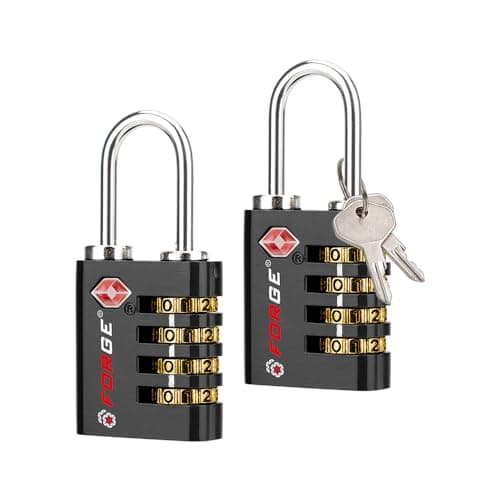
| Rigid-shackle padlock | A short solid steel shackle, commonly 2 to 3 mm in diameter | Only pulls with a big enough hole and the right geometry | Fails to fit a lot of bags; harder to cut than a cable |
Both are opened by the same master keys and both are equally defeated by a determined thief, so "harder to cut" is a weak argument against "fits the bag you own." That is why six of the eight picks below are cable locks, and why the two rigid ones are here for specific reasons rather than as defaults.
The country count nobody reconciles
If you are buying a lock for an international trip, note that the two figures most often quoted for the Travel Sentry program come from the same company and do not match. Master Lock's support page publishes "approved in 44 countries and over 650 airports" ; Master Lock's own product page for the 4688D publishes "recognized as a TSA-approved luggage lock in 29 countries." We have quoted both rather than pick one, and the practical conclusion is the same either way: recognition is wide but not universal, so in an airport outside that list a lock is a zipper fastener, not an inspection pass.
How many locks do you actually need?
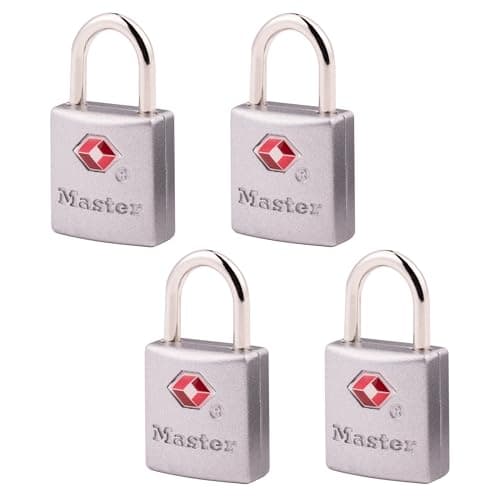
More than one, which is why cost per lock is a scored criterion above. A typical expandable hardside case has a main compartment with two sliders and a front pocket with two more. Lock only the main compartment and the front pocket is open; lock both and you need two locks per case. Add a carry-on backpack or a duffel and you are at three or four. Two-packs and four-packs are the sensible unit of purchase, and a single lock at a premium price is the worst value in the category.
Lock the sliders to each other, not to the bag
The point of a luggage lock is to stop the two zipper sliders traveling apart. Thread it through both pulls so they are joined to each other. Locking a pull to a handle or a D-ring feels more secure and is worse: the zipper can still open from the other end, and a dropped bag now puts the whole load through one stitched anchor point rather than through the zipper chain that was designed to carry it.
What a lock does not do
Three things, and all three are worth knowing before you spend:
- It does not stop a zipper bypass. A standard coil zipper can be opened with a ballpoint pen and re-zipped afterwards, with the lock untouched the whole time. That is a property of coil zippers, not of locks. The only structural answer is a case that closes on a latching frame, which is covered in our zipperless luggage guide.
- It does not survive tools. Every lock here is cuttable in seconds with hand tools. They deter the opportunist and the curious, which is most of the real risk.
- It does not make a checked bag safe for valuables. Nothing does. Laptops, jewelry, medication and documents travel in the cabin, lock or no lock.
Built-in locks versus padlocks
Most current hardside cases ship with a TSA combination lock molded into the shell. It is convenient, impossible to lose and — this is the part people miss — impossible to replace yourself if the mechanism jams. A separate padlock is the answer for softside bags, duffels, backpacks and any case whose built-in lock has failed. If you are choosing a case, our hardside luggage roundup notes which picks have an integrated lock and which do not.
Before an international trip
Check the lock carries a Travel Sentry red diamond or a Safe Skies torch stamped on the body — not just the words "TSA approved" in a listing title. Recognition is wide but, on the two figures Master Lock itself publishes, somewhere between 29 and 44 countries, so it is not universal. In an airport outside the program, a locked bag selected for inspection is a bag whose lock may be removed. If the trip goes somewhere you are unsure about, a numbered zip tie costs pennies, cannot be relocked by anyone, and tells you instantly whether the bag was opened. Our checked luggage rules guide covers what screeners are looking for in the first place.
The combination you should set
Not 000, and not your bank PIN. Set something you already know cold — a year, a house number, the last three digits of an old phone number — and record it somewhere that is not inside the bag. If you are buying for a household, a keyed-alike set like the Master Lock 4683Q removes the problem entirely, at the cost of having a single key to lose.