A two-wheel bag makes one trade and it is worth understanding before you spend anything. You give up the sideways glide: a spinner stands upright and carries its own weight, while a rollaboard tilts back and puts part of its mass into your hand, wrist and shoulder for as long as you are walking. What you get back are two things a spinner cannot offer. The wheels sit recessed inside the shell rather than protruding below it, so the single most common catastrophic luggage failure — a caster sheared off against a curb, an escalator edge or a baggage chute — becomes much harder to inflict. And the volume those four housings would have occupied goes back into the bag, which is why a two-wheel case usually out-packs a spinner of identical outside dimensions.
So we ranked these on the things that actually separate two-wheel bags from each other, not on the things that separate them from spinners. Wheel durability: wheel diameter, bearing type, and how much of the housing the shell protects. Tow comfort: empty weight, because every ounce of a tilted bag is carried by your arm, plus how many heights the handle locks at. Capacity: the maker's published liters, judged against that weight rather than in isolation. Size fit: the published overall dimensions — including wheels and handles, which is what an airline measures — against the US 22 x 14 x 9 in cabin convention for the cabin bags, and against the 62-linear-inch checked standard for the large one. Warranty: what the maker promises in writing, and specifically whether it covers the wheels and airline-inflicted damage. And value, judged on what the bag does rather than on a number we would have to keep re-typing — the buy buttons show today's price.
Three things before the picks. First, the list is cabin-led but not cabin-only: seven of the eight picks are carry-ons and the fourth is the large checked case, for readers searching for two-wheel luggage in a 27-inch size. Each pick's job is named on its card. Second, almost every two-wheel bag sold today is softside — a catalog search for hardside two-wheel carry-ons this run returned nothing but spinners, so if you want a molded shell you are effectively choosing four wheels and should read our best spinner luggage roundup instead. Third, if you have not yet decided which wheel count you want at all, the honest side-by-side lives in spinner vs 2-wheel luggage — read that first and come back, because this page assumes you have already chosen two.
Why two wheels pack more than four
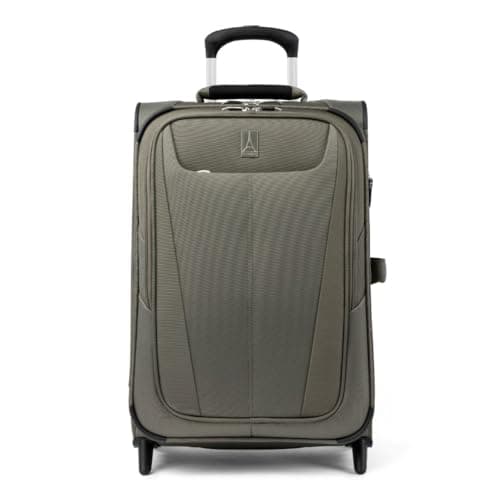
This is the part most listings never explain. A spinner's four caster housings hang below the shell and each one occupies volume that is outside the bag but inside the airline's measurement — you are paying height for wheels you cannot pack in. A two-wheel bag sets a single pair of larger wheels into recesses in the shell, so the wheels live partly inside the outline instead of entirely below it. On the same published exterior dimensions, the two-wheel version is usually the roomier bag. It is why the Maxlite 5 rollaboard carries a published 52 liters at dimensions where hardside spinners of similar footprint publish well under 45, and it is the strongest practical argument for two wheels once you have accepted the towing.
Wheel diameter is the spec nobody lists prominently
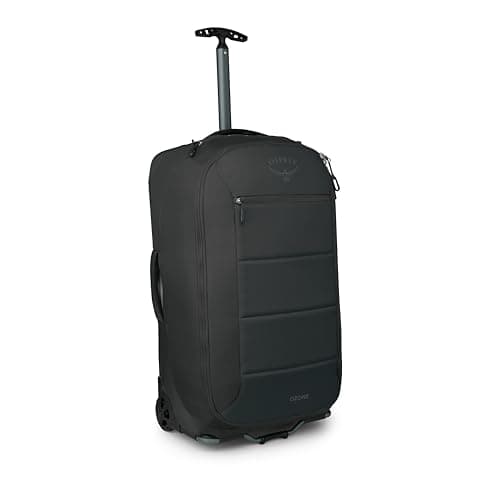
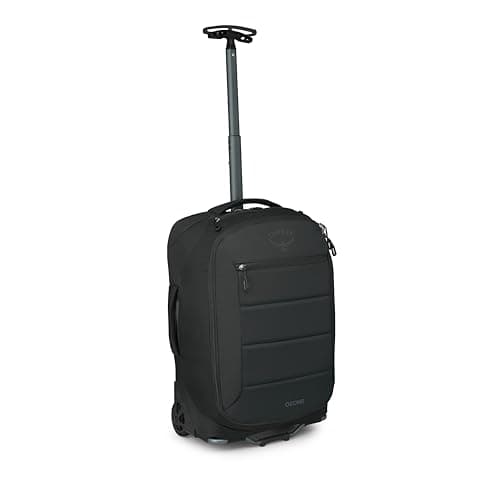
Whether a bag rides over a cobble, a tram rail, a threshold strip or a broken sidewalk seam is mostly a function of wheel radius, and it is close to binary — a wheel either clears the obstacle or stops against it and jerks your arm. Most luggage never publishes a wheel diameter at all. Osprey does, and 90 mm is roughly double what a typical cabin caster runs; that single number is why both Ozone bags score a 10 on wheel durability despite a warranty we could not fully verify. When a maker will not publish a diameter, the listing photograph is your best proxy: a wheel that looks large relative to the case, set into a deep housing, is the one you want.
Sealed bearings versus bushings
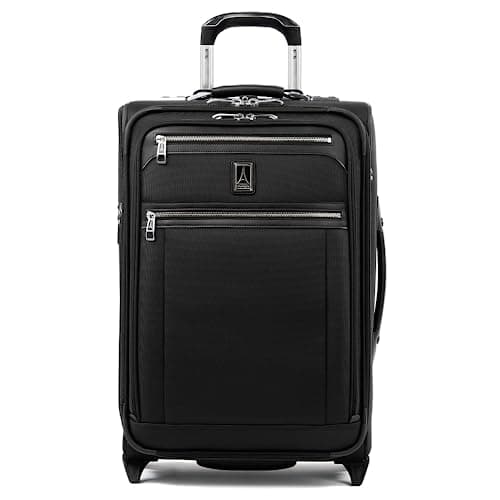
The second wheel spec that matters, and the one you notice a year in rather than on day one. A sealed ball-bearing wheel keeps grit out of the race; an unsealed wheel or a plain bushing takes it in and gets progressively louder, stiffer and more prone to flat-spotting. Travelpro publishes sealed high-performance ball bearings on the Platinum Elite, which is the specific reason it out-scores its own cheaper sibling on wheel durability. If a listing says nothing about bearings, assume it does not have good ones.
Measure the overall dimension, not the case
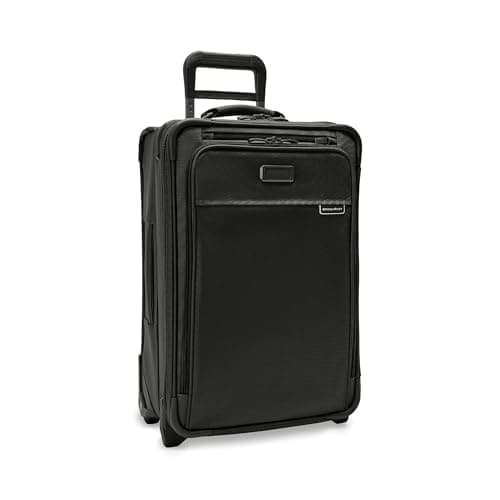
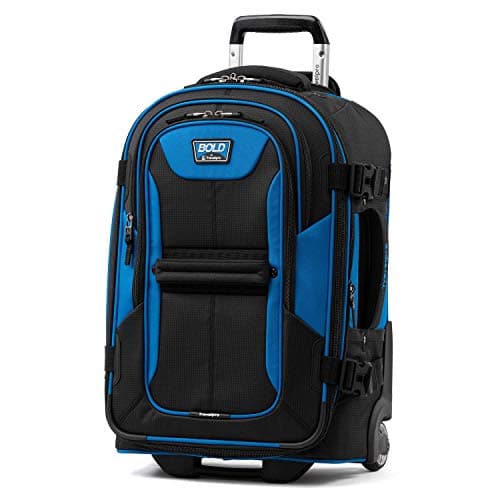
Every pick above publishes two size figures, and the gap between them is where people get stopped. The case dimension is the fabric box. The overall dimension adds the wheels and the handle housing, and it is what a sizer and a tape measure both see. Both Travelpro rollaboards here publish a case of 21 x 14 x 9 in — inside the US convention — and an overall of 23 x 14.5 x 9 in, which is not. In practice US carriers seldom measure a compressible softside bag, and these bags have been riding in overhead bins for years; the risk rises sharply on low-cost carriers, on basic-economy fares and abroad. Our how to measure luggage guide walks the right method, and carry-on size by airline has the published allowances.
The weight penalty is real and it is the whole trade
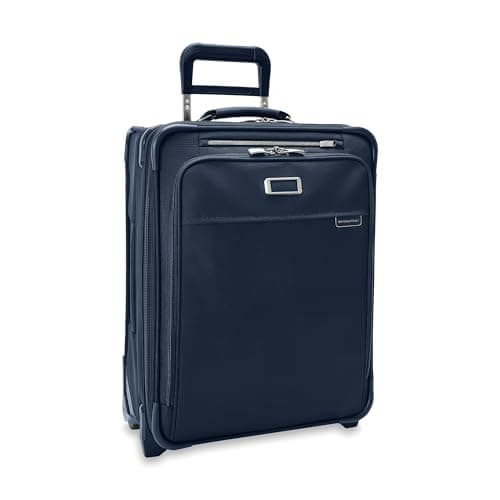
On a four-wheel bag, empty weight mostly costs you airline allowance. On a two-wheel bag it also costs you comfort, continuously, because a tilted bag transfers a share of its mass into your hand, wrist and shoulder for every step you take. That is why the ranking above rewards weight so heavily, and why the best-built bag on the page is not the top pick. The spread here is wide: 4.476 lb for the Osprey cabin bag against 9.7 lb for either Briggs & Riley, which is more than double. Decide how far you actually walk with a bag in hand before you spend on build quality you will be carrying.
Expansion zippers and what they do to compliance
Almost every pick here expands — 2 in on the Travelpros, up to 30% via CX on the Briggs & Riley pair. Treat that as trip flexibility, not capacity you can board with. Expanded, the Briggs & Riley bags reach a published 11.5 in of depth, and Travelpro's own Platinum Elite listing warns that "fully expanded may not meet airline restrictions." The workable habit: expand at the hotel for the return leg, compress before you reach the airport, and never plan a cabin trip around expanded dimensions.
Read the warranty's wheel clause specifically
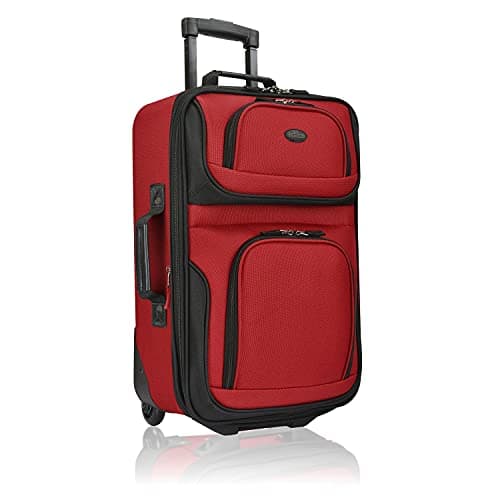
Wheels fail first on every suitcase ever made, and warranties know it — some exclude them, some cover them, some cover them only if you registered the bag inside a window. Briggs & Riley is the cleanest promise in the category: repaired for life, airline damage included, no proof of purchase. Travelpro covers wheels, zippers, extension handles and carrying handles under its limited lifetime terms and adds carrier damage through the Trusted Companion Promise — for life on Platinum Elite, for a year on the Maxlite 5 and Bold, and only if you register, which on the Bold is a 120-day window. The budget pick publishes nothing we could find. That spread is the real price difference on this page. Luggage warranties explained unpacks the terminology.
If you want a hard shell, you want four wheels
Worth stating flatly because it saves people a long search: a catalog search for hardside two-wheel carry-ons this run returned spinners and nothing else. The two-wheel configuration has become an almost exclusively softside proposition — the recessed-wheel geometry suits a frame with fabric over it, and the volume makers chase in hardside is easier to sell on four casters. If your priority is a molded shell that protects fragile contents and wipes clean, accept four wheels and read best hardside luggage. If your priority is wheels that survive and volume you can use, you are on the right page.
What we would buy
The Travelpro Maxlite 5 rollaboard, for most people, most of the time — it is the lightest capable bag here, it carries more than any cabin pick but one, and it costs a fraction of the premium options while sharing their warranty family. Fly weekly? The Platinum Elite, for the sealed bearings, the four-stop handle and a Trusted Companion Promise that runs for life. Want to buy a carry-on once and never think about it, and you do not walk far with it? The Briggs & Riley Essential, which is also the only pick published inside the US template with its wheels counted. Rough ground, or a weight-capped cabin? The Osprey Ozone carry-on, with the 10 in depth understood in advance. Checking a big bag? The Ozone 80L, if nothing inside it is fragile. And on a real budget, the U.S. Traveler Rio — bought knowing it is a small 28-liter bag with no warranty behind it, not a cheap large one.