Leather luggage needs three things and no more: keep it dry, keep it out of heat, and condition it rarely. Almost every ruined leather travel bag we read about was ruined by one of four avoidable events - it was checked into a hold, it was left wet, it was dried near a heat source, or it was conditioned every month until the finish went blotchy. There is no fifth category. Conditioning is not the main act of leather care; it is the small final step after the three things above.
The reason this guide exists separately from how to clean luggage is that a polycarbonate shell and a hide are opposites. A shell wants soap, water and a cloth; a hide wants none of those in quantity. Everything you would correctly do to a Samsonite will damage a Polare.
First: what grade is it, and why that changes the method
The care routine depends on the grade, and the listing usually tells you. Full-grain leather has the natural grain layer intact, so it takes conditioner in and develops a patina - it is the grade that rewards care. Top-grain has been sanded and refinished, so there is a finish layer between your conditioner and the hide, and heavy conditioning sits on top rather than soaking in. "Genuine leather" in US listings is a grade term for lower splits of the hide and is usually finished too, with the same consequence: less is more. Bonded leather is leather fiber in polyurethane and cannot be conditioned at all - there is no hide to feed. Our leather travel bags roundup ranks bags by published grade and explains the ladder in full.
The routine, in order of how much it matters
1. Never check it. This is the whole of leather care compressed into four words. A hold is wet, dirty, and full of edges; leather marks permanently where a shell wipes clean; and no leather travel bag carries an airline-damage warranty - the two warranties in this category that do are on nylon and polycarbonate cases, listed in luggage warranties explained. Leather travels in the cabin.
2. Keep it out of standing water, and out of heat afterward. Leather is not waterproof. A wet panel is survivable; a wet panel dried with heat is not, because heat drives the moisture out of the fibers along with the oils and leaves the leather stiff and liable to crack. If a bag gets soaked: blot with a dry cloth, stuff it loosely with paper to hold its shape, and let it dry slowly, at room temperature, away from any radiator, vent, hairdryer or sun. Condition it once it is fully dry, not before.
3. Wipe it, do not wash it. A dry or barely damp cloth, and that is the routine clean. Dust and grit are abrasive and the wipe is what removes them. Avoid household cleaners, alcohol wipes, glass cleaner and anything labeled degreaser - all of them strip finish. Avoid saddle soap on a finished bag specifically: it is formulated for unfinished tack leather and on a finished travel bag it tends to dull the surface and leave a residue that attracts more dust.
4. Condition sparingly. Two or three times a year for a bag in regular use is plenty, and less for a finished or genuine-grade bag. Use a conditioner made for finished leather goods, apply a thin coat with a cloth rather than a thick one with your hand, let it absorb, and buff off what did not. Over-conditioning is a real failure mode: it darkens the leather unevenly, can leave a tacky surface that picks up dirt, and on a finished hide it mostly just sits there.
5. Mind the hardware and the lining. These are what actually end leather bags. Keep zips clean - a stiff zip is usually grit, not a broken zip, and a soft brush fixes it. Solid brass does not rust; plated hardware pits, and once the plating flakes there is no repair. And bag your shoes, because lining tears start at the corners from an unbagged sole - the method is in how to pack shoes in a suitcase.
Specific problems, specific answers
A water spot. Counter-intuitively, the fix is to dampen the whole panel very lightly and let it dry evenly, so there is no edge. A spot is a drying ring, not a stain.
A scuff on full-grain. Often not damage at all. Rub it firmly with a clean finger or a soft cloth - the warmth and pressure redistribute the surface oils and the mark frequently burnishes away. This does not work on finished or split leather, because there is no grain layer to burnish.
Ink or oil. Act fast, blot rather than rub, and accept that these are the two marks that often do not come out of leather. Do not escalate to solvents - you will trade a small stain for a large bleached patch.
Mold or a musty smell. Almost always a storage failure rather than a travel one. Wipe with a cloth barely damp with a weak white-vinegar solution, dry slowly, then condition. Then fix the storage, because it will come back otherwise.
Storage, which is where most damage happens. Stuff the bag loosely so it keeps its shape, leave the zips half open so air moves, and store it in a cotton dust bag - never a plastic one, which traps moisture and is the single most common cause of mold on a leather bag. Indoors, not a garage or basement; our luggage storage guide covers the environment for every material.
What to buy if you want leather that survives being owned
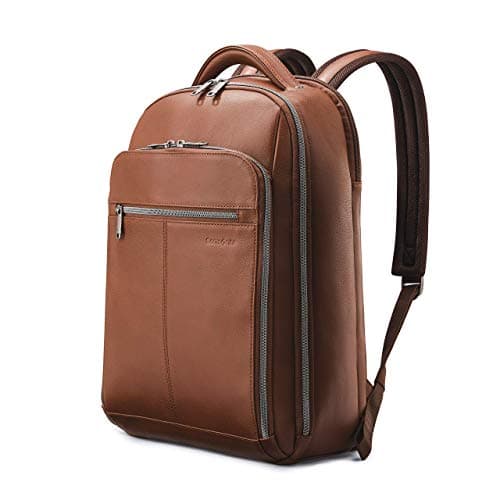
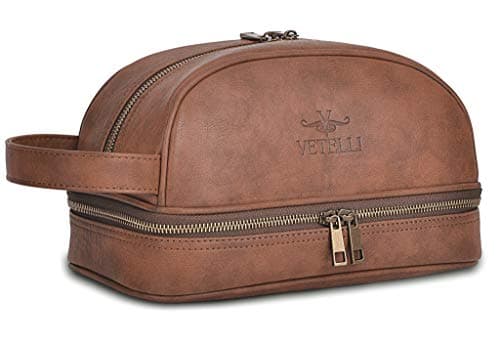
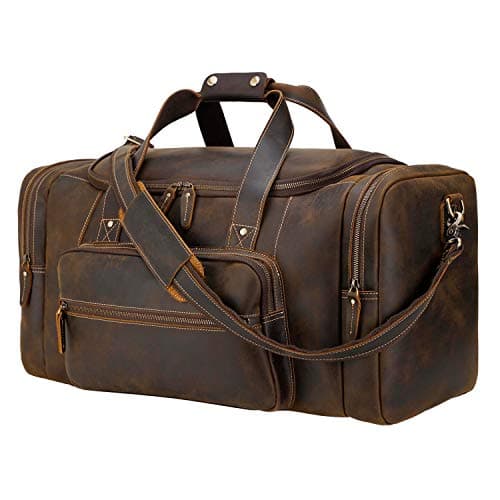
Care routine aside, the grade and the hardware do most of the work. These three registry picks are the three honest answers: buy full-grain if you want a bag that improves, buy into a service network if you want recourse when hardware fails, and buy a contained leather piece if you want leather in your kit without exposing it to an airport at all.
The do-not list, in one place
Do not dry a wet bag with heat - a radiator, a vent, a hairdryer or direct sun. Do not use household cleaners, alcohol wipes, glass cleaner or degreasers. Do not use saddle soap on a finished travel bag; it is for unfinished tack. Do not condition monthly - two or three times a year is the cadence, and less on finished or genuine-grade leather. Do not store a leather bag in a plastic bag; it traps moisture and grows mold. Do not overpack an unstructured leather bag - the crease it takes is permanent, and no conditioner removes a fold. And do not check it.
How often, realistically
For a bag you travel with monthly: a dry wipe after each trip, which takes a minute, and conditioner two or three times a year. For a bag you use twice a year: a wipe before and after the trip, conditioner once a year, and correct storage in between - which for a twice-a-year bag is where all the risk actually is. For a finished or genuine-grade bag, halve the conditioning in both cases. Nothing here needs a schedule on a calendar; it needs the bag not to spend eleven months in a plastic sack in a basement.
Leather versus the alternatives, on maintenance alone
If this routine does not appeal, that is a reason to buy a different material rather than a reason to buy leather-look vinyl - a coating peels and cannot be repaired, which is worse than anything on the do-not list above. Ballistic and woven nylon from Briggs & Riley and TUMI needs a damp cloth and nothing else, publishes its weights, and comes with a warranty; polycarbonate shells want soap, water and a cloth, which is the opposite of leather and is covered in how to clean luggage. The honest case for leather is not that it is low-maintenance. It is that it is the only material in this category that looks better after five years than it did new.
Where leather belongs in a travel kit
In the cabin, and preferably on your carry-on handle rather than your shoulder. A leather tote or weekender with a trolley strap is the format that works, because carried weight is leather's real cost - our luxury travel tote and weekender roundups rank those. In the hold, use a shell: our best luxury luggage page covers premium cases built for exactly the handling leather cannot take, and best luxury travel bags ranks the same positioning across every material.