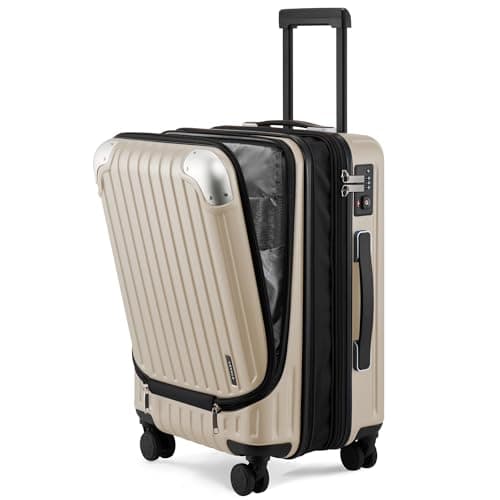
The best carry-on with a front pocket is the one where the pocket is worth the space it steals. A front-opening laptop compartment on a hardside case solves a real problem - the laptop comes out for the tray and the charger comes out on the plane without opening a clamshell across two seats - but every front pocket takes its depth out of the main compartment, and on a 9-inch-deep carry-on that is a meaningful share of your clothes. So this page ranks five front-access bags on how much the pocket costs you, whether it is padded and lockable, and whether the rest of the case is any good, because a front pocket on a bag with bad wheels is a bad bag with a pocket.
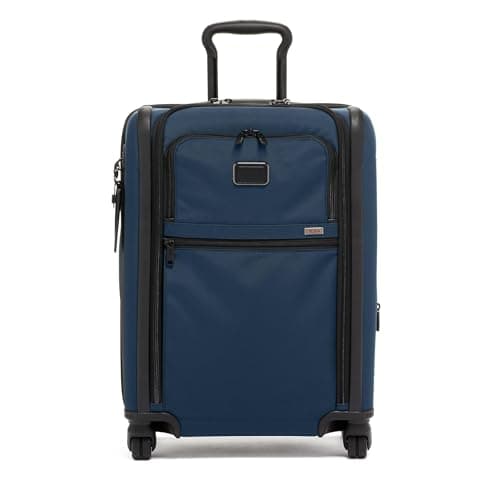
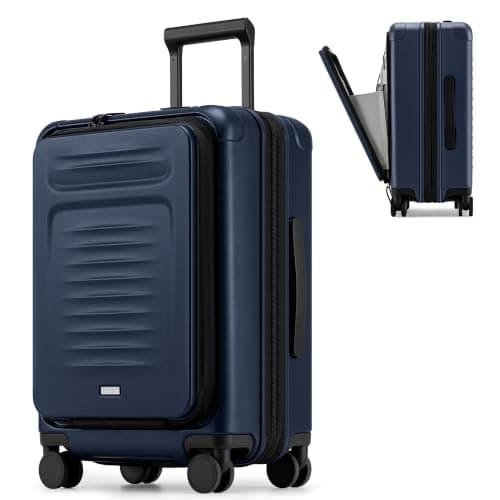
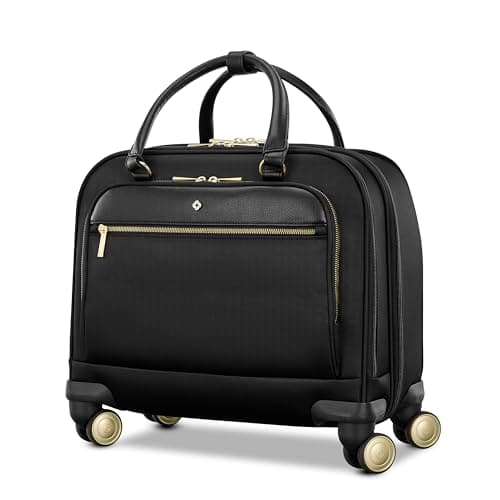
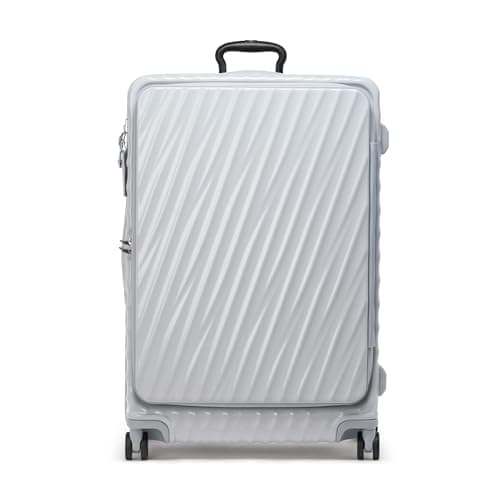
Three kinds of front access exist, and they suit different people. A front laptop compartment on a molded hardside (the LEVEL8 and Coolife here) is a shallow padded pocket that holds a laptop, a tablet and documents. A dual-access front panel on a softside (the TUMI) is a deeper, organized section that reaches further into the case. And a front-lid opening on a checked case (the 19 Degree at the end) opens the top layer of a large bag without laying it flat - the same idea scaled to a hotel-room problem rather than an airport one. We have also included the wheeled underseater with a laptop sleeve, because for many buyers the answer to "carry-on with a laptop compartment" is a personal item rather than a cabin case.
Every product here is one the site already covers on its own roundup, with the scores it earned there; specifications are the manufacturer's published figures and we have not lab-tested any of them - see how we test. If a front pocket is not a requirement, the main carry-on roundup ranks the whole field, and the business travel picks cover the organized softsides.
What a front pocket costs you
A carry-on is roughly 22 x 14 x 9 inches outside, and a front laptop compartment is typically an inch to an inch and a half deep across most of the front face. That depth comes out of the main compartment, because the exterior cannot grow. On a hardside this is a fixed loss; on a softside the pocket and the main compartment share a flexible volume, so a half-empty pocket gives some of the space back. If you pack the case to the limit every trip, the pocket is a cost; if you routinely fly with room to spare, it is free. Be honest about which you are.
Padded, or just a pocket?
Look for a padded sleeve with a suspended bottom - the laptop should not rest on the floor of the pocket where a dropped case hits first. Check that the pocket zipper can be locked to the main lock or has its own; a laptop in an unlockable front pocket is the easiest thing to take from a bag in an overhead bin. And check that the pocket opens far enough to get the laptop out one-handed while the bag stands upright, which is the whole point.
The security-tray question
In most US lanes a laptop still comes out of the bag for screening, and a front pocket makes that a ten-second job instead of an aisle-blocking clamshell operation. In lanes with newer CT scanners, and for TSA PreCheck members, the laptop can often stay in the bag - in which case the pocket's value moves to the plane, where it is the difference between reaching a charger and not. Either way, keep the laptop in the pocket rather than the main compartment on the plane: it is the item you most need to reach.
Front pocket vs organized softside
If you carry a laptop, a folder and a tablet and want all three reachable, the organized front panel on a softside business case (the TUMI here, or the Travelpro cases on our business travel roundup) does more than a single hardside pocket. If you carry one laptop and want a wipe-clean shell, the hardside pocket is the cleaner solution. The two are not the same feature, and the marketing treats them as if they were.
Charging ports and the battery rule
Several front-pocket cases add a USB port. The port is a cable pass-through; the power bank behind it is yours, and it must come out of the bag if the case is gate-checked - spare lithium batteries and power banks are carry-on only under FAA rules. Our USB charging luggage guide covers the details, and the checked luggage rules page lists what else cannot go in the hold.
How we picked
We did not lab-test these bags
Everyone in this category says they tested twenty suitcases. We have not lab-tested any of these, and we say so. What we did instead: compiled each bag's published specifications, checked its dimensions against the airline sizers, ran the cost-per-trip and weight-to-capacity math, read the aggregated owner reviews, and scored every pick against a published rubric. The scores are judgments from documented research — not measurements we took, because we do not have a lab and we will not pretend we do. Where a number came from someone else's work, we name them in Sources.