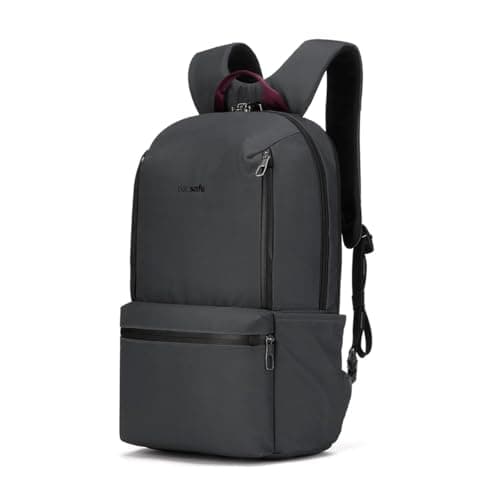
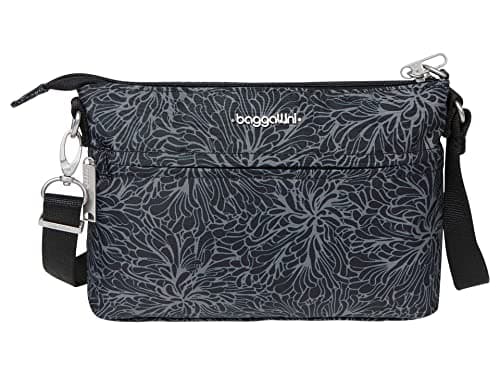
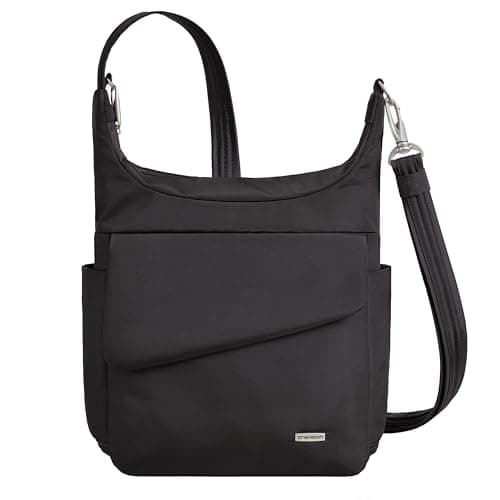
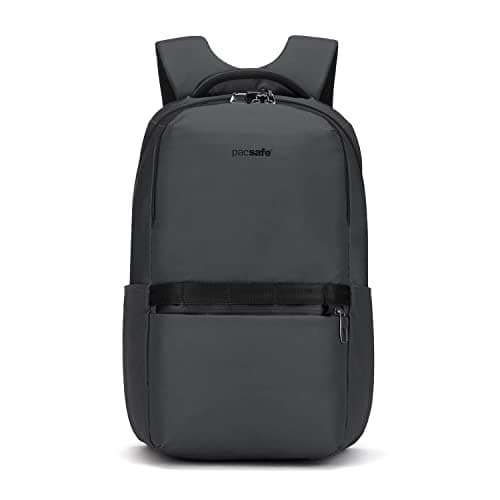
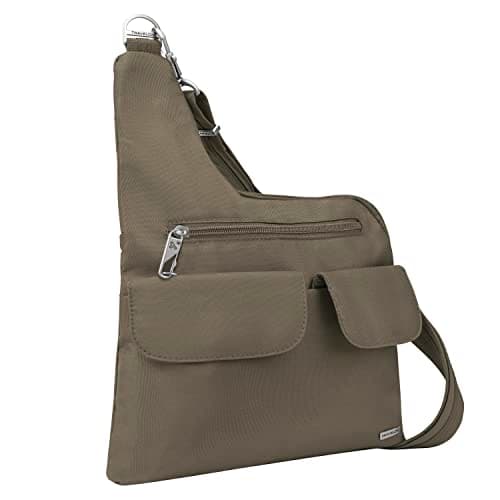
"Anti-theft" is used loosely enough on Amazon to be meaningless, so start with what it should mean. A genuine anti-theft travel bag does at least three of four things: it has slash-resistant panels and a cut-resistant strap so a blade cannot open the bag or free it from you; it has locking or hidden zippers so a hand cannot open it while it is on your back; it has a secured attachment point so it can be locked to a chair leg; and it is shaped to sit against your body rather than swinging behind you.
What none of them do is make a bag theft-proof. They defeat the opportunist — the crowded metro, the outdoor cafe, the moment your attention is elsewhere — which is how the overwhelming majority of travel theft actually happens. Nothing here resists a determined attack, and nothing here should hold your passport in a place you cannot see.
We ranked six on construction rather than marketing. One deliberate exclusion: bags whose only anti-theft claim is RFID blocking. That is a single feature, it addresses a threat that is rare in practice compared with a hand in a pocket, and it does nothing about the way bags are actually stolen.
Which bag you carry is one part of the answer. How to prevent luggage theft covers the three places bags are actually taken from - the hold, the train luggage rack and the cafe chair - and what works in each.
The four features that matter
- Slash-resistant panels and strap. A wire mesh or high-tenacity weave laminated into the fabric, plus a cable or steel wire inside the shoulder strap. This is the feature that is genuinely hard to fake and it is the one worth paying for.
- Locking or hidden zippers. Either a clip that secures the pulls to a fixed point or zippers concealed under a flap. Both defeat the single most common attack: a hand opening a backpack you are wearing.
- A secured attachment point. A clip or loop that lets you fix the bag to a chair leg or a rail. Cafes and train seats are where day bags actually disappear.
- A body-hugging shape. Structural, not a feature: a bag worn in front of you and visible cannot be opened without you noticing. This is why the crossbody tops the list ahead of the more expensive backpacks.
What anti-theft bags do not do
They do not stop a determined thief, they do not stop a bag being taken while you are not holding it, and they do not replace not carrying everything in one place. The single most effective anti-theft measure remains splitting your valuables: one card and some cash on your person, the rest in the bag, the passport in the hotel safe unless you need it. A slash-resistant panel is a useful last line, not a strategy.
On RFID blocking
Nearly every bag in this category advertises RFID-blocking pockets. Contactless cards and modern e-passports use short read ranges and encrypted, single-use transaction data, which makes walk-by cloning a far smaller practical risk than the marketing implies. Treat RFID blocking as a free extra if it comes with a bag you were buying anyway, and never as a reason to choose one.
Where these fit alongside your luggage
An anti-theft bag is a day bag or a personal item, not a suitcase. If you are trying to solve security on your main luggage instead, the answer is different: a latching, zipperless case, because a standard luggage zipper can be separated with a ballpoint pen regardless of the lock on the pulls. That is covered in our aluminum luggage roundup and our TSA lock guide.
Crossbody, sling or backpack?
Crowded transit and street markets favor a front-worn crossbody, because visibility beats hardware. Full days of walking with a laptop favor a backpack, because two straps and a padded back panel are the only comfortable way to carry weight. The convertible sling is the compromise and, for most city travel, the most practical shape of the three. If your priority is capacity rather than security, our carry-on backpack roundup is the better page.
What we would buy
The Travelon Anti-Theft Classic Crossbody for most travelers — it has every feature that matters, it is worn where you can see it, and it costs a fraction of the backpacks. Add the Pacsafe Metrosafe X 20L if you carry a laptop through cities regularly, and take the Baggallini if you would rather the bag did not look like a security product at all.
How we picked
We did not lab-test these bags
Everyone in this category says they tested twenty suitcases. We have not lab-tested any of these, and we say so. What we did instead: compiled each bag's published specifications, checked its dimensions against the airline sizers, ran the cost-per-trip and weight-to-capacity math, read the aggregated owner reviews, and scored every pick against a published rubric. The scores are judgments from documented research — not measurements we took, because we do not have a lab and we will not pretend we do. Where a number came from someone else's work, we name them in Sources.